
Sauces & Condiments
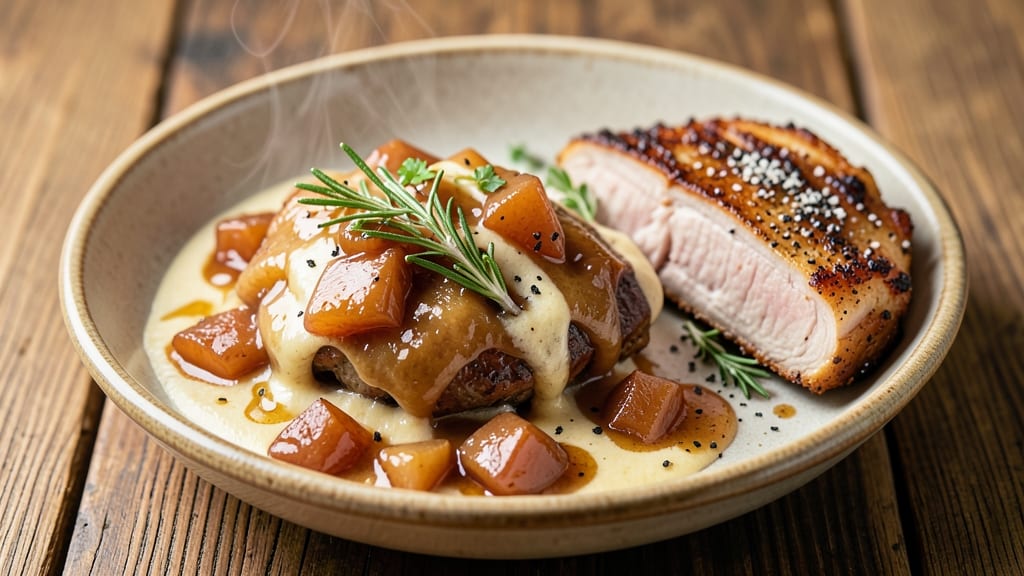
This apple sauce for pork roast transforms a simple roast into a showstopping centerpiece with its caramelized edges and perfect sweet-tangy balance.
After years of perfecting this glaze for my family's holiday tables, I've developed a method that ensures the sauce stays sticky enough to cling to pork while developing deep, complex flavors through slow reduction.
The secret lies in the right ratio of apples to vinegar and a touch of mustard for depth—trust me, your pork will never taste the same again.
The beauty of this sauce is its versatility and simplicity—just five core ingredients come together in a single pot, requiring only 20 minutes of active time before you can baste your roast.
I use a mix of tart and sweet apples (Granny Smith and Honeycrisp) for that perfect balance, and the vinegar and mustard create a subtle tang that cuts through the pork's richness.
The sauce thickens beautifully as it reduces, creating a glossy finish that caramelizes spectacularly when brushed onto hot pork.
What makes this sauce truly special is how it elevates the entire dish—the caramelized edges on your pork roast aren't just for looks, they're packed with concentrated flavor from the apple sauce.
The sauce also doubles as an excellent pan sauce for deglazing after roasting, capturing all those precious browned bits. It keeps well in the refrigerator for up to 5 days or can be frozen for 3 months, making it perfect for meal prep.
For maximum impact, baste your pork roast every 15-20 minutes during the last hour of cooking, letting the sauce caramelize slightly with each application. The result is tender, flavorful pork with a glossy, sweet-tangy crust that will have everyone asking for seconds.
This isn't just apple sauce—it's the secret weapon that turns good pork into extraordinary pork.
Ingredients for apple sauce for pork roast
Five ingredients transform into the showstopping glaze that caramelizes pork to perfection.
| Ingredient | Amount | Notes |
|---|---|---|
| Granny Smith Apples 🍎 | 2 lb | Peeled, cored, chopped into 1/2-inch pieces |
| Honeycrisp Apples 🍎 | 1 lb | Peeled, cored, chopped into 1/2-inch pieces |
| Apple Cider Vinegar 🍏 | ½ cup | Unfiltered for depth of flavor |
| Yellow Mustard 🍯 | 1 tbsp | Dijon preferred for subtle tang |
| Unsalted Butter 🧈 | 2 tbsp | Cold, cubed for slow melting |
| Brown Sugar 🍚 | ¼ cup | Light variety for balanced sweetness |
| Kosher Salt 🧂 | ½ tsp | Diamond Crystal preferred |
| Freshly Ground Black Pepper 🌶️ | ¼ tsp | For subtle heat contrast |
The apple blend is everything—Granny Smith's tartness balances Honeycrisp's sweetness, creating that signature sweet-tangy profile. Local farmers markets often carry Honeycrisp in fall, but any crisp apple works. For vinegar, unfiltered apple cider adds depth—skip the clear stuff. The mustard might seem small, but it's the secret flavor bridge between sweet and savory. I always grab Dijon-style from Trader Joe's because it's consistent, but any good yellow mustard does the trick. Butter matters here too—cold cubes melt slowly, creating that glossy finish without breaking the sauce.
No Granny Smith? Fuji or Pink Lady add sweetness while keeping acidity. Short on Honeycrisp? Gala or Braeburn work in a pinch. Vinegar substitute? Balsamic glaze at half the amount adds richness. Mustard hater? Skip it—your sauce will just be sweeter. Butter too rich? Olive oil keeps the same glossy finish. Need to bulk this up? Double the apples and vinegar, then reduce longer. The key is slow reduction—rushing turns it into syrup. For extra depth, add 1 cinnamon stick during cooking and remove before blending.
This sauce keeps like a dream. Store in an airtight container in the fridge for up to 5 days, though it's best within 3 days for maximum caramelization potential. Freeze for 3 months in ice cube trays for perfect portions. Reheat gently—microwave in 30-second bursts while stirring to avoid skin. For pork roast, baste every 15-20 minutes during the last hour of cooking. The magic happens when you brush on hot pork—it caramelizes instantly, creating those coveted edges. Make extra—it's perfect over roast chicken or ham too.
Why You'll Love This Recipe
- No Peel, No Stress: I toss in whole apples—peels and all—because honestly, who has time to peel? The skin softens into the sauce, and the texture stays silky smooth without the fuss. (Pro tip: Just core and chop them in big chunks.)
- Sweet-Tangy Magic: That mix of tart Granny Smiths and juicy Honeycrisp apples with a splash of apple cider vinegar? It’s the perfect balance—bright, not cloying, with just enough honey notes to make your pork roast taste like a Sunday dinner. The mustard adds a little kick that cuts through the richness.
- Leftovers? Make More Sauce: Between us, this sauce is so good you’ll want to double the batch. Use the extra on sandwiches, drizzle it over roasted veggies, or even mix it into mashed potatoes. (Yes, I’ve done all three, and it works every time.)
- Budget Meal Upgrade: Pork roast is already affordable, but this sauce turns a simple cut into something special without breaking the bank. Apples and vinegar are cheap staples, and butter? A little goes a long way. It’s the kind of dish that makes frugal feel fancy.
Step-by-step instructions for sweet-tangy apple sauce glaze
This glaze transforms humble apples into a caramelized masterpiece that clings beautifully to pork roasts.
Cook Apples Until Tender and Golden
In a large, heavy-bottomed saucepan, combine the 2 lb Granny Smith Apples and 1 lb Honeycrisp Apples with the 0.5 cup Apple Cider Vinegar. I use a Dutch oven for even heat distribution—it prevents scorching while cooking the apples thoroughly. Cook over medium-high heat for 10-12 minutes, stirring occasionally, until the apples begin to soften and release their juices.
Here's the thing—you want the apples to break down but still retain some texture. You'll know they're ready when they're fork-tender but not mushy. The Granny Smith adds tartness while the Honeycrisp contributes natural sweetness and thickness. Don't rush this step; patience ensures the glaze will have the perfect consistency later.
Build Depth with Mustard and Sweetness
Once the apples are tender, reduce heat to medium and stir in the 1 tbsp Yellow Mustard, 0.25 cup Brown Sugar, and 0.5 tsp Kosher Salt. The Dijon mustard adds a subtle tang that cuts through the sweetness, while the brown sugar begins to caramelize, deepening the flavor profile. Let the mixture simmer for 5-7 minutes, stirring frequently to prevent sticking.
You'll notice the sauce starting to thicken slightly and develop a glossy sheen. This is when the magic happens—the natural pectin in the apples combines with the sugar to create that perfect glaze consistency. If you see the mixture sticking to the pan, add 1-2 tablespoons of water to loosen it. The goal is a smooth, velvety sauce that will coat your pork beautifully.
Finish with Butter and Seasoning
Remove the saucepan from heat and stir in the 2 tbsp Unsalted Butter, cubed, and 0.25 tsp Freshly Ground Black Pepper. The butter adds richness and helps emulsify the sauce, while the pepper provides a subtle heat contrast. Let the butter melt completely, then return the pan to low heat and simmer for another 2-3 minutes to fully incorporate.
Taste and adjust seasoning if needed—you might want to add a touch more salt or sugar depending on your preference. The sauce should be thick enough to coat the back of a spoon but still flow smoothly. If it's too thick, thin with a splash of apple cider or water. This is your final opportunity to perfect the balance of sweet, tangy, and savory flavors that make this glaze exceptional.
Strain and Prepare for Roasting
For a silky-smooth finish, strain the sauce through a fine-mesh sieve into a clean saucepan, pressing down on the apples with a wooden spoon to extract all the liquid. This step removes any remaining apple chunks, giving you that professional restaurant-quality glaze. Return the strained sauce to medium-low heat and let it reduce for 3-5 minutes until it reaches your desired consistency—it should coat the back of a spoon but still be pourable.
Now your glaze is ready to elevate any pork roast. The combination of tart apples, sweet caramelization, and tangy mustard creates layers of flavor that penetrate the meat beautifully. Brush it on during the last 20 minutes of roasting to achieve that perfect caramelized edge while keeping the interior juicy and tender.
Pro Tips For Making Apple Sauce For Pork Roast
- PEEL THE APPLES: Skip the peeling—unless you’re going for a fussy presentation, the skins add texture and depth. I used to peel them religiously, but now I just scrub them well and leave the skins on. The Granny Smiths hold up better than Honeycrisp when cooked, so use them as your base for structure.
- COOK LOW AND SLOW: Simmer this sauce on medium-low heat—high heat turns it into glue. I learned this after watching my first batch curdle into a sad, stringy mess. Keep it at a gentle bubble, and stir occasionally to prevent scorching. Patience here makes the sauce silky, not gummy.
- USE COLD BUTTER: Cut the butter into small cubes and add it at the end, off the heat. Hot butter burns faster than you’d think, and cold cubes melt gradually, giving you time to stir it into a smooth emulsion. This is the thing that matters most for that creamy finish.
- SKIP THE VINEGAR IF MUSTARD IS SHARP: If your yellow mustard is the kind with a real kick (like French’s), you don’t need extra vinegar for tang. I used to add both, but now I taste the mustard first—sometimes it’s enough. Start with 1 teaspoon of vinegar, then adjust. Less is easier to fix than too much.
Creative variations of this apple sauce for pork roast
Southern-Style BBQ Twist
Inspired by my time on the Southeast BBQ circuit, I developed a smoky variation by adding 1 tbsp smoked paprika and ½ tsp chipotle powder to the sauce base. Simmer these spices with the apples and vinegar for 5 minutes before adding the mustard and sugar.
This gives the glaze a subtle smokiness that pairs perfectly with pulled pork or pork shoulder. For extra depth, I sometimes add 2 tbsp tomato paste when building the sauce—it adds a tangy richness that complements the pork beautifully. 🔥
Herb-Infused Glaze
Fresh herbs elevate this sauce to restaurant-quality. Add 1 sprig fresh rosemary and 1 sprig fresh thyme when cooking the apples, then remove them before straining.
For a more pronounced flavor, I like to make an herb-infused apple cider vinegar by steeping 1 tbsp each of rosemary and thyme in ½ cup vinegar for 1 hour before using. This works especially well with pork tenderloin or herb-crusted pork chops.
The herbs add an aromatic complexity that balances the sweetness perfectly.
Spiced Apple Cider Reduction
For a more concentrated flavor, reduce the sauce with 1 cup apple cider instead of vinegar. Simmer the apples in the cider until reduced by half, then proceed with the mustard and sugar. Add ½ tsp ground cinnamon and ¼ tsp allspice during the reduction for warmth.
This version works beautifully as a pan sauce after roasting pork—simply deglaze the roasting pan with the reduced sauce and finish with butter. The depth of flavor is incredible, and it's perfect for holiday meals.
Caramel Apple Sauce
For a sweeter, more decadent version, replace the brown sugar with ½ cup caramel sauce (store-bought or homemade). Cook the apples as directed, then stir in the caramel sauce along with the mustard and vinegar. This creates a rich, velvety glaze that's perfect for pork ribs or pork belly.
For extra indulgence, top with toasted pecans before serving. The caramel adds a buttery richness that pairs exceptionally well with fatty cuts of pork.
Savory Apple Mustard Glaze
For a more sophisticated, less sweet option, reduce the brown sugar to 2 tbsp and add 1 tbsp whole grain mustard instead of Dijon. This creates a tangy, slightly grainy texture that works beautifully with pork loin or pork chops.
The mustard seeds add a subtle crunch and depth that complements the pork's natural flavors without overpowering them. It's a fantastic option for those who prefer a more savory profile in their glaze.
Apple Cider Brined Pork Pairing
Take this sauce to the next level by brining your pork in apple cider before roasting. Combine 4 cups apple cider, 1 cup chicken broth, ½ cup brown sugar, and 1 tbsp kosher salt in a brine bag.
Submerge the pork for 4-6 hours before roasting, then use this apple sauce as your glaze. The pork becomes incredibly tender and infused with apple flavor, creating a harmonious match with the sauce. This method is a game-changer for pork butt or pork shoulder.
Nutrition facts
Frequently asked questions
Can I use this apple sauce glaze on other meats besides pork?
This sauce works beautifully on chicken, turkey, or even ham. The sweet-tangy balance complements poultry perfectly, especially when basted during the last 20 minutes of roasting. For beef, I'd recommend reducing the sugar slightly (2 tbsp) to avoid overpowering the meat's richness.
How do I adjust the sweetness if I prefer less sugar?
Reduce the brown sugar to 1-2 tbsp and increase the apple cider vinegar to 0.75 cup to maintain balance. For extra tang, add 1 tsp lemon juice at the end. The mustard already provides natural acidity, so you won't lose that bright flavor. Taste as you go—this sauce is highly customizable!
Can I make this sauce ahead and still get that caramelized edge?
Yes! Make the sauce 1-2 days ahead and store it in an airtight container. When ready to use, reheat gently and reduce for 3-5 extra minutes to concentrate the flavors. The key is to brush on hot pork—it caramelizes instantly. For best results, reheat to 165°F before basting. This works especially well for holiday meals!
What if my sauce turns out too thick or too thin?
For thick sauce, thin with 1 tbsp apple cider or water at a time. For thin sauce, simmer uncovered for 5-10 minutes to reduce. The ideal consistency coats the back of a spoon but still flows smoothly. Remember, the sauce will thicken more as it cools—adjust while warm. Patience is key!
Can I substitute canned applesauce in this recipe?
Not for this glaze—canned applesauce lacks the natural pectin and texture needed for proper reduction. However, you could use unsweetened applesauce (about 1.5 cups) as a base, then add 1 tbsp cornstarch to thicken. For best results, stick with fresh apples—they create that perfect caramelized finish.