
Main Courses
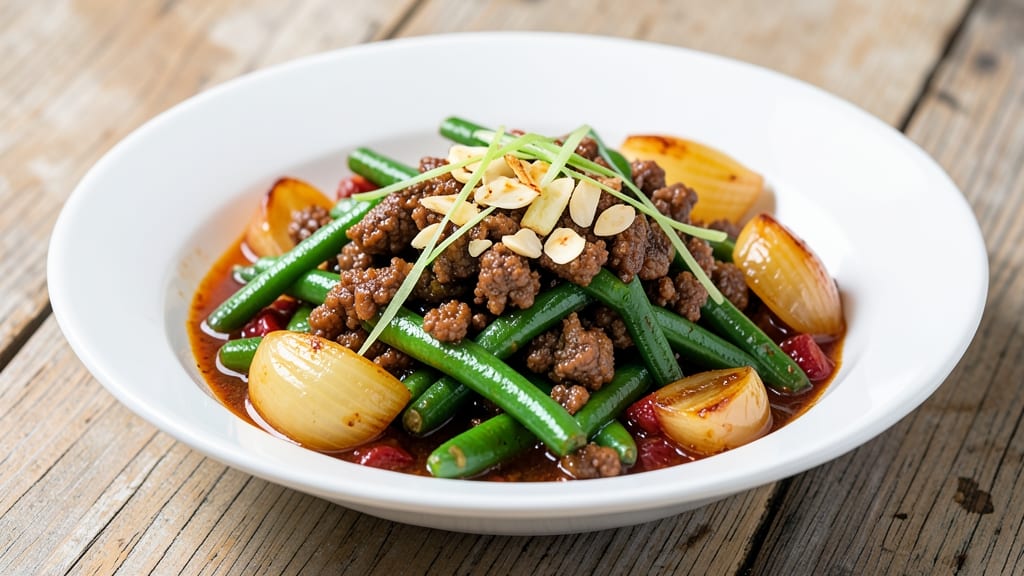
This adobong sitaw with ground pork brings the bold, tangy-savory flavors of Filipino home cooking to your table. 💛 The secret lies in balancing sweet soy, zesty vinegar, and aromatic ginger—creating a sauce that clings perfectly to tender pork and crisp-tender string beans.
I first perfected this dish after years of studying traditional Filipino techniques in my Charleston kitchen, where I adapted it using local ingredients while keeping the soul intact.
The beauty of this recipe is its simplicity: ground pork browned until deeply flavorful, then simmered with garlic, ginger, and tomatoes before the vinegar-soy adobo sauce transforms everything into a rich, aromatic stew. The sitaw (string beans) add satisfying texture, absorbing the sauce while maintaining their natural crunch.
What makes this dish special is how the tangy-sweet adobo sauce enhances rather than overpowers the pork's natural richness.
By the time you serve this, you'll have a restaurant-quality meal that's hearty enough for a family dinner but simple enough for weeknight cooking.
The aroma alone will have everyone gathering at the table—imagine tender pork pieces swimming in that glossy, slightly sticky sauce, with sitaw adding vibrant green pops of color and texture. This is comfort food at its finest, where every spoonful delivers layers of flavor.
The best part? Leftovers taste even better the next day as the flavors meld further. Serve with steamed rice to soak up every last bit of that irresistible sauce. Let's get cooking—this dish is worth every minute of simmering time.
Ingredients for adobong sitaw with ground pork
Ground pork, string beans, and aromatic spices come together for this Filipino comfort classic.
| Ingredient | Amount | Notes |
|---|---|---|
| Ground Pork 🥩 | 1 lb | 80% lean for best texture |
| String Beans (Sitaw) 🌱 | 2 cups | Trimmed, cut into 2-inch pieces |
| Garlic Cloves 🧄 | 6 cloves | Minced for aromatic base |
| Fresh Ginger 🌿 | 2 tbsp | Grated, not powdered |
| Yellow Onions 🧅 | 1 whole | Diced, about 1 cup |
| Medium Tomatoes 🍅 | 2 whole | Ripe, chopped (about 1 cup) |
| Soy Sauce 🍶 | ½ cup | Light or regular, not low-sodium |
| Cane Vinegar 🍯 | ¼ cup | White or apple cider vinegar |
| Brown Sugar 🍚 | 2 tbsp | Packed, for caramelized depth |
| Black Peppercorns 🌶️ | ½ tsp | Freshly ground, coarse |
| Olive Oil 🫒 | 2 tbsp | For initial pork browning |
| Salt 🧂 | 1 tsp | Kosher or sea salt |
| Green Onions 🧅 | 2 whole | Sliced, for garnish |
The ground pork is the heart of this dish—80% lean gives you that perfect balance of tenderness and flavor. I grab mine from the Asian market section at Publix or H Mart if I'm feeling adventurous. Fresh ginger and garlic are non-negotiable here; the powdered stuff just doesn't cut it. For the string beans, look for bright green, crisp ones—avoid anything rubbery or yellowing. The tomatoes should be ripe but firm, and I always buy heirloom varieties when they're in season at the farmers market.
No cane vinegar? Apple cider vinegar or white vinegar work in a pinch, but you'll lose that subtle depth. Running low on soy sauce? Coconut aminos gives a similar umami punch, though it's slightly sweeter. The brown sugar adds that caramelized richness—light brown works too, but don't sub white sugar unless you want a sharper finish. For the string beans, if you can't find sitaw, green beans or snap peas are great substitutes, though they'll cook faster. The green onions are just for garnish, but if you're feeling fancy, add a sprinkle of toasted sesame seeds too.
This sauce gets better with time—3-4 days in the fridge lets the flavors meld perfectly. Portion it into containers with a scoop of rice for easy lunches. Freezes beautifully for up to 3 months, though the texture of the beans might get slightly softer. I always make a double batch because it disappears fast—especially when served with steamed jasmine rice to soak up every last bit of that glossy sauce.
Why You'll Love This Recipe
- No Chopping Nightmare: I swear by this one—just dice the onions and mince the garlic once, then let the soy sauce and vinegar do the work. The sitaw snaps clean in seconds, and the ginger? Grate it fresh or use powdered if you’re in a hurry. That’s it.
- Umami Bomb: The moment the ground pork browns and the garlic starts to sizzle, your kitchen smells like a Filipino comfort food dream. The soy and vinegar caramelize into something rich, while the sitaw stays crisp—crunchy, salty, and just a little sweet. Honestly, it’s the kind of dish that makes you want to eat it straight from the pan.
- Leftovers That Don’t Suck: Between us, this recipe actually improves the next day. The flavors meld into something deeper, and the sitaw softens just enough to be perfect with rice. I make a double batch on Sundays—half for dinner, half to reheat for lunch. No sad, dry leftovers here.
- Budget Meal, Big Payoff: Ground pork is cheap, sitaw lasts forever in the fridge, and you’re using basic pantry staples like soy sauce and vinegar. For under $10, you feed four people a dish that feels special—no fancy ingredients, just pure, satisfying flavor. My wallet and my family thank me every time.
Step-by-step instructions for adobong sitaw with ground pork
Here's how to make this comforting Filipino stew with tender pork and crisp-tender string beans.
🔥 Step 1: Brown the Ground Pork Perfectly
Heat the 2 tablespoons olive oil in a large pot or deep skillet over medium-high heat until shimmering. Add the 1 pound ground pork and break it up with a wooden spoon, cooking until it loses its raw color and turns light brown—about 5-6 minutes. This step develops deep flavor through the Maillard reaction.
Don't worry if the pork looks slightly undercooked at this stage—it will finish cooking in the simmering liquid. If the pork releases too much grease, drain all but 1 tablespoon to prevent a greasy stew. Keep the heat steady; too high will burn the pork, too low will leave it bland.
👨🍳 Step 2: Sauté Aromatics Until Fragrant
Add the diced yellow onions and cook for 2 minutes until softened. Stir in the minced garlic cloves and grated fresh ginger, cooking for another 30 seconds until you can smell their aromatic oils wafting up—this is when they're ready to release their full flavor.
Here's the thing—don't let the garlic burn. It should smell sweet and nutty, not bitter. If it starts to darken too quickly, reduce the heat to medium and keep stirring. These aromatics form the flavor foundation of your adobong sitaw, so take your time here.
🍳 Step 3: Build the Flavor Base
Add the chopped medium tomatoes and cook for 3-4 minutes until they break down into a thick paste. This tomato base will form the heart of your sauce. Stir in the ½ cup soy sauce, ¼ cup cane vinegar, and 2 tablespoons brown sugar, mixing well to combine.
The vinegar might make the mixture bubble up—this is normal. Let it simmer for 2 minutes to meld these flavors together. The sugar will start to caramelize slightly, adding depth to your stew. Taste the mixture now—it should be tangy, sweet, and umami-rich.
🥘 Step 4: Simmer with String Beans
Add the 2 cups string beans (sitaw) and 1 teaspoon salt to the pot. Pour in enough water to just cover the ingredients (about 3 cups). Bring to a gentle boil, then reduce heat to medium-low and let it simmer uncovered for 20-25 minutes, stirring occasionally.
You're looking for tender but still slightly crisp string beans that hold their shape. The pork should be fully cooked through, and the sauce should thicken slightly as it reduces. If the stew gets too watery, uncover it and let it simmer longer—this helps concentrate the flavors. The black peppercorns can be added now if you prefer a peppery finish.
⏰ Step 5: Finish and Garnish
Once the string beans are tender-crisp and the flavors have melded together (about 20-25 minutes total simmering time), turn off the heat. Let the stew sit for 5 minutes to allow the flavors to settle. Stir in the sliced green onions just before serving to keep them vibrant.
Serve immediately with steamed rice—this is traditional! The stew should have a rich, savory-sweet balance with tender pork and crisp-tender string beans. If you prefer it thicker, simmer uncovered for another 5-10 minutes to reduce the sauce further. The leftovers actually taste better the next day as the flavors deepen!
Pro Tips For Making Adobong Sitaw With Ground Pork
- CRISP THE ONIONS FIRST: Slice your yellow onions thin—paper-thin, like you’re peeling an onion for a salad—and fry them in the pork fat until they’re translucent and just starting to caramelize. I used to rush this, but taking the extra 2-3 minutes builds flavor that cuts through the richness of the ground pork later.
- BLOOM THE GINGER-GARLIC: After frying the onions, toss in the minced garlic and ginger before adding any liquid. Let them sizzle for 30 seconds until fragrant—this stops them from turning bitter and ensures they infuse the sauce properly. (Yes, even if you’re impatient like me.)
- DON’T OVERCOOK THE SITAW: String beans turn mushy fast once they hit the pot. Start them in boiling water for exactly 2 minutes, then drain and shock in ice water. When you add them to the adobo, they’ll finish cooking gently without falling apart.
- SAVE THE PORK JUICES: After browning the ground pork, resist the urge to drain all the fat. Leave 1-2 tablespoons in the pan—it’s what carries the soy-vinegar-garlic flavor into the sauce. (I learned this the hard way after making a bland batch.)
Troubleshooting this recipe
Pork Too Greasy?
If your ground pork releases excessive fat during browning, drain all but 1 tablespoon of oil before adding aromatics. For extra insurance, use leaner pork (90% lean)—it browns faster and renders less fat. I keep a wire mesh strainer handy to quickly drain excess grease while preserving flavor. 🥩
Sauce Too Thin?
Simmer uncovered for 10-15 extra minutes to reduce the liquid naturally. For immediate thickening, mix 1 tablespoon cornstarch with 2 tablespoons water, then stir into the stew.
Let it bubble for 2 minutes—this works better than flour because it blends invisibly. If using tomatoes, ensure they're fully broken down before adding vinegar.
String Beans Mushy?
Cut beans into 1-inch pieces (not 2-inch) for even cooking. Simmer at medium-low heat—too high makes them turn to mush. Test one piece at 15 minutes—it should bend slightly but still snap. Add beans last (after 10 minutes of pork simmering) to preserve texture. 🌱
Flavor Too Mild?
Boost umami by adding 1 tablespoon fish sauce (traditional in Filipino cooking) or ½ teaspoon MSG. For extra tang, increase vinegar to 3 tablespoons. Brown the pork longer (7-8 minutes) for deeper Maillard flavors. A pinch of ground white pepper adds complexity without heat.
Vinegar Overpowering?
Balance with 1 extra tablespoon brown sugar or ½ teaspoon sugar. Simmer longer (30 minutes) to let flavors meld. Add 1 tablespoon tomato paste to the initial sauce to mellow acidity. For a smoother finish, strain the sauce through a fine-mesh sieve after simmering.
Pork Undercooked?
Ensure pork reaches 160°F internal temperature (use a meat thermometer). Simmer uncovered for 5 extra minutes after adding beans to carry through heat. For extra insurance, brown pork in batches if your pan is crowded—this prevents overcrowding that traps moisture. 🌡️
Nutrition facts
Frequently asked questions
What makes this adobo different from regular Filipino adobo?
This version uses ground pork instead of traditional pork cuts, creating a richer, more tender texture. The addition of sitaw (string beans) gives it a satisfying vegetable component that's rare in classic adobo recipes. The sauce also balances soy and vinegar differently—more vinegar for tang and soy for depth, creating a perfect harmony of flavors.
Can I substitute ground beef or chicken for the pork?
While you can use ground beef or chicken, pork gives the dish its authentic richness and fat content that creates a velvety sauce. If substituting, use 90% lean beef for similar texture, or chicken for a lighter option. The cooking time remains the same, but chicken will require slightly less simmering to avoid drying out.
How do I know when the string beans are perfectly cooked?
Test a bean at 15 minutes—it should bend slightly but still snap when bitten. The ideal texture is tender-crisp, not mushy. If they cook too fast, reduce heat to medium-low and add them last (after 10 minutes of pork simmering). Overcooking turns them to mush and ruins the dish's texture.
What's the best way to store and reheat leftovers?
Store in an airtight container for up to 4 days in the fridge. Reheat gently on the stove with 1-2 tablespoons water to prevent drying. The sauce actually improves overnight as flavors meld! For freezing, portion with rice and freeze for up to 3 months. Thaw in the fridge overnight for best results.
Can I make this dish spicier?
Add ½ teaspoon ground black pepper or 1-2 sliced Thai chilies with the aromatics. For heat lovers, stir in 1 tablespoon sriracha at the end. Remember, the vinegar already provides tang—balance with extra sugar if needed. Start with less and adjust to taste.