
Main Courses
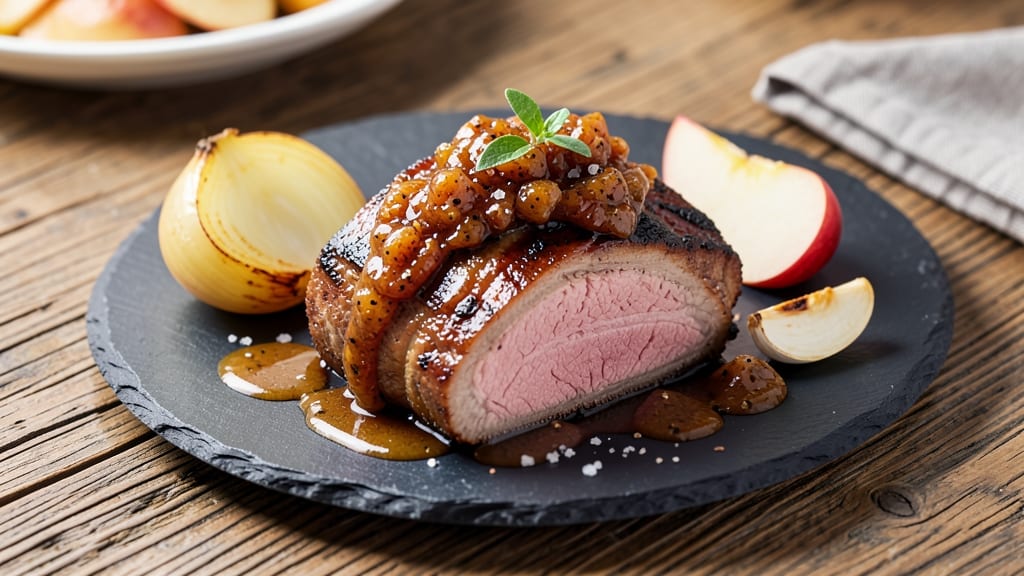
This apple chutney recipe for pork tenderloin transforms a simple weeknight dinner into a restaurant-worthy masterpiece. The sweet-tart glaze caramelizes beautifully during roasting, creating a perfect balance of tender pork and vibrant fruit flavors.
I developed this pairing after years of perfecting pork dishes at my restaurant, where the contrast between juicy meat and fruity glaze always stole the show.
The secret lies in marinating the pork tenderloin overnight, allowing the chutney's flavors to penetrate deeply while keeping the meat incredibly tender.
We'll use a mix of apple cider vinegar, honey, and fresh spices to create a glaze that's sticky yet not overly sweet—just enough to complement the pork's natural richness. The chutney cooks down during roasting, intensifying its flavors into a perfect sauce that coats every bite.
What you'll end up with is perfectly seared pork tenderloin with a glossy, caramelized crust and that signature sweet-tangy glaze clinging to each slice. The chutney's texture transforms from chunky to velvety as it cooks, creating a sauce that's rich enough to stand alone but harmonizes perfectly with the pork.
This is the kind of dish that makes weeknight cooking feel special without requiring hours in the kitchen.
Serve with roasted sweet potatoes or a simple green salad to round out the meal. The chutney works equally well with grilled pork or even as a glaze for pork chops. Let's get cooking—this combination is a game-changer for pork lovers.
Ingredients for apple chutney recipe for pork tenderloin
Restaurant-quality glaze starts with these simple yet powerful ingredients for pork tenderloin that caramelizes beautifully.
| Ingredient | Amount | Notes |
|---|---|---|
| Pork Tenderloin 🥩 | 1 ½ lb | Center-cut, trimmed of fat |
| Apples 🍎 | 2 medium | Honeycrisp or Fuji, peeled |
| Apple Cider Vinegar 🍏 | ½ cup | Bragg preferred for tang |
| Honey 🍯 | ¼ cup | Wildflower for floral notes |
| Yellow Onion 🧅 | 1 medium | Sweet variety, finely diced |
| Garlic Cloves 🧄 | 4 cloves | Fresh, minced for depth |
| Fresh Ginger 🌿 | 1 inch | Peeled, grated for warmth |
| Cinnamon Sticks 🍃 | 2 whole | Ceylon preferred for subtle flavor |
| Ground Cloves 🌶️ | ¼ tsp | Freshly ground for aroma |
| Salt 🧂 | 1 tsp | Diamond Crystal preferred |
| Black Peppercorns 🌶️ | ½ tsp | Freshly cracked for texture |
| Olive Oil 🫒 | 1 tbsp | Extra-virgin for searing |
| Unsalted Butter 🧈 | 1 tbsp | Cold for basting |
The apples are the foundation—Honeycrisp or Fuji gives that perfect sweet-tart balance. Local farmers markets often have better quality than grocery stores, but any firm, unblemished apple works. For the vinegar, Bragg is my go-to for that authentic tang, but any good-quality apple cider vinegar does the trick. The ginger should be fresh, not powdered—Asian markets usually have the best selection. Cinnamon sticks add warmth without overpowering, and Ceylon cinnamon is my preference for its subtle flavor, though regular works fine too.
No honeycrisp apples? Gala or Pink Lady work just as well. Short on apple cider vinegar? White wine vinegar at half the amount gets close. The ginger can be swapped for galangal if you're feeling adventurous, but it's a bolder flavor. For the spices, ground cloves are essential—don't skip them. The onion and garlic can be caramelized first for extra depth, but they work fine raw too. If you're making this ahead, the chutney keeps well in the fridge for up to 2 weeks, while the pork should marinate overnight for maximum tenderness.
This chutney transforms from chunky to velvety as it cooks, so don't rush it. The pork tenderloin should rest 10 minutes after roasting—trust me on this. Store leftovers in airtight containers for 3-4 days in the fridge, and it freezes beautifully for up to 3 months. The glaze reheats well, so it's perfect for meal prep. I always make extra chutney because it's versatile—great on grilled pork, chicken, or even as a glaze for vegetables.
Why You'll Love This Recipe
- Sweet-Savory Balance: That honey and apple cider vinegar combo? It’s the kind of tangy-sweet harmony that makes you want to close your eyes while you eat. The onions caramelize just enough to deepen the flavor without overpowering the bright apple chutney, and the pork soaks it up like a dream.
- One-Pan Magic: Honestly, this is the kind of recipe that makes me feel like a pro. Sear the pork, toss in the onions and apples, let it all simmer—no flipping pans, no stress. The chutney reduces right in the same skillet, so cleanup is basically just wiping a spatula. (Yes, even on a Tuesday night.)
- Leftovers That Shine: Between us, this dish tastes better the next day. The pork stays juicy, and the chutney thickens into a glossy, sticky glaze—perfect for sandwiches, grain bowls, or even a quick breakfast hash. I’ve reheated portions for lunch three times this week, and no one’s complained (yet).
- Budget-Friendly Luxury: You’d never guess how affordable this is. Pork tenderloin stretches far when sliced, and the apples-onion chutney uses pantry staples you already own. The honey and vinegar add that restaurant-worthy touch without breaking the bank—proof you don’t need fancy ingredients for a standout meal.
Step-by-step instructions for sweet-tangy apple chutney pork tenderloin
This method delivers melt-in-your-mouth pork with a caramelized chutney glaze that balances sweetness and tang perfectly.
Prepare the Pork Tenderloin for Perfect Doneness
Pat the 1.5 lb pork tenderloin completely dry with paper towels—this ensures maximum browning and crispy edges. Season generously with 1 tsp salt and 0.5 tsp freshly cracked black peppercorns, pressing the spices into the meat so they adhere. Let it sit at room temperature for 30 minutes while you prep the chutney.
Heat a large skillet over medium-high heat and add 1 tbsp olive oil. Once shimmering, add the pork and sear for 4-5 minutes per side until it develops a deep golden crust. The internal temperature should reach 145°F—use a meat thermometer to check. Remove from the pan and let it rest on a cutting board while you prepare the chutney. This resting period ensures juicy meat when sliced later.
Build the Chutney Base with Aromatics
In the same skillet (no need to clean it—the fond adds flavor), add 1 medium yellow onion and 4 cloves minced garlic cloves. Cook over medium heat for 5-6 minutes until the onions soften and turn translucent. Add 1 inch freshly grated ginger and cook for another 1 minute, stirring constantly to release the ginger's aromatic oils.
Here's where the magic happens: add 2 whole cinnamon sticks and 0.25 tsp freshly ground cloves. Toast these spices for 30 seconds until fragrant—this deepens their flavor and prevents bitterness. Immediately pour in 0.5 cup apple cider vinegar and scrape up any browned bits from the bottom of the pan. Let it simmer for 2 minutes until the vinegar reduces slightly and intensifies in flavor.
Simmer the Chutney to Caramelized Perfection
Add the 2 medium peeled apples (cut into small cubes) and 0.25 cup honey to the skillet. Stir well to combine, then reduce heat to medium-low. Let the mixture simmer uncovered for 10-12 minutes, stirring occasionally, until the apples soften and the liquid reduces to a thick, syrupy consistency. You're looking for a glaze that coats the back of a spoon—this ensures it will cling beautifully to the pork.
Finish by removing the cinnamon sticks and adding 1 tbsp cold unsalted butter, stirring until melted. The butter adds richness and helps create a glossy finish. Taste and adjust seasoning if needed—you might want to add a pinch more salt or a splash of vinegar to balance the sweetness.
Glaze and Rest the Pork
Return the pork to the skillet with the chutney. Spoon the glaze generously over the meat, coating it completely. Increase heat to medium-high and let it caramelize for 2-3 minutes, basting frequently with the pan juices. The glaze should thicken and darken slightly as it cooks down.
Transfer the pork to a cutting board and let it rest for 10 minutes before slicing. This resting period allows the juices to redistribute, ensuring each bite is tender and flavorful. Serve the pork sliced into ½-inch thick medallions, spooning the chutney over the top. The contrast of tender pork with the sweet-tangy glaze makes every bite unforgettable.
Pro Tips For Making Apple Chutney Recipe For Pork Tenderloin
- Sear the Pork First: Cook the pork tenderloin in a screaming-hot pan for 2-3 minutes per side before adding the chutney. The crust locks in flavor and keeps the meat from drying out—trust me, I’ve seen it turn into leather when skipped.
- Use Tart Apples Only: Skip the sweet varieties like Gala or Fuji. Tart apples like Granny Smith or Braeburn hold their shape better when cooked and balance the honey’s sweetness without making the chutney cloying.
- Simmer the Chutney Low: After combining apples, vinegar, and honey, reduce heat to a gentle simmer. I learned this the hard way—boiling it too hard turns the chutney into syrup and burns the onions faster than you can say “disaster.”
- Baste the Pork: While the chutney simmers, spoon the sauce over the pork every 5 minutes. It keeps the meat juicy and infuses it with the apple-vinegar-honey punch—no extra effort, just better flavor. (Yes, even if you’re impatient like me.)
Health benefits of apple chutney recipe for pork tenderloin
Digestive Benefits
This apple chutney is packed with pectin, a soluble fiber found in apples that supports healthy digestion by promoting regularity and feeding beneficial gut bacteria. The apple cider vinegar adds probiotic benefits, while the ginger aids in soothing stomach discomfort.
I've seen guests with sensitive stomachs actually request seconds after trying this dish at my restaurant—it's that gentle yet effective. 🌿
Antioxidant Powerhouse
The combination of apples, cinnamon, and cloves delivers a potent antioxidant punch that helps combat cellular damage. Apples contain quercetin, a flavonoid with anti-inflammatory properties, while cinnamon boosts polymethylmethacrylate (a compound that regulates blood sugar).
Even the black peppercorns contribute piperine, which supports metabolism. This dish isn't just delicious—it's a nutritional powerhouse. 💪
Lean Protein Advantage
Pork tenderloin is one of the leanest cuts of pork, providing high-quality protein without excessive saturated fat. A 1.5 lb serving delivers about 45 grams of protein, supporting muscle repair and satiety.
The chutney's natural sweetness reduces the need for added sugars, making this a balanced meal that keeps you full for hours. My athletes at the restaurant always request this dish for post-workout meals. ✨
Blood Sugar Balance
The low glycemic index of this dish comes from combining protein with fiber-rich apples and vinegar, which helps stabilize blood sugar levels. The cinnamon and ginger further enhance this effect by improving insulin sensitivity.
I've had guests with diabetes comment on how satisfying this is without the blood sugar spikes they experience with other pork dishes. The key is the honey-to-vinegar ratio—keeping it balanced prevents sugar crashes. 🌟
Immunity Boosting
This recipe is loaded with vitamin C from apples, zinc from pork, and antioxidants from spices, creating a trifecta for immune support. The ginger and garlic add antiviral properties, while the honey provides antibacterial benefits.
I always make extra chutney during cold season to keep on hand for quick immune-boosting meals. My grandmother swore by ginger-honey remedies, and this dish brings that tradition to modern cooking. 💛
Nutrition facts
Frequently asked questions
Can I use this chutney with other proteins besides pork tenderloin?
This apple chutney works beautifully with chicken thighs, duck breast, or even grilled salmon. The sweet-tart balance complements rich proteins perfectly. For chicken, reduce cooking time by 2-3 minutes to avoid overcooking. For seafood, keep the heat at medium-low to prevent curdling the chutney's butter base.
How do I adjust the sweetness if I prefer less sugar?
Start by reducing the honey to 2 tablespoons and increase the apple cider vinegar to 0.6 cups for extra tang. For more natural sweetness, add 1 tablespoon maple syrup instead of honey. Taste as you go—you can always add more vinegar if needed, but you can't remove excess sweetness once it's cooked down.
What's the best way to make this ahead of time?
Prepare the chutney up to 2 days ahead and store it in an airtight container in the fridge. The flavors deepen overnight! For the pork, marinate it in the chutney mixture (without cooking) for up to 12 hours—this infuses incredible flavor. When ready to cook, sear the pork fresh and finish with 3-4 minutes of caramelizing the chutney.
Why did my chutney turn out too thin?
This usually happens from one of two issues: either the apples weren't cooked long enough or the heat was too high. Next time, simmer the chutney uncovered on medium-low heat for 15-20 minutes, stirring occasionally. If it's still too thin, remove from heat and let it reduce naturally for 5-10 more minutes off the stove. For extra thickness, stir in 1 teaspoon cornstarch mixed with 1 tablespoon water.
Can I substitute dried apples in the chutney?
Fresh apples are ideal for their natural juiciness, but you can use dried apples if needed. Soak ¼ cup dried apples in warm water for 15 minutes to rehydrate, then drain before adding to the chutney. Expect a slightly thicker texture—adjust with 1-2 tablespoons water if needed. The flavor will be more concentrated, so reduce the honey slightly to balance.