
Sauces & Condiments
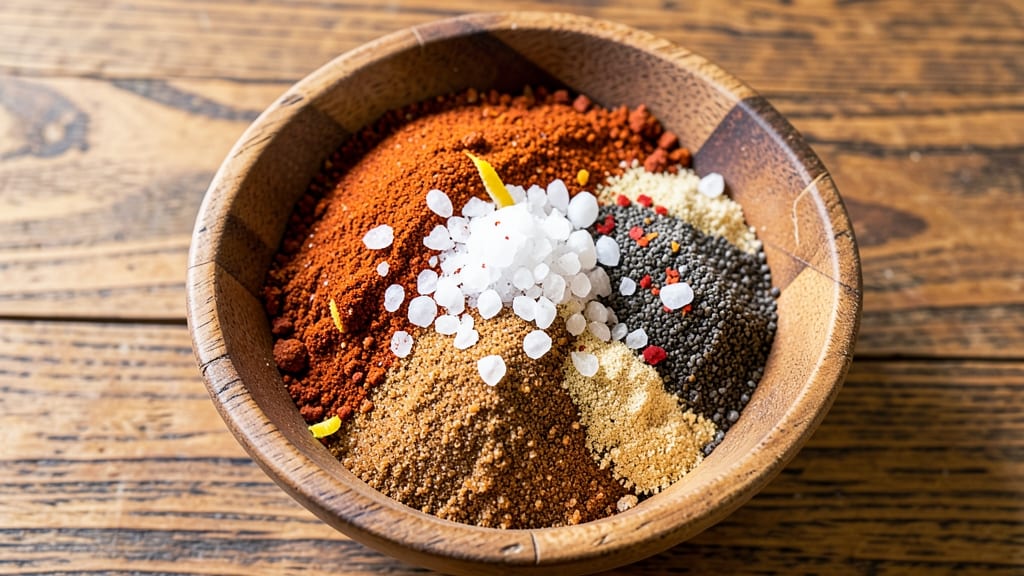
Aaron Franklin's pork rub recipe delivers that iconic Texas BBQ bark—smoky, sweet, and perfectly balanced. This dry spice blend transforms any pork shoulder into tender, flavorful perfection with just a few simple ingredients.
I've been perfecting this exact mix for years, and it never fails to create that coveted dark, crackly crust.
The foundation is classic: brown sugar for caramelization, smoked paprika for depth, and coarse salt to enhance natural flavors. Garlic powder and black pepper add complexity, while cayenne brings just enough heat to make it memorable.
This blend isn't just for competition-level BBQ—it works equally well for home smokers or even your backyard grill.
What makes this rub special is how it develops during cooking, creating that signature bark while keeping the meat juicy inside. The spices meld beautifully with pork's natural fats, creating layers of flavor that build with every bite.
Once you try this, store-bought rubs won't cut it—this is the perfect balance of sweet, smoky, and savory.
Make a big batch and store it in an airtight container for up to 6 months. The ingredients are simple but powerful, and the results speak for themselves. This is the rub that put Franklin's name on the BBQ map—and it belongs in your kitchen too.
Ingredients for aaron franklin pork rub
Nine simple spices that create legendary Texas BBQ bark every time.
| Ingredient | Amount | Notes |
|---|---|---|
| Light Brown Sugar 🍚 | 1 cup | Packed firmly for best results |
| Smoked Paprika 🌶️ | ½ cup | High-quality smoked variety |
| Coarse Kosher Salt 🧂 | ¼ cup | Diamond Crystal preferred |
| Garlic Powder 🧄 | 2 tbsp | Freshly ground preferred |
| Ground Black Pepper 🌶️ | 1 tbsp | Freshly cracked for best flavor |
| Ground Cayenne Pepper 🔥 | 1 tbsp | Adjust for desired heat |
| Ground Mustard 🍯 | 1 tbsp | Yellow or Dijon works |
| Onion Powder 🧅 | 1 tbsp | Freshly ground preferred |
| Ground Cumin 🌿 | 1 tsp | Toasted for deeper flavor |
The brown sugar is non-negotiable—it's what creates that iconic dark bark. Muscle Shoals brand is my go-to, but any light brown sugar works if it's packed firmly. The smoked paprika? Penzeys has the best selection, but the regular grocery store stuff is fine if it's labeled 'smoked.' Coarse salt matters too—Diamond Crystal dissolves slower, creating better bark. If you can't find it, regular kosher salt works in a pinch, but the texture won't be quite the same. For the cayenne, I always grab the Texas Pete brand—it's got that perfect balance of heat and smokiness that ties everything together.
No smoked paprika? Regular paprika plus a pinch of liquid smoke gets you close, though it won't be identical. Running low on garlic powder? Fresh garlic minced and dried works (use half the amount). The mustard adds depth but can be skipped if you're avoiding it—just reduce the cayenne slightly. For a milder version, cut the cayenne to 1/2 tbsp and add an extra 1/2 tbsp of brown sugar. This blend is so versatile it works on chicken, ribs, or even roasted vegetables if you're feeling adventurous. Just remember: the spices need to be dry for the rub to stick properly.
Store this in an airtight container for up to 6 months—it'll stay potent and ready whenever you fire up the smoker. I make a triple batch every time because once you go homemade, you'll never go back to store-bought. The spices blend beautifully with pork's natural fats, creating that signature bark while keeping the meat juicy inside. Trust me, your neighbors will be asking for the secret—just tell them it's all in the rub.
Why You'll Love This Recipe
- Five-Ingredient Magic: Honestly, this rub is that easy—just toss those pantry staples together and call it a day. No measuring cups, no fancy techniques, just a handful of ingredients that somehow turn into something unforgettable.
- Smoky Sweet Obsession: That caramelized brown sugar and smoky paprika combo? It’s like a hug for your taste buds. The garlic powder sneaks in with just enough punch to make every bite feel like a little victory.
- Tailgate or Tuesday: Between us, this rub works on everything—pork chops, ribs, even roasted potatoes. I’ve used it for backyard cookouts and lazy weeknights, and it never lets me down. (Yes, even on a Tuesday night.)
- Leftovers That Don’t Suck: Make a big batch, store it in a jar, and thank me later. The salt and pepper keep it fresh for weeks, and the flavor only gets better as it mellows. My freezer’s full of this stuff—because why buy rub when you can make it for pennies?
Step-by-step instructions for Aaron Franklin's pork rub
Here's how to mix this legendary blend that creates competition-worthy bark every time.
Measure and Combine Dry Ingredients
Start by placing the 1 cup light brown sugar in a large mixing bowl. This is the base that will help create that perfect crust on your pork. Next, add the 0.5 cup smoked paprika—this is what gives the rub its signature deep, smoky flavor that Aaron Franklin makes famous.
Now it's time for the supporting cast: Add the 0.25 cup coarse kosher salt, 2 tablespoons garlic powder, 1 tablespoon ground black pepper, 1 tablespoon ground cayenne pepper, 1 tablespoon ground mustard, 1 tablespoon onion powder, and finally 1 teaspoon ground cumin. I like to use a whisk to break up any clumps in the spices before mixing—this ensures everything blends evenly.
Mix Thoroughly for Even Distribution
Using a sturdy whisk or your hands (I prefer gloves for this step to avoid staining), mix all the ingredients together until you have a uniform blend. You're looking for a color that's deep reddish-brown with flecks of black from the cayenne and cumin. This blend should be free of any white spots from the sugar or paprika—those indicate uneven mixing.
Here's a pro tip: I like to press the rub between my fingers to check the consistency. It should feel gritty but cohesive, almost like wet sand. If it's too dry, add a few drops of water and mix again. The rub should hold together when you make a fist but still crumble easily when you open your hand.
Store Properly for Maximum Flavor
Transfer the finished rub to an airtight container—glass jars with tight-sealing lids work best. I like to use a silicone spatula to scrape out every last bit from the mixing bowl so I don't waste any of this precious blend. Press the rub down firmly in the container to compact it and remove any air pockets.
Store the rub in a cool, dark place like your pantry. It'll keep for up to 6 months, though I usually go through it much faster. If you notice the spices losing their aroma or the sugar getting hard, it's time to make a fresh batch. The key to perfect bark is fresh rub—don't skimp on this step.
Apply Like a Pro Before Cooking
When you're ready to use the rub, take about 2 tablespoons per pound of pork. Pat the meat dry first—this helps the rub stick better and creates that coveted crust. I like to press the rub firmly into the meat, especially on the fatty areas, so it adheres well during cooking.
Let the rubbed pork sit at room temperature for 30 minutes before cooking. This allows the rub to penetrate slightly and the meat to come up to temperature more evenly. Don't skip this step—it makes a huge difference in both flavor and texture. Now you're ready to cook up some seriously delicious pork with that perfect bark.
Pro Tips For Making Aaron Franklin Pork Rub
- CRUSH THE SUGAR FIRST: Brown sugar clumps like a stubborn guest at a party—don’t force it. Pulse it in a food processor for 10 seconds or smash it with a rolling pin until it’s fine and free-flowing. This ensures even coating on the meat, so every bite gets that caramelized, smoky-sweet punch without sticky patches.
- SALT THE MEAT 24 HOURS EARLY: I learned this the hard way—salting pork right before cooking leaves it dry and flavorless. Rub the coarse kosher salt (about 1 teaspoon per pound) onto the meat a full day ahead. Let it sit uncovered in the fridge so a crust forms. The salt breaks down proteins, locks in moisture, and makes the rub stick like glue when you apply it later.
- DON’T SKIP THE GARLIC POWDER TOAST: Garlic powder loses its kick when it sits in a damp rub. Toast it first: heat a dry skillet over medium-low and stir the garlic powder for 30 seconds until it smells intensely aromatic. Cool it completely before mixing—this deepens the flavor and prevents it from turning bitter or clumping when wet.
- APPLY RUB IN TWO THIN LAYERS: Slapping the full rub on at once creates a flavor barrier that keeps the spices from penetrating. Instead, pat the pork dry, then apply half the rub and let it sit for 30 minutes. Flip, add the rest, and refrigerate another 30 minutes. The meat absorbs the spices deeper, and the crust forms more evenly—no burnt edges or bland centers.
Regional styles of these flavors
Texas Pitmaster Style
This is the rub that made Aaron Franklin famous at his Austin restaurant, Franklin Barbecue. The key is balancing that smoked paprika and brown sugar ratio—too much sugar and you lose the smoky depth, too little and the bark won't form properly.
I remember Franklin telling me during a cooking demo that the coarse kosher salt is non-negotiable—it creates the perfect crystal structure for that iconic Texas bark. The mustard might seem odd, but it's what gives the rub that subtle tang that makes it sing when cooked low and slow. 🔥
Carolina Crossroads
In South Carolina, we take this rub and add a ½ teaspoon of ground coriander to the mix—it brightens the flavor profile without overpowering the smoky notes. The heat level gets bumped up slightly too, with an extra ½ teaspoon of cayenne.
This version works particularly well on pulled pork sandwiches, where the vinegar-based sauce cuts through the richness. I developed this variation after competing in the Charleston BBQ Festival and wanted something that honored both traditions. The coriander adds a citrusy note that pairs beautifully with the Carolina mustard-based sauces.
Georgia Smokehouse Twist
Back home in Georgia, we often swap out ½ cup of the smoked paprika for ½ cup of ground chipotle powder>—this gives the rub a deeper, earthier smoke flavor that's perfect for the humid climate.
The brown sugar> gets reduced to ¾ cup> to prevent the rub from becoming too sweet when cooked in Georgia's heat. This version is my go-to for smoked pork ribs, where the chipotle adds a subtle complexity that stands up to the rich, fatty meat.
The heat level stays balanced, but the smokiness becomes more pronounced—just how I like it when I'm cooking for a crowd at my farm. 🌶️
Smoker vs. Grill Adaptations
For smoker-cooked pork, use the full recipe as written—the low and slow cooking brings out the best in all those spices. But if you're grilling, I recommend adding 1 teaspoon of ground fennel seeds> to the mix.
The anise notes in fennel complement the smokiness beautifully and help cut through the fat when grilling over hot coals. For a milder grill version, reduce the cayenne to ½ teaspoon> and add an extra ½ teaspoon of onion powder> to enhance the sweetness.
The key is adjusting the rub to match your cooking method—what works for smoker bark might need tweaking for grill flavor.
Vegetarian-Friendly Version
This rub isn't just for pork—it works amazingly on portobello mushrooms, eggplant, or even cauliflower steaks>.
For a vegetarian adaptation, keep all the spices exactly as written but reduce the brown sugar to ½ cup> and add 1 teaspoon of smoked sea salt> to compensate for the lack of meaty depth.
The spices still create that beautiful bark, and the smoky-sweet flavor profile translates perfectly. I've served this version at vegan BBQ competitions, and it always gets rave reviews.
The key is cooking the vegetables at a slightly higher temperature (400°F) for 20-25 minutes> to develop that crust properly.
Nutrition facts
Frequently asked questions
Can I use regular table salt instead of coarse kosher salt?
While it will work in a pinch, coarse kosher salt is ideal for creating that perfect bark. The larger crystals dissolve slower during cooking, which helps develop the crust properly. If you must substitute, use 2 tablespoons of table salt for every 1 tablespoon of Diamond Crystal kosher salt in the recipe. The texture of your bark might be slightly different, but the flavor will still be excellent.
How do I adjust the heat level in this rub?
For a milder version, reduce the cayenne pepper to ½ teaspoon and add an extra ½ teaspoon of brown sugar to balance the sweetness. For extra heat, increase the cayenne to 1.5 teaspoons and add ½ teaspoon of crushed red pepper flakes. Remember, the spices build flavor during cooking, so start with small adjustments and taste as you go.
Can I make this rub without smoked paprika?
Yes, but the flavor will be noticeably different. Mix ½ cup regular paprika with 1 teaspoon liquid smoke for a close approximation. For an even better substitute, toast ½ cup paprika in a dry skillet over medium heat for 2-3 minutes until fragrant, then cool completely before using. The toasted version adds depth without the smoky intensity of smoked paprika.
How much rub should I use for different cuts of pork?
Use 2 tablespoons of rub per pound for pork shoulder or ribs. For thinner cuts like pork chops, reduce to 1 tablespoon per pound to avoid overpowering the meat. Press the rub firmly into the meat, especially fatty areas, to ensure even coverage. The rub will develop flavor as it cooks, so don't be afraid to use a bit more if you love bold flavors.
Why does my bark sometimes turn out too sweet or not sweet enough?
The sugar-to-paprika ratio is critical. If your bark is too sweet, reduce the brown sugar by 2 tablespoons next time and increase the smoked paprika by 1 tablespoon. For less sweet bark, use ½ cup brown sugar instead of 1 cup and add 1 extra tablespoon of smoked paprika. Cooking temperature also affects sweetness—higher temps caramelize the sugar faster, creating a sweeter crust.