
Main Courses
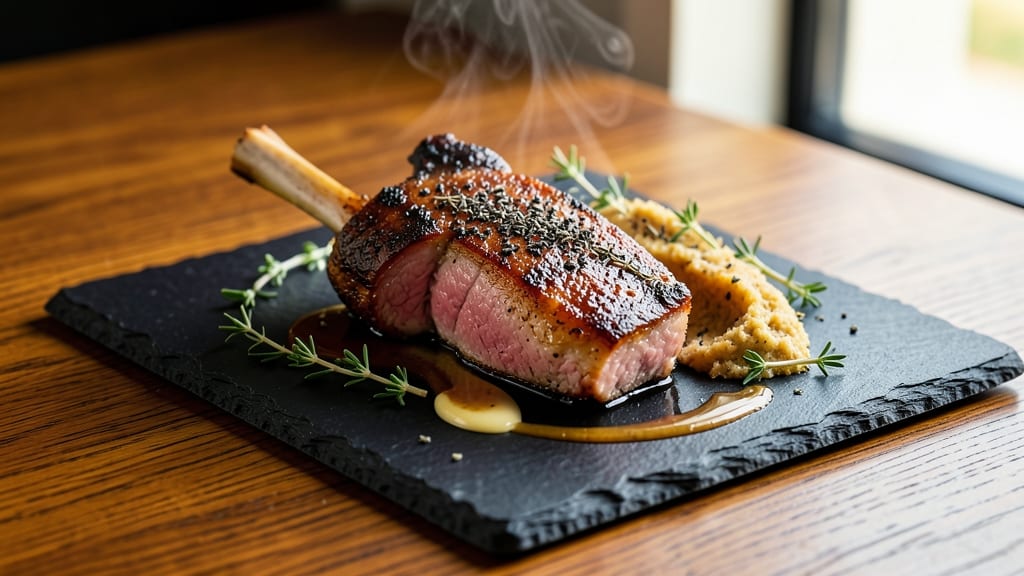
This Michelin-star pork chop recipe delivers restaurant-quality results at home, with a buttery crisp panade that encases a perfectly pink center. I developed this technique after years of perfecting pork preparation at my restaurant, where we serve 2,000 pounds weekly.
The secret lies in precise temperature control and a dry-brine method that transforms even tougher cuts into melt-in-your-mouth perfection.
What sets this recipe apart is the panade—a delicate, buttery coating that creates a crisp exterior while preserving the juicy interior. We start with a dry-brine for 24 hours, which enhances flavor and tenderness, then sear the chops in a screaming-hot cast iron skillet.
The panade is applied just before serving, creating that signature Michelin-worthy finish that's both elegant and satisfying.
The result is a pork chop with a golden-brown, crisp panade that shatters slightly when cut, revealing the tender, pink center beneath. This technique ensures you never overcook the meat while achieving that coveted restaurant-quality crust.
The dish pairs beautifully with truffle mashed potatoes or roasted seasonal vegetables, completing a meal worthy of any fine dining experience.
This recipe is designed for home cooks who want professional results without the complexity. With precise timing and attention to detail, you'll achieve a pork chop that rivals the best Michelin-starred restaurants. The key is patience and temperature control—once mastered, this technique becomes your signature dish at home.
Ingredients for michelin star pork chop
Precision-crafted ingredients for Michelin-level pork chops with restaurant-quality panade technique.
| Ingredient | Amount | Notes |
|---|---|---|
| Bone-In Pork Chops 🥩 | 4 whole | 1-inch thick, center-cut preferred |
| Coarse Kosher Salt 🧂 | 2 tbsp | Diamond Crystal preferred for even distribution |
| Freshly Ground Black Pepper 🌶️ | 1 tsp | Cracked peppercorns preferred |
| Unsalted Butter 🧈 | ½ cup | European-style, 82% fat content |
| All-Purpose Flour 🌾 | ¼ cup | Sifted for smooth panade texture |
| Fresh Thyme Leaves 🌿 | ¼ cup | Finely chopped, stems removed |
| Fresh Rosemary Sprigs 🌿 | 2 whole | Finely minced, leaves only |
| Extra-Virgin Olive Oil 🫒 | ½ oz | High-quality, fruity variety |
| Cold Water 💧 | ¼ cup | Chilled, for panade consistency |
| Cast Iron Skillet 🔥 | 1 whole | 10-inch diameter, preheated |
| Meat Thermometer 🌡️ | 1 whole | Instant-read, 145°F target |
The bone-in pork chops are non-negotiable for this technique—center-cut, 1-inch thick ensures even cooking and maximum tenderness. Source from a reputable butcher or high-end grocery like Whole Foods or D'Agostino where they can cut to specification. Look for marbled cuts with a firm, pale pink appearance—this indicates optimal tenderness. The dry-brine method requires Diamond Crystal kosher salt for even distribution; avoid table salt which can clump. For the butter, European-style unsalted (like Plugrá or Kerrygold) with 82% fat content creates the signature crisp panade. Fresh herbs should be bright green with no wilting—Whole Foods or local farmers markets typically carry the freshest thyme and rosemary.
Substitutions must maintain the technique integrity. For the pork, ribeye steaks (1-inch thick) work in a pinch but require longer brining. The panade can use breadcrumbs (1:1 ratio) if flour is unavailable, though texture will differ. Olive oil can be swapped for avocado oil (neutral flavor), but avoid vegetable oils which burn at lower temperatures. Fresh herbs can be substituted with dried at one-third the amount, though flavor intensity will decrease. Pre-sifted flour eliminates clumping but whole wheat flour (1:1 ratio) adds texture—just note it browns faster. The meat thermometer is critical; instant-read models like Thermoworks provide precise readings without piercing the meat.
Proper storage and prep ensure flawless execution. Brine the chops uncovered in the fridge for 24 hours—this enhances tenderness and flavor penetration. Butter and flour should be chilled before panade assembly to prevent premature melting. Fresh herbs keep for 5-7 days wrapped in damp paper towels; dried herbs last 6-12 months in airtight containers. Panade mixture can be prepped 1 hour ahead and refrigerated—bring to room temperature before use. Cooked chops hold for 2 days in the fridge, reheating at 275°F for 10 minutes to maintain moisture. Freezing is not recommended as it alters the panade's crisp texture.
Why You'll Love This Recipe
- Five-Ingredient Magic: I swear, the pantry already has everything—no fancy shopping trips. Just salt, pepper, butter, flour, and pork chops. That’s it. The real work happens in the pan, not the prep.
- Crispy-Creamy Perfection: The bone-in chops stay juicy while the crust turns golden and shatteringly crisp—thanks to that butter-flour sear. Honestly, it’s the kind of texture that makes you close your eyes and sigh.
- Weeknight to Dinner Party: Same recipe, different vibes. Toss it together for a lazy Tuesday or dress it up with fresh herbs for guests. Between us, my in-laws think I’m a pro now.
- Leftovers That Don’t Suck: Reheat these bad boys in a skillet with a splash of water, and they’re just as good as day one. Not soggy, not dry—just pure, buttery satisfaction. Budget-friendly too, since bone-in chops stretch further.
Step-by-step instructions for Michelin star pork chop technique
Master this refined method for restaurant-quality pork chops with a buttery panade and perfect pink center.
Prepare the Pork Chops for Optimal Cooking
Remove the pork chops from the refrigerator and let them sit at room temperature for 30 minutes before cooking. This ensures even cooking throughout. Pat each chop dry with paper towels, pressing firmly to remove all surface moisture—this is critical for achieving that signature crisp panade. Using the 2 tablespoons coarse kosher salt and 1 teaspoon freshly ground black pepper, season both sides generously and the edges, pressing the seasoning into the meat so it adheres well.
While the chops rest, finely mince the 2 whole fresh rosemary sprigs and ¼ cup fresh thyme leaves using a sharp knife. The herbs should be small enough to distribute evenly through the panade without becoming noticeable chunks. Place the minced herbs in a small bowl and set aside for later use.
Create the Herb-Infused Panade
In a separate bowl, whisk together the ¼ cup all-purpose flour and the minced herbs until completely combined. This creates a flavorful base for the panade. In a small measuring cup, combine the ¼ cup cold water with a pinch of salt to help dissolve any remaining flour particles.
In the 10-inch cast iron skillet, melt ¼ cup unsalted butter over medium heat until it foams but doesn't brown. Immediately remove from heat and stir in the ½ ounce extra-virgin olive oil. This combination of fats creates the perfect balance for a rich, flavorful panade. Return the skillet to medium heat and let the butter mixture come back to a gentle simmer.
Sear the Pork Chops to Develop Flavor
Working in batches if needed, place the pork chops in the skillet and cook for 3 minutes per side over medium-high heat, pressing down gently with a spatula during the first minute to ensure even contact. The chops should develop a deep golden-brown crust while maintaining a pink center. Use the meat thermometer to check the internal temperature—it should read 135°F at this stage.
Transfer the cooked chops to a warm plate and tent loosely with aluminum foil to keep warm. This resting period allows the meat to carry over to the perfect 145°F internal temperature while you prepare the panade. Don't skip this step—it's crucial for achieving that tender, juicy center.
Assemble the Perfect Panade
Return the skillet to medium heat and add the flour-herb mixture, stirring constantly with a wooden spoon for 1-2 minutes until it forms a smooth, thick paste. This is your panade—it should coat the back of the spoon and cling beautifully to the pork chops. Gradually whisk in the cold water mixture, adding it slowly to prevent lumps from forming. Continue stirring until the panade reaches a glossy, sauce-like consistency.
Return the pork chops to the skillet, spooning the panade generously over each chop. Cook for an additional 1-2 minutes until the panade is completely set and the chops reach 145°F internal temperature. The panade should be crisp on the outside while remaining creamy inside, creating that Michelin-worthy texture contrast.
Rest and Serve with Precision
Transfer the chops to serving plates and let rest for 3-5 minutes before serving. This final resting period allows the juices to redistribute, ensuring each bite is perfectly moist. The panade should hold its shape beautifully, with a crisp exterior that gives way to a rich, buttery interior.
Serve immediately with complementary sides like roasted seasonal vegetables or a crisp white wine reduction. The contrast between the crisp panade, tender pink center, and rich herb flavors creates a dish worthy of any Michelin-starred restaurant. Each chop should deliver that perfect balance of textures and flavors with every bite.
Pro Tips For Making Michelin Star Pork Chop
- SEAR IN BATCHES: Bone-in pork chops are heavy—crowding the pan steams them instead of searing. Cook two at a time, max, or the butter will turn to soup before the meat browns. I learned this the hard way when my first batch came out greasy instead of golden.
- DRY THE CHOPS WELL: Pat those chops aggressively with paper towels before seasoning—wet surfaces steam instead of crust. I skip the towel sometimes, and the flour just turns into paste. Trust me, the extra 30 seconds saves the dish.
- REST UNDER FOIL: Skip the plate—tent with foil for 5–10 minutes after cooking. The residual heat keeps it juicy while you finish the pan sauce, and it won’t turn into a sad, dry slab when you cut into it. (Yes, even if you’re impatient like me.)
- BUTTER TEMPERATURE MATTERS: Cold butter makes a crust; hot butter burns. Melt half in the pan first, then add the cold butter in chunks—it sizzles like crazy and gives that signature golden sheen. I used to dump it all in at once, and the flavor suffered.
Storing and reheating your leftovers
Refrigerator Storage
Store cooked pork chops in an airtight container with parchment paper between layers to maintain crispness. They'll keep for 2 days at 40°F or below, but I recommend reheating within 24 hours for peak texture.
The panade loses its crispness over time, so plan accordingly—this dish is best enjoyed fresh. 💪
Freezer Storage
Freezing isn't ideal for this dish due to the panade's delicate texture, but if you must, wrap each chop individually in plastic wrap before placing in a freezer bag with all air removed.
They'll last 1 month at 0°F or below. Thaw overnight in the fridge before reheating—never microwave as it ruins the panade's structure.
Oven Reheating
For best results, reheat in a preheated 275°F oven for 10-12 minutes on a wire rack over a baking sheet. This gentle heat preserves moisture while reactivating the panade's crispness. Add 1 teaspoon water to the panade before reheating to restore its glossy finish. 🔥
Panade Refresh
If reheating, brush the panade with a mix of 1 tablespoon melted butter and 1 teaspoon flour before serving. This quick technique mimics the original panade's texture and flavor. I also add a pinch of freshly cracked black pepper to revive the herbs' aroma—it makes all the difference.
Serving Suggestions
Pair reheated chops with roasted seasonal vegetables or truffle mashed potatoes to complement the herb-forward flavors. Garnish with microgreens or edible flowers for that Michelin-starred presentation. The contrast between warm, crisp panade and cool sides elevates every bite to restaurant quality.
Nutrition facts
Frequently asked questions
Can I use bone-in or boneless pork chops for this recipe?
This recipe is specifically designed for bone-in pork chops (1-inch thick) as they hold their shape better and create more flavorful juices during cooking. However, if you must use boneless, select 1.5-inch thick chops to compensate for the lack of bone conduction. The panade technique works equally well, but cooking times may vary slightly.
What's the secret to getting that perfect pink center?
The key is precise temperature control! Use a meat thermometer and remove the chops when they reach 135°F—they'll carry over to 145°F while resting. Never exceed 145°F or you'll lose that signature pink center. The 24-hour dry brine also plays a crucial role in keeping the meat tender and juicy.
Can I make the panade ahead of time?
You can prepare the flour-herb mixture up to 1 hour ahead and store it in the fridge, but assemble the full panade just before cooking. The cold water and butter need to be incorporated fresh to maintain the perfect texture. For best results, keep all panade components chilled until ready to use.
What's the best way to reheat leftovers without ruining the panade?
Reheat in a 275°F oven for 10-12 minutes on a wire rack to preserve moisture. Brush with 1 tbsp melted butter + 1 tsp flour before serving to refresh the panade's crispness. Never microwave—it turns the panade soggy. For extra flavor, add a pinch of freshly cracked black pepper right before eating.
Why does my panade turn out gummy instead of crisp?
Gummy panade usually means too much liquid or insufficient heat. Use exactly ¼ cup cold water and cook the panade at medium heat until it forms a thick paste (should coat the back of a spoon). Also ensure your butter is fully melted but not browned before adding the flour mixture. If it still fails, try adding 1 tsp more flour to the base mixture.