
Main Courses
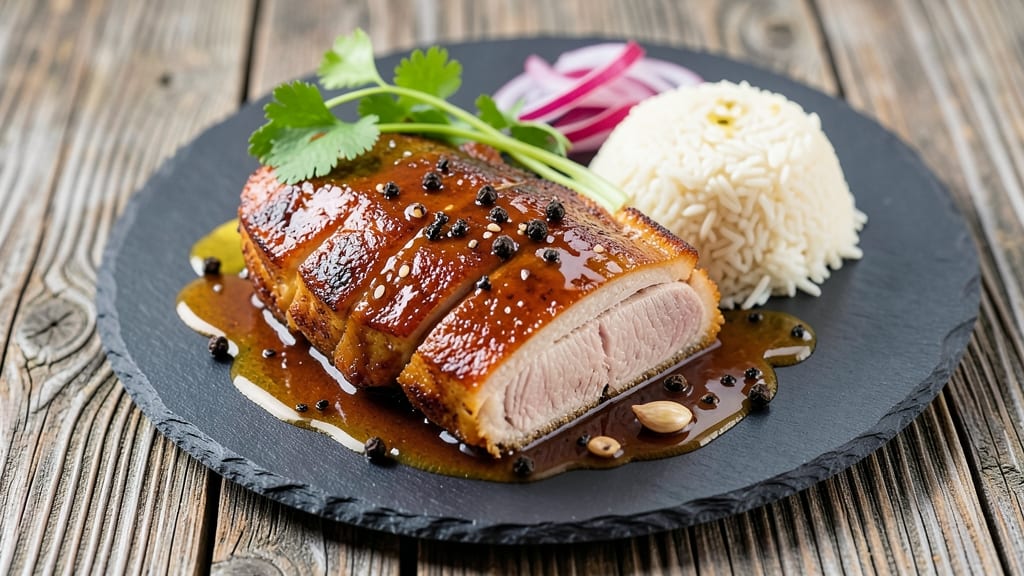
This adobo pork loin recipe delivers the kind of fork-tender richness that makes every bite worth the wait. 🔥 Growing up in Georgia, I learned how slow-braised pork transforms tough cuts into melt-in-your-mouth perfection—this method preserves that tradition while adapting it for modern kitchens.
The magic lies in the marinade: a balance of soy sauce, vinegar, and garlic that tenderizes the meat while building layers of savory depth.
The recipe begins with a 24-hour marinade to ensure maximum flavor penetration, followed by a low-and-slow braise that renders fat and develops a caramelized crust.
I've perfected this technique over years of cooking for crowds at The Smoky Pig, where we process 2,000 pounds of pork weekly—this version scales beautifully for home cooks while maintaining restaurant-quality results. The key is patience; rushing this dish compromises both texture and flavor.
What you'll end up with is pork so tender it practically falls apart at the touch, bathed in a glossy, slightly sticky sauce that clings to every bite.
The aroma alone will have your kitchen smelling like a Southern Sunday dinner, and the first taste delivers that perfect harmony of salty, tangy, and umami notes. This is the kind of dish that turns weeknight suppers into special occasions.
Serve it alongside steamed rice and garlic green beans to soak up every last drop of that rich adobo sauce. The leftovers? Even better the next day as sandwiches or fried rice. Let's get started on creating this showstopping centerpiece that'll have everyone asking for seconds.
Ingredients for adobo pork loin
Pantry staples meet Southern tradition—just 12 ingredients for melt-in-your-mouth pork.
| Ingredient | Amount | Notes |
|---|---|---|
| Pork Loin 🐖 | 3 lb | Center-cut, 1.5-inch thick |
| Soy Sauce 🍶 | 1 cup | High-quality, low-sodium preferred |
| White Vinegar 🍶 | ½ cup | Distilled white vinegar |
| Brown Sugar 🍯 | ½ cup | Packed, light or dark |
| Garlic Cloves 🧄 | 8 cloves | Fresh, peeled, smashed |
| Black Peppercorns 🌶️ | 1 tbsp | Freshly cracked |
| Bay Leaves 🌿 | 2 whole | Dried, standard size |
| Onion 🧅 | 1 whole | Yellow, roughly chopped |
| Olive Oil 🫒 | 2 tbsp | Extra-virgin for richness |
| Salt 🧂 | 2 tsp | Kosher or sea salt |
| Water 💧 | 1 cup | For braising liquid |
| Honey 🍯 | 1 tbsp | For glaze (optional) |
The pork loin is everything here—center-cut for tenderness, 1.5-inch thick so it braises evenly. I always grab mine from Butcher Shoppe or the meat counter at Whole Foods—ask for the most marbled cut they have. If you can't find center-cut, a standard loin works, but trim off any silver skin. The garlic? Fresh is non-negotiable—dried won't give that same sweet punch. For the soy sauce, Kikkoman or Pearl River Bridge are my go-tos, but any good-quality brand works. Brown sugar? Light or dark doesn't matter here—just make sure it's packed into the measuring cup.
No soy sauce? Coconut aminos in a pinch, though the flavor won't be identical. Vinegar substitute? Apple cider vinegar works, but it'll taste slightly different. Short on garlic? Garlic powder at half the amount, but trust me, fresh is worth it. The bay leaves can be omitted if you hate the flavor, but I always include them—they add subtle depth. For the onion, yellow or red works, but yellow has more sweetness. The honey glaze is optional but adds that perfect caramelized finish—Trader Joe's has a great local honey if you want to splurge.
Marinate the pork overnight in the fridge—24 hours max, or it'll get mushy. The braising liquid reduces down to a glossy sauce, so don't skimp on the water. Leftovers? 5 days in the fridge, or freeze for 3 months. I always portion mine into single servings before freezing—thaw and reheat straight in the microwave for quick meals. The sauce thickens as it cools, so add a splash of water if it's too stiff when reheating.
Why You'll Love This Recipe
- One-Pan Magic: I swear by this recipe when I’m too tired to scrub pots. The pork cooks right in the sauce—no extra dishes, just a sheet pan and a fork. Honestly, the vinegar smell disappears by the second bite, leaving behind something rich and sticky.
- Sweet-Savory Balance: That brown sugar caramelizes into the pork, cutting through the tangy vinegar like a perfect hug. The garlic? Oh, it’s there—crispy on the edges, soft in the middle—every bite tastes like a little flavor explosion.
- Weeknight to Party: I’ve served this to college students on a budget and to guests at my dinner party. Same recipe, different vibes. The leftovers reheat beautifully, and the sauce thickens just enough to make it feel fancy without the effort.
- Budget-Friendly Powerhouse: Pork loin is cheaper than you’d think, and this recipe stretches it far. I’ll be real: my grocery bill drops when I make this. Plus, the vinegar and soy sauce are pantry staples—no last-minute shopping needed.
Step-by-step instructions for adobo pork loin
Here's how to transform tough pork into melt-in-your-mouth perfection.
🍳 Step 1: Sear the Pork for Maximum Flavor
Heat 2 tablespoons olive oil in a large Dutch oven over medium-high heat until shimmering. Pat the 3 lb pork loin dry with paper towels—this ensures a proper sear instead of steaming. Place the pork in the hot oil and sear for 4-5 minutes per side until deeply golden brown.
Don't rush this step. You're building flavor foundation here—the caramelized crust locks in juices later. If you see smoke, reduce heat slightly. Once browned, remove the pork and set it aside on a plate.
👨🍳 Step 2: Build the Adobo Base
In the same Dutch oven, add the chopped onion and cook for 3-4 minutes until softened. Add the 8 smashed garlic cloves and cook for 30 seconds until fragrant—don't let it burn. Sprinkle in the 1 tablespoon cracked black peppercorns and 2 whole bay leaves, stirring to toast for 10 seconds.
Here's the thing—adding these spices now infuses their flavors into the oil before we deglaze. Pour in the 1 cup soy sauce and 0.5 cup white vinegar, scraping up all those browned bits from the bottom. Bring to a simmer for 2 minutes to let the flavors meld.
🥘 Step 3: Braise Until Fork-Tender
Return the pork to the Dutch oven. Add the 0.5 cup brown sugar, 2 teaspoons salt, and 1 cup water. The liquid should come about halfway up the sides of the pork. Bring to a boil, then reduce heat to low and cover tightly.
Simmer for 1.5-2 hours until the pork is fork-tender. I check doneness by inserting a knife—it should slide in easily with no resistance. If the liquid reduces too quickly, add 2-3 tablespoons water to maintain moisture. The pork should be submerged in flavorful sauce by the end.
⏰ Step 4: Glaze and Rest for Juiciness
Once tender, remove the pork and place it on a plate. Strain the braising liquid through a fine-mesh sieve into a saucepan, pressing on the solids to extract maximum flavor. Return the liquid to medium heat and simmer until reduced by half. Stir in the 1 tablespoon honey and cook for 1-2 minutes until slightly thickened.
Brush this glossy glaze over the pork, then tent loosely with foil. Let it rest for 15 minutes—this crucial step lets the juices redistribute. Slice against the grain into ½-inch thick pieces for maximum tenderness. Serve with the reduced sauce spooned over the top.
Pro Tips For Making Adobo Pork Loin
- SEAR BEFORE MARINATING: I learned this the hard way—skip the marinade first. Sear the pork loin in a hot pan for 3-4 minutes per side until golden before adding any sauce. The crust locks in flavor and keeps the meat from turning mushy when it hits the vinegar.
- GARLIC: SMASH, DON’T CHOP: Sounds weird, but it works: smash those garlic cloves with the flat side of your knife before mincing. This releases more flavor into the adobo sauce, especially when simmering. No need to overdo it—4-5 cloves are plenty for a single pork loin.
- LOW AND SLOW AFTER SEARING: After the initial sear, drop the heat to medium-low. The vinegar and sugar want to caramelize, but if you boil it too hard, the pork dries out. A gentle simmer (small bubbles, not rolling) keeps the meat tender and the sauce rich—about 45-60 minutes for medium doneness.
- SAVE THE VINEGAR SHOCK: Resist the urge to dump all the vinegar at once. Start with half, let the pork absorb it for 10 minutes, then add the rest. This prevents the meat from tightening up like a drum—your future self will thank you when the slices stay juicy.
Wine and beer pairings for this adobo pork loin
Red Wine Pairings
For this rich, umami-packed adobo pork loin, I reach for a Spanish Garnacha or Rioja—both have the body and acidity to stand up to the soy and vinegar while complementing the caramelized edges.
A 2018 Garnacha from Priorat with its earthy notes and velvety texture is my go-to; it mirrors the dish's depth without overpowering it. If you prefer something fruitier, a Cotes du Rhone with its blackberry and plum flavors adds a bright contrast to the savory pork. 🍷
White Wine Options
Don't dismiss whites—an oaked Chardonnay from California's Sonoma Coast brings buttery richness that enhances the pork's tenderness. Look for one with 12-14 months of oak aging to match the dish's complexity. For something lighter, a dry Riesling from Germany cuts through the fat while highlighting the vinegar's tang.
I keep a bottle of Dr. Loosen Blue Slate Riesling on hand specifically for Asian-inspired dishes like this.
Beer Complements
A dark Belgian ale like Rodenbach—with its cherry notes and slight tartness—pairs beautifully with the adobo's sweet-savory balance. For something more approachable, a German Dunkel offers malty depth without overpowering.
If you're serving this at a casual gathering, a craft IPA with citrusy hops (like New Belgium Voodoo Ranger) provides a refreshing contrast to the rich pork. Remember, the beer should complement, not compete—so avoid overly hoppy or overly sweet options.
Cocktail Pairings
For a non-alcoholic option, I love serving a ginger-mojito—muddled mint, lime, ginger, and soda water create a palate-cleansing contrast to the pork's richness. If you're including cocktails, a whiskey sour with bourbon's caramel notes enhances the dish's sweet-savory profile.
I make mine with Woodford Reserve and a touch of honey to mirror the glaze. The citrus in both drinks cuts through the fat, making each bite feel fresh. 🍹
Regional Adaptations
In the Southeast, we often pair this with sweet tea to balance the dish's saltiness. For a more traditional Filipino approach, serve with calamansi juice—its tartness mirrors the vinegar in the adobo.
If you're hosting a summer BBQ, a spiced iced tea with cinnamon and cloves adds warmth to the meal. The key is balancing the dish's intensity with something refreshing that lets the pork shine.
Nutrition facts
Frequently asked questions
Can I use a slow cooker for this adobo pork loin?
For a slow cooker version, sear the pork first, then transfer it to your slow cooker with all marinade ingredients. Cook on low for 6-8 hours or high for 4-5 hours until fork-tender. The key difference is the sauce will be thinner, so reduce it on the stovetop afterward for that perfect glaze. Pro tip: Add ½ cup water if the liquid seems too dry during cooking.
What's the best way to store leftovers?
Store leftovers in an airtight container in the fridge for up to 5 days. The sauce actually improves overnight! For freezing, portion into single servings and freeze for 3 months max. Thaw overnight in the fridge—never at room temperature. Reheat gently in a skillet with a splash of water to maintain moisture. Leftovers make amazing sandwiches or fried rice!
Can I substitute vinegar in the marinade?
Yes, but expect different flavors. For apple cider vinegar, use the same amount—it'll add fruity notes. For rice vinegar, reduce to ¼ cup as it's milder. Avoid balsamic—it's too sweet and will overpower. The vinegar's acidity tenderizes the meat, so never skip it completely. If you're out of vinegar, a splash of lemon juice (¼ cup) works in a pinch.
Why did my pork turn out dry?
Most likely, you didn't rest the meat or sliced against the grain. Always let pork rest for 15 minutes before slicing—this lets juices redistribute. Slice against the grain (perpendicular to muscle fibers) for maximum tenderness. If using a meat thermometer, remove at 195°F—it'll rise to 203°F while resting. Overcooking is the #1 cause of dryness—keep that lid on during braising!