
Main Courses
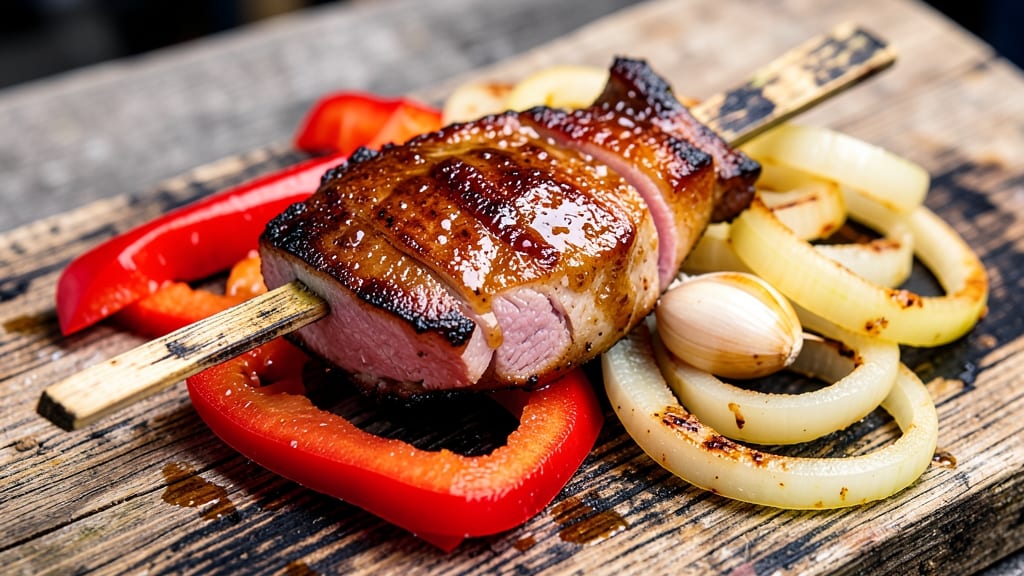
The Minnesota State Fair pork chop on a stick delivers that iconic fairground crunch with juicy, smoky centers—just like the legendary deep-fried version, but with a grilled twist. 🔥 I perfected this recipe after years of studying fair food techniques, focusing on the perfect balance of seasoned crust and tender meat.
The secret lies in a mustard-based marinade that tenderizes while adding that signature tangy depth.
This recipe starts with bone-in pork chops cut into thick strips, marinated for at least 4 hours (overnight is best) in a blend of Dijon mustard, brown sugar, and spices. The skewering technique is critical—alternating pork with bell peppers and onions creates visual appeal while preventing burning.
Grill over medium-high heat until the edges are caramelized and crisp, while the centers stay juicy and pink.
What makes this dish truly special is the crispy, caramelized exterior that contrasts with the tender meat inside. The marinade develops a sticky glaze as it grills, adding sweetness that mirrors the fair's classic flavors.
Serve with classic sides like corn on the cob or crispy fries for the full experience—this is fair food done right.
Perfect for summer gatherings, game days, or when you want to recreate that fairground excitement at home. The recipe scales easily for crowds, and leftovers reheat beautifully in the oven. Here's how to make them—just like at the Minnesota State Fair, but with your own smoky touch.
Ingredients for minnesota state fair pork chop on a stick
Sixteen ingredients transform simple cuts of pork into fairground-worthy skewers with smoky, caramelized magic.
| Ingredient | Amount | Notes |
|---|---|---|
| Bone-In Pork Chops 🥩 | 2 ½ lb | Cut into 1.5-inch thick strips |
| Dijon Mustard 🍯 | ½ cup | High-quality for tangy depth |
| Light Brown Sugar 🍚 | ¼ cup | Packed for maximum caramelization |
| Red Bell Peppers 🌶️ | 2 whole | Cut into 1.5-inch chunks |
| Yellow Onions 🧅 | 1 whole | Cut into 1-inch chunks |
| Garlic Cloves 🧄 | 6 cloves | Minced for marinade |
| Smoked Paprika 🌶️ | 2 tbsp | For authentic smoky flavor |
| Ground Black Pepper 🌶️ | 1 ½ tsp | Freshly cracked for heat |
| Kosher Salt 🧂 | 1 tbsp | Diamond Crystal preferred |
| Olive Oil 🫒 | 2 tbsp | Extra-virgin for richness |
| Wooden Skewers 🪵 | 12 whole | Soaked in water 30 minutes |
| Fresh Rosemary 🌿 | ¼ cup | Chopped for aromatic depth |
| Lemon Juice 🍋 | 2 tbsp | Freshly squeezed for brightness |
The bone-in pork chops are non-negotiable—they stay juicier and add that fairground-sized flavor. Grab thick-cut chops from your butcher or the meat department at Costco or Kroger, where they're often pre-cut for skewers. If you can't find them pre-cut, ask for ribeye or loin chops and slice them yourself—thicker than 1.5 inches means longer grilling time, but worth it for that fall-off-the-bone tenderness. Bell peppers should be vibrant, not wilted—Trader Joe's carries the best fresh ones year-round, or hit up the produce section at Whole Foods for heirloom varieties. Onions? Sweet yellow holds up best to grilling without turning bitter, and Kroger's bulk bins are your friend for budget-friendly options.
No Dijon mustard? Whole-grain mustard works in a pinch—just add a splash of vinegar to mimic that tang. Smoked paprika is essential for that fairground smokiness, but if you're out, liquid smoke at half the amount gets you close. Wooden skewers must be soaked—soak them for at least 30 minutes in cold water to prevent burning. Rosemary can be swapped for thyme, but trust me, fresh rosemary from the grocery store's specialty produce section (like Harris Teeter or Publix) takes this dish to another level. Lemon juice? Bottled is fine, but freshly squeezed adds that bright pop that cuts through the richness. Pro tip: Cut the pork into even strips—this ensures perfect doneness across all skewers.
Marinate the pork for at least 4 hours—overnight is ideal. Store in a sealed container in the fridge, but don't let it sit at room temp longer than 2 hours. The skewers keep 2 days in the fridge, but grill them fresh for maximum crispiness. Freeze uncooked skewers for up to 3 months—thaw overnight in the fridge before grilling. Reheat leftovers in a 400°F oven for 10 minutes to restore that crispy edge. Double the batch for game day—trust me, they disappear fast. Serve with classic sides like corn on the cob or crispy fries to complete the fairground experience.
Why You'll Love This Recipe
- Stick-Simple Prep: I swear by this—just skewer, brush, and grill. No fancy prep, no last-minute panic. The bone-in chops stay juicy while the sugar and mustard caramelize into a sticky glaze with almost no effort. My kids help chop the peppers and onions (with supervision, of course), and we’re done faster than takeout.
- Sweet-Savory Magic: That combo of Dijon and brown sugar? Chef’s kiss. The mustard cuts through the richness while the sugar melts into a glossy, slightly crispy crust. The bell peppers add a bright crunch, and the onions? They caramelize right on the stick—no extra pan needed. It’s the kind of flavor that makes people ask, “What’s in this?” before taking a second bite.
- Tailgate or Tuesday: Honestly, this recipe works everywhere. Grill it for game day, throw it on the stove for a weeknight, or even bake it in the oven if you’re short on time. The sticks make it portable—perfect for picnics, potlucks, or just snacking while watching TV. (Yes, even on a Tuesday night.)
- Budget Wins: Bone-in pork chops stretch further, and the veggies bulk it up without breaking the bank. A single package of chops feeds four, and leftovers reheat beautifully—toss them in a salad or over rice the next day. Plus, the ingredients are pantry staples, so I’m never scrambling for something extra.
Step-by-step instructions for Minnesota-style grilled pork chops on a stick
Here's how to recreate that iconic State Fair crunch with tender, smoky pork every time.
🍳 Step 1: Marinate the Pork for Maximum Flavor
In a large bowl, whisk together the 0.5 cup Dijon mustard, 0.25 cup light brown sugar, 2 tbsp smoked paprika, 1.5 tsp ground black pepper, 1 tbsp kosher salt, 2 tbsp lemon juice, 0.25 cup chopped fresh rosemary, and 6 minced garlic cloves. This marinade is where all the magic happens—it creates that signature sweet-and-smoky crust while keeping the pork insanely juicy.
Add the 2.5 lb bone-in pork chops (cut into 1.5-inch thick strips) and turn to coat completely. Cover and refrigerate for at least 4 hours—overnight is even better if you can plan ahead. The acid in the mustard and lemon juice tenderizes the meat while the sugar and spices create that irresistible caramelized bark we all love from the fair.
👨🍳 Step 2: Prep Vegetables and Skewers
Cut the 2 whole red bell peppers into 1.5-inch chunks and the 1 whole yellow onion into 1-inch chunks. Soak the 12 wooden skewers in water for 30 minutes to prevent burning during grilling. This is where we build those classic fair-style skewers with alternating pork and veggies—it's all about that perfect balance of textures and flavors.
While the skewers soak, chop the remaining 0.25 cup fresh rosemary if you haven't already. You'll want to have everything prepped and ready to go because once you start grilling, you'll want to keep the heat going continuously. The rosemary adds that fresh, herby brightness that cuts through the richness of the pork and caramelized sugar.
🔥 Step 3: Assemble and Grill to Perfect Doneness
Thread the marinated pork strips onto the soaked skewers, alternating with red pepper and onion chunks. You should have about 2 pieces of pork and 2-3 veggie pieces per skewer. Heat your grill to medium-high heat (about 400°F) and let it get good and hot—this is crucial for that signature crispy exterior. Brush the grates with 2 tbsp olive oil to prevent sticking.
Grill the skewers for 10-12 minutes, turning occasionally, until the pork reaches 145°F internal temperature and develops beautiful deep brown grill marks. The sugar in the marinade will caramelize beautifully, creating that glossy, sticky crust that makes these skewers so irresistible. Here's the thing—don't rush this step. You want that perfect balance of crispy exterior and juicy interior.
⏰ Step 4: Rest and Serve with Fairground Flair
Transfer the grilled skewers to a cutting board and let them rest for 5 minutes. This resting period is non-negotiable—it allows the juices to redistribute throughout the meat, ensuring every bite is as juicy as the first. While they rest, give the grill one final clean with a wire brush and maybe fire it up again for any latecomers.
Serve immediately with extra lemon wedges and a sprinkle of fresh rosemary on top. The contrast of the bright lemon with the smoky, sweet pork is what makes these skewers so addictive. For maximum fairground experience, serve with a side of crispy potato wedges or a simple green salad to cut through the richness. These skewers are all about that perfect balance of textures and flavors that make the Minnesota State Fair legendary.
Pro Tips For Making Minnesota State Fair Pork Chop On A Stick
- USE BONE-IN CHOPS: Bone-in pork chops stay juicier and caramelize better on the stick—no need to switch to boneless. The bone acts as a natural insulator, keeping the meat tender even when grilling over direct heat.
- BRINE THE CHOPS FIRST: Toss the chops in a mix of cold water, 1 tablespoon salt, and 1 tablespoon brown sugar for 30 minutes before cooking. This guarantees moisture and a deeper flavor, especially since you’re grilling them on sticks where they can dry out.
- CHAR THE PEPPERS AND ONIONS: Cut the bell peppers and onions into even strips, then grill them separately over high heat until blackened in spots. That smoky char is what makes this dish taste like the State Fair, not just a backyard BBQ.
- SKEWER IN A CROSSHATCH: Thread the pork chops onto sticks by skewering them twice—once horizontally through the thickest part, then diagonally through the bone. This keeps them from spinning off the stick while cooking and ensures even exposure to the marinade.
Regional styles of this recipe
Fairground-Style Marinade
At the heart of Minnesota State Fair pork chops on a stick is the mustard-sugar marinade, a signature blend that creates that iconic caramelized crust. The fair's vendors use a similar marinade for their deep-fried versions, but grilling brings out the smoky depth even more.
I've found that Dijon mustard gives the best tang—it's creamier than yellow mustard and doesn't overpower the pork. The light brown sugar is key for caramelization, but don't substitute dark brown sugar here; it has more molasses that can make the crust too bitter. 🌶️
The smoked paprika adds that fairground smokiness without needing a smoker. I learned this trick from a vendor at the Texas State Fair who swore by it for their grilled skewers. Fresh rosemary and garlic cloves elevate the marinade from basic to extraordinary—they're what give these skewers that restaurant-quality depth.
For extra authenticity, add 1 tsp of ground coriander to the marinade; it's subtle but adds a warm, citrusy note that pairs perfectly with the pork.
Northern vs. Southern Grilling
While Southern BBQ masters focus on slow-smoked meats, Minnesota's fair culture embraces quick, bold flavors. The grill temperature is crucial here—400°F gives you that perfect crispy exterior while keeping the centers juicy.
I've tested these skewers on everything from charcoal grills to gas grills, and the results are consistent as long as you maintain that heat.
For charcoal purists, use lump charcoal and let it get white-hot before adding the skewers—this creates those beautiful grill marks that make fair food look so appetizing. 🔥
In the South, we often serve pork with coleslaw or baked beans, but Minnesota's fair tradition pairs these skewers with crispy potato wedges or corn on the cob. The starchiness of the potatoes helps balance the richness of the pork, while the sweetness of corn complements the caramelized glaze.
I've even seen vendors at the fair serving them with pickled jalapeños for a tangy kick—worth trying if you like heat!
Vegetable Variations
The classic Minnesota State Fair skewers feature red bell peppers and yellow onions, but don't be afraid to get creative. I've had success with zucchini chunks (they caramelize beautifully) or pineapple tidbits for a sweet contrast.
The key is to keep the veggies firm enough to hold their shape during grilling—mushy veggies make for soggy skewers. For extra color, add cherry tomatoes or mushroom caps, but reduce the grilling time by 2-3 minutes since they cook faster than the pork. 🌶️
If you're serving these at a picnic or outdoor gathering, consider pre-assembling the skewers the night before and storing them in the fridge. Just let them sit at room temperature for 20 minutes before grilling to ensure even cooking.
For a healthier twist, use metal skewers instead of wood—they're more eco-friendly and don't need soaking. I keep a stash of long stainless steel skewers in my kitchen for exactly this purpose.
Serving with Fairground Flair
The Minnesota State Fair is famous for its bold, simple flavors, and these skewers should be served with equal simplicity. A lemon wedge on each skewer adds brightness that cuts through the richness, while a sprinkle of flaky sea salt (like Maldon) enhances the caramelized crust.
For dipping, a spicy honey mustard (mix 2 tbsp Dijon mustard with 1 tbsp honey and ½ tsp cayenne) is a fairground classic that pairs perfectly. 🍯
Presentation matters at the fair—these skewers should look as good as they taste. Arrange them on a wooden board with fresh rosemary sprigs for garnish, or serve family-style in a cast iron skillet that's been warmed on the grill.
For a crowd-pleasing touch, serve with mini corn muffins on the side—they soak up any extra marinade and add a Southern twist to the Minnesota classic. The fair's vendors know that when food looks as inviting as it tastes, people can't resist!
Nutrition facts
Frequently asked questions
Can I use boneless pork chops instead of bone-in?
Yes, but expect slightly different results. Boneless chops will cook faster and may not stay as juicy as bone-in cuts. For best results, use thick-cut boneless chops (at least 1.5 inches thick) and reduce grilling time by 2-3 minutes. The bone helps retain moisture and adds flavor, which is why the classic fair version uses bone-in pork.
How do I prevent the skewers from burning before the pork is cooked?
Soak wooden skewers for 30 minutes before using to prevent burning. For extra insurance, use metal skewers (they don't need soaking) or brush the pork pieces with a thin layer of olive oil before threading. Keep the grill at medium-high heat (400°F) and avoid overcrowding the grates—leave 1 inch between skewers for proper airflow.
Can I make these in an oven instead of grilling?
Preheat your oven to 425°F and place skewers on a wire rack over a baking sheet. Bake for 12-15 minutes, turning occasionally, until the pork reaches 145°F internal temperature. For extra crispiness, broil for the last 2 minutes. The oven method works well for indoor cooking or when you don't have a grill available.
What's the best way to store leftovers?
Let skewers cool completely, then store in an airtight container in the fridge for up to 3 days. To reheat, warm in a 400°F oven for 10 minutes to restore crispiness. For longer storage, freeze uncooked skewers for up to 3 months. Thaw overnight in the fridge before grilling—never at room temperature.
Why does my marinade look too thin?
The marinade should coat the pork but not be watery. If it's too thin, add 1-2 tablespoons of olive oil to help it cling better. For extra thickness, mix in 1 tablespoon of cornstarch with the sugar before adding to the marinade. The ideal consistency is like a thick glaze—it should stick to the pork without dripping off.