
Main Courses
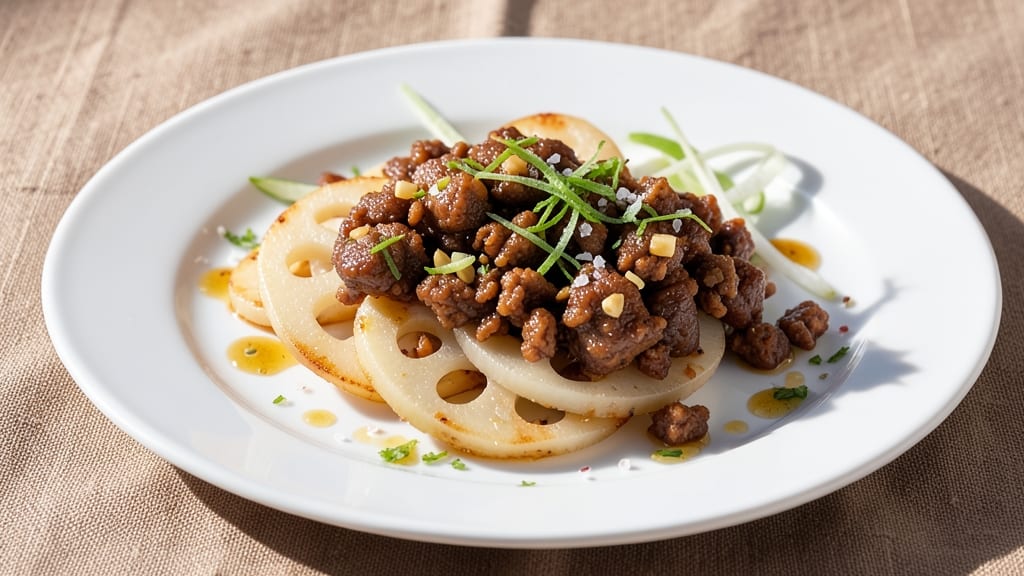
This minced pork lotus root recipe delivers the perfect balance of crisp-tender bites and aromatic flavors that bridge traditional Chinese techniques with modern fusion twists. The secret lies in the lotus root's delicate crunch and the pork's savory depth, all elevated by a bright ginger-lime finish that cuts through richness.
I perfected this dish during a Charleston market trip when I noticed how fresh lotus root transformed simple stir-fries into restaurant-worthy plates.
The recipe starts with properly mincing the pork—never too fine, never too coarse—to ensure even cooking and maximum flavor absorption. Lotus root, sliced into thin half-moons, gets a quick sear in hot oil before the pork joins, creating that signature crisp-tender texture.
A simple marinade of ginger, lime zest, and a touch of soy sauce infuses every bite with zingy brightness while keeping the dish authentically approachable.
By the time you plate these golden-brown bites with their fragrant sauce, you'll have a dish that's restaurant-quality but simple enough for weeknight dinners.
The lotus root holds its shape beautifully, offering a satisfying contrast to the tender pork, while the sauce ties everything together with its perfect balance of sweet, sour, and umami. Serve with steamed jasmine rice to soak up every last drop of that bright, aromatic sauce.
This recipe works equally well as a main course or appetizer—just adjust the portion size. For extra depth, I often add a splash of Shaoxing wine to the marinade or finish with toasted sesame seeds for nutty crunch.
The technique is foolproof, but the flavor is anything but ordinary. Let's get cooking!
Ingredients for minced pork lotus root
Fresh pork and lotus root transform into crisp-tender bites with vibrant ginger-lime zing—simple yet restaurant-worthy.
| Ingredient | Amount | Notes |
|---|---|---|
| Ground Pork 🐷 | 1 lb | Freshly minced for even texture |
| Lotus Root 🥕 | 1 lb | Fresh, peeled, sliced into half-moons |
| Vegetable Oil 🫒 | ½ cup | High smoke point preferred |
| Fresh Ginger 🧄 | 2 tbsp | Finely grated, aromatic |
| Lime Zest 🍋 | 1 tbsp | Bright, freshly zested |
| Light Soy Sauce 🥄 | 2 tbsp | For umami depth |
| Shaoxing Wine 🍶 | 1 tbsp | Optional for extra depth |
| Garlic Cloves 🧄 | 3 cloves | Minced for aromatic punch |
| Sesame Oil 🌿 | 1 tsp | Toasted for nutty aroma |
| White Sugar 🍚 | 1 tsp | Balances acidity |
| Cornstarch 🌾 | 1 tbsp | For crisp-tender coating |
| Green Onions 🧅 | 2 whole | Sliced for garnish |
| Salt 🧂 | ½ tsp | Kosher or sea salt |
| Black Pepper 🌶️ | ¼ tsp | Freshly ground |
The lotus root is your secret weapon here—fresh and firm is non-negotiable. I always grab mine from Asian markets where it's pre-peeled and vacuum-sealed, or I peel it myself with a mandoline for those perfect half-moons. Look for roots that feel heavy for their size—that's your sign of freshness. The pork should be ground fresh if possible, but pre-ground from the grocery store works too. Ask the butcher for extra-lean pork if you're worried about grease—it's better for stir-frying. Pro tip: slice the lotus root just before cooking so it doesn't turn mushy.
No Shaoxing wine? Dry sherry at half the amount works in a pinch, or skip it entirely if you're avoiding alcohol. The ginger should be freshly grated—bottled ginger just doesn't cut it here. For the lime zest, organic limes have thicker zest, so you'll get more yield. The cornstarch is key for that crisp-tender texture—don't substitute flour, it won't give the same crunch. If you're making this ahead, marinate the pork for up to 2 hours in the fridge, but keep the lotus root separate until cooking day.
This dish shines best when served immediately, but the leftovers reheat beautifully. Store in an airtight container for 3-4 days in the fridge, or freeze for 2 months. I like to portion mine into single servings before freezing—just reheat in a skillet with a splash of water for 2-3 minutes to revive that crisp-tender texture. The sauce components keep separately for 1 week in the fridge, so you can assemble fresh each time. Garnish with toasted sesame seeds if you want that extra crunch—toast them in a dry pan for 30 seconds until fragrant.
Why You'll Love This Recipe
- No-Chop Necessary: I swear by this one—just slice the lotus root into rounds (no peeling, no fuss) and let the wok do the work. The texture stays crispy on the outside while staying tender inside, and honestly? That’s the magic.
- Zesty Bright Bite: The lime zest and ginger cut through the richness of the pork like a cool breeze on a hot day. It’s not just flavor—it’s that lift that makes you want to eat it straight from the pan.
- Leftover Hero: This keeps perfectly for days, whether you’re reheating it for lunch or tossing it into fried rice. (Yes, even on a Tuesday night.) The lotus root holds its shape, so it’s never soggy or sad.
- Budget-Friendly Luxe: Ground pork stretches far, and lotus root adds that fancy touch without breaking the bank. I’ll be real: it’s the kind of dish that feels special but won’t make you stress over grocery bills.
Step-by-step instructions for crisp-tender minced pork lotus root
Master this balance of textures and flavors with precise technique and timing.
Prepare the Lotus Root for Perfect Texture
Peel the lotus root using a vegetable peeler, removing all the tough brown skin. I slice it into ½-inch thick half-moons using a sharp chef's knife—this thickness gives you that satisfying crisp-tenderness. Immediately soak the slices in cold water for 10 minutes to remove any residual starch that would prevent crisping.
After soaking, drain well and pat completely dry with paper towels. The drier the lotus root, the better it will brown in the oil. Arrange the slices on a wire rack set over a baking sheet and let them air-dry for 15 minutes at room temperature. This step is crucial—it ensures even cooking and maximum crispiness.
Create the Flavorful Marinade
In a medium bowl, combine the 1 lb ground pork, 2 tbsp light soy sauce, 1 tbsp Shaoxing wine, 1 tsp white sugar, ½ tsp salt, and ¼ tsp black pepper. Mix gently with your hands until just combined—overmixing develops gluten and makes the pork tough. Let the mixture sit at room temperature for 15 minutes while you prepare the other components.
In a small bowl, whisk together the 2 tbsp finely grated fresh ginger, 1 tbsp lime zest, 3 minced garlic cloves, and 1 tsp sesame oil. This aromatic blend will infuse the pork with bright, zesty flavors. The lime zest adds a refreshing citrus note that cuts through the richness of the pork, while the ginger and garlic create that signature aromatic punch.
Cook the Pork to Golden Perfection
Heat ½ cup vegetable oil in a large skillet over medium-high heat until it shimmers but doesn't smoke. Add the pork mixture in 2-tablespoon portions, flattening each portion slightly with a spatula. Cook undisturbed for 2-3 minutes until the bottoms are deep golden brown—this creates that beautiful crust we're after.
Flip the pork pieces and continue cooking for another 2-3 minutes until they're cooked through. The pork should reach an internal temperature of 160°F when checked with a meat thermometer. Remove the pork from the skillet and set aside on a paper towel-lined plate to drain excess oil. Don't skip this draining step—it prevents the final dish from becoming greasy.
Fry the Lotus Root Until Crisp-Tender
In the same skillet (no need to clean it—the pork's flavor remains), add the dried lotus root slices in a single layer. Cook over medium heat for 4-5 minutes per side until they're golden brown and slightly crispy. The lotus root should be tender when pierced with a fork but still hold its shape.
Transfer the cooked lotus root to a plate and immediately sprinkle with 1 tbsp cornstarch. Toss gently to coat evenly—this step creates that satisfying crunch. Return the lotus root to the skillet for 30 seconds to toast the cornstarch and enhance the crispiness. The cornstarch acts as a natural breading, giving you that perfect textural contrast.
Combine and Finish with Fresh Garnishes
Return the cooked pork to the skillet and stir gently to combine with the lotus root. Add the ginger-lime-garlic mixture and toss everything together for 1 minute until the flavors meld. The residual heat will infuse the pork with those bright aromatics, creating a harmonious balance of tastes.
Remove from heat and transfer to a serving platter. Garnish with 2 sliced green onions for a fresh pop of color and texture. Serve immediately while everything is hot—this dish tastes best straight from the skillet when the pork is juicy and the lotus root maintains its perfect crisp-tenderness. The combination of tender pork, crispy lotus root, and fragrant ginger-lime sauce makes each bite a delightful experience.
Pro Tips For Making Minced Pork Lotus Root
- Slice Lotus Root Thin: The thicker the slice, the tougher the bite—aim for ¼-inch rounds or even thinner if you’re feeling ambitious. I used to cut mine in ½-inch chunks and wondered why my dish felt chewy instead of tender; a sharp knife and steady hand make all the difference.
- Brown the Pork First: Skip the raw pork-and-lotus-root mix straight into the pan—brown the ground pork alone over high heat until it loses its pink. This builds flavor fast and prevents a bland, mushy texture later (yes, even if you’re impatient like me).
- Salt the Lotus Root: Toss sliced lotus root in a pinch of salt before cooking—it draws out moisture and crisps the edges when stir-fried. I learned this the hard way after soggy, limp slices ruined a batch; it’s a 10-second fix that actually changes the outcome.
- Use Lime Zest Late: Add the lime zest in the last 30 seconds of cooking, not at the start. The acid burns off quickly, and saving it for the end keeps the bright, citrusy punch sharp instead of fading into the background (your future self will thank you).
Essential equipment for great minced pork lotus root
Skillet Essentials
Your 12-inch heavy-bottomed carbon steel skillet is non-negotiable for this recipe—I use my Mauviel M'Cook because it handles high heat like a dream while distributing it evenly. The deep sides give you room to work with both pork and lotus root without overcrowding, which is crucial for that perfect crust.
If you don't have carbon steel, a well-seasoned cast iron (like my Lodge 10.25-inch) works beautifully too. Just make sure it's properly seasoned to prevent sticking. 🔥
Precision Tools
A sharp chef's knife and mandoline slicer are your best friends for the lotus root. I slice mine to ½-inch thickness using my OXO Good Grips mandoline—it gives me perfectly even slices every time.
For the pork, I use a meat thermometer (my Thermoworks Smoke) to ensure it hits 160°F without overcooking. A wire cooling rack is essential for drying the lotus root properly before frying—it prevents soggy slices.
Marinade Mixers
Small bowls are key here—I use glass mixing bowls (like my Pyrex 8-cup set) for both the pork marinade and the ginger-lime-garlic blend. The glass lets me monitor color changes, and the size is perfect for whisking the aromatic paste.
A microplane (I love my BergHOFF) makes quick work of grating fresh ginger and lime zest, giving you that bright, fragrant finish. Don't skip the zest—it's what elevates this dish from good to restaurant-quality. 🌶️
Crisp-Tender Secrets
The cornstarch tossing technique requires a fine-mesh strainer (like my OXO Good Grips) to evenly distribute the 1 tbsp cornstarch over the lotus root. I also keep a paper towel-lined plate nearby to drain excess oil from the pork—this prevents a greasy final dish.
A spatula with a thin, flexible blade (like my Mercer Culinary Genesis) helps flip the lotus root slices without crushing them during frying.
Optional Upgrades
For extra crispiness, I sometimes use a deep-fry thermometer to monitor oil temperature at 350°F—this gives the lotus root an even deeper golden color. A small whisk (like my Cuisipro) comes in handy for quickly combining the sauce ingredients.
And if you want to get fancy, a tongs set** (I use J. BergHOFF) makes tossing the final dish effortless while keeping everything hot. These tools aren't mandatory, but they make the process smoother and more enjoyable. ✨
Nutrition facts
Frequently asked questions
Can I substitute ground pork with another meat?
You can use ground chicken or turkey for a leaner option, but pork gives the best flavor and texture. If using beef, opt for 80/20 ground chuck—the fat helps create that crispy crust. For vegetarian versions, shitake mushrooms or tofu work well when marinated in the same ginger-lime sauce. The lotus root will still shine as the star!
How do I find fresh lotus root if my local store doesn't carry it?
Check your Asian grocery stores—they usually stock fresh lotus root in the produce section. If unavailable, look for canned lotus root (drained and dried thoroughly) as a substitute. For online options, try specialty stores like Manchurian Market or H Mart. Pro tip: freeze fresh lotus root for up to 3 months—just thaw and pat dry before using.
Can I make this recipe ahead of time?
Cook the pork and lotus root separately, then refrigerate in airtight containers for 2-3 days. Reheat gently in a skillet with 1 tsp oil over medium heat for 3-4 minutes to restore crispiness. The sauce components keep separately for 1 week—just combine fresh when ready to serve. For freezing, portion into single servings and freeze for 2 months.
Why does my lotus root turn mushy instead of crisp-tender?
Mushy lotus root usually means it wasn't dried properly before cooking. Always pat slices thoroughly with paper towels and air-dry for 15 minutes on a wire rack. Also, avoid overcrowding the pan—cook in batches if needed. The cornstarch coating is key too—don't skip that 30-second toast in the skillet to activate the crispiness.
What's the best way to serve this dish?
This recipe pairs perfectly with steamed jasmine rice or egg noodles to soak up the flavorful sauce. For a complete meal, add quick-pickled cucumbers or a simple cucumber salad for refreshing contrast. Garnish with toasted sesame seeds or cilantro for extra freshness. It also works as an appetizer—just reduce portion sizes and serve with wonton wrappers.