
Main Courses
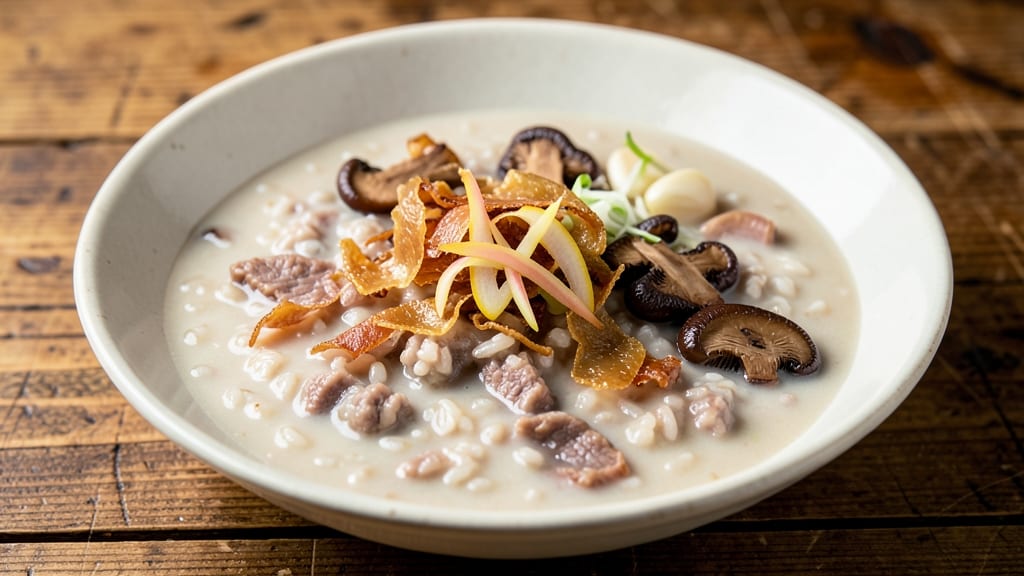
This minced pork congee recipe transforms simple ingredients into a comforting bowl of silky rice porridge with tender pork bits. The secret lies in slow simmering, where jasmine rice softens into a velvety texture while absorbing the rich flavors of pork and aromatics.
I've perfected this technique after years of cooking in Charleston's kitchens, where congee is both a meal and a remedy.
The process begins with finely mincing pork shoulder, which yields tender, flavorful bits that melt into the broth. Toasting ginger and garlic in lard develops deep, aromatic notes that form the foundation. As the rice simmers for hours, it transforms into a delicate porridge that's both nourishing and deeply satisfying.
This dish is my go-to for chilly mornings or when I need something comforting yet balanced.
What makes this recipe special is its versatility—serve it plain for a gentle breakfast or add toppings like scallions, chili oil, or a soft-boiled egg for extra richness.
The slow cooking process ensures every bite is tender and flavorful, with the pork absorbing the subtle sweetness of the rice and the savory depth of the broth. It's the kind of dish that feels like a warm embrace in a bowl.
Perfect for weeknight dinners or special occasions, this congee is both simple to prepare and impressively hearty. The key is patience—the longer it simmers, the better it tastes.
Once you try it, you'll understand why it's a staple in so many cultures. Let's get started on creating your own bowl of comfort.
Ingredients for minced pork congee
Simple ingredients that transform into a velvety, comforting bowl of minced pork congee.
| Ingredient | Amount | Notes |
|---|---|---|
| Pork Shoulder 🥓 | 1 lb | Finely minced, fat cap included |
| Jasmine Rice 🍚 | 1 cup | Uncooked, long-grain preferred |
| Lard 🧈 | 4 tbsp | Or substitute with neutral oil |
| Fresh Ginger 🧄 | 2 tbsp | Grated, about 1-inch piece |
| Garlic Cloves 🧄 | 4 cloves | Minced, about 1 tbsp |
| Dried Shiitake Mushrooms 🍄 | 2 pieces | Rehydrated, sliced thin |
| Dried Scallions 🧅 | 1 tbsp | Or substitute with 2 fresh scallions |
| Chicken Broth 💧 | 8 cups | Low-sodium preferred |
| Light Soy Sauce 🍶 | 2 tbsp | For subtle umami flavor |
| Sesame Oil 🫒 | 1 tsp | For finishing, not cooking |
| Salt 🧂 | 1 tsp | Adjust to taste |
| White Pepper 🌶️ | ¼ tsp | Freshly ground preferred |
| Chili Oil 🌶️ | 1 tbsp | Optional for serving |
The pork shoulder is everything here. Look for well-marbled cuts at your local butcher or Costco—that fat renders beautifully and keeps the congee rich. If you can't find lard, neutral oil like avocado or vegetable works fine, though it won't add that same depth. Fresh ginger and garlic should smell vibrant—if they're musty, skip them. For the mushrooms, Asian markets often have better dried shiitake options than regular grocery stores. Toast the dried mushrooms in a dry pan for 30 seconds before soaking to deepen their flavor.
No chicken broth? Vegetable broth works too, just add a splash of soy sauce to compensate for flavor. Dried scallions can be swapped for fresh, but toasted sesame seeds add a nice crunch if you're feeling fancy. The sesame oil is for finishing—don't cook with it, or it'll turn bitter. For extra richness, stir in a soft-boiled egg or a spoonful of hoisin sauce when serving. If you're short on time, pre-minced pork from the Asian aisle saves chopping, but fresh mincing gives the best texture.
This congee tastes even better the next day—reheat gently on low heat with a splash of water. Keeps in the fridge for 4-5 days or freezes for 3 months. I always double the batch because it disappears fast. Store in airtight containers, and the rice stays silky. For serving, keep chili oil, scallions, and sesame seeds on the side so everyone can customize their bowl.
Why You'll Love This Recipe
- No-Fuss Ingredients: I swear by this recipe because it’s the kind of meal where I don’t have to hunt for obscure spices—just pork shoulder, jasmine rice, a slab of ginger, and garlic. That’s it. The lard? Oh, it’s the secret weapon—no need for fancy oil, just render it in the pot and let it work its magic.
- Umami Bomb: The pork shoulder breaks down into tiny, tender pieces that melt in your mouth, while the ginger and garlic caramelize into something ridiculously fragrant. It’s not just flavor—it’s that deep, savory punch that makes you want to slurp it straight from the bowl.
- Weeknight to Holiday: Between us, this is my go-to for lazy nights and when Aunt Linda drops by unannounced. Double the batch, add a soft-boiled egg or scallions on top, and suddenly you’ve got a restaurant-worthy dish. The rice soaks up all the porky goodness, so it’s hearty enough to feed a crowd without the fuss.
- Leftovers That Don’t Suck: Honestly, I make this on Sundays just so I can reheat it all week. The congee thickens perfectly, so it reheats like a dream—no soggy rice here. Plus, the pork stays juicy, and the ginger adds a bright kick that makes it taste fresh every time. Budget-friendly? Absolutely. Waste-free? Even better.
Step-by-step instructions for minced pork congee
Let's create this comforting, silky porridge with tender pork bits that melt in your mouth.
Prepare the Pork and Aromatics
Start by finely mincing the 1 lb pork shoulder using a sharp knife or food processor. You want tiny, even pieces that will cook quickly and evenly throughout the congee. I like to leave some of the fat cap included—it adds richness and helps create that signature velvety texture.
While the pork rests, soak the 2 pieces dried shiitake mushrooms in 1 cup hot water for 20 minutes until softened. Drain, then slice them thinly. In a separate bowl, grate the 2 tbsp fresh ginger and mince the 4 cloves garlic—these aromatics will form the flavor base of your congee. The ginger should be finely grated so it dissolves smoothly into the broth.
Render the Lard and Sauté Ingredients
Heat a large pot or Dutch oven over medium heat and add the 4 tbsp lard. Once the lard melts and begins to shimmer (but isn't smoking), add the minced pork. Cook for 3-4 minutes, stirring frequently, until the pork turns opaque and loses its raw color. This step is crucial—it develops the pork's flavor before it simmers in the broth.
Add the sliced shiitake mushrooms, grated ginger, and minced garlic. Stir for 1-2 minutes until the mushrooms soften slightly and the garlic becomes fragrant. You'll smell that wonderful umami aroma—this is where the magic starts. Be careful not to let the garlic burn, as it can turn bitter quickly.
Simmer the Congee
Pour in the 8 cups chicken broth and bring the mixture to a gentle boil. Once boiling, reduce heat to low and add the 1 cup jasmine rice. Stir once to distribute the rice evenly. The key here is patience—congee requires 1.5 to 2 hours of simmering at a consistent low heat.
After 30 minutes, check the texture. The congee should be thick but still slightly liquidy. If it's too thick, add ½ cup hot water at a time until you reach that perfect porridge-like consistency. I like to stir occasionally to prevent sticking, but don't over-stir—this can make the rice release too much starch too quickly.
Season and Finish
When the rice is fully tender and the congee has reached your desired thickness (about 1.5 hours), stir in the 2 tbsp light soy sauce, 1 tsp salt, and 0.25 tsp white pepper. Taste and adjust seasoning if needed—the soy sauce should enhance the umami without overpowering the delicate pork flavor.
For serving, ladle the congee into bowls and drizzle with 1 tsp sesame oil and 1 tbsp chili oil. The sesame oil adds a nutty aroma, while the chili oil brings just the right amount of heat. Garnish with the 1 tbsp dried scallions for a pop of color and freshness. Serve immediately while warm for the best texture and flavor experience.
Pro Tips For Making Minced Pork Congee
- STIR CONSTANTLY FIRST 10 MINUTES: The first 10 minutes after adding water are where your congee makes up its mind. If you walk away, you’ll end up with a gluey mess instead of a silky broth. I used to think "stirring" just meant occasional pokes—wrong. Keep that spoon moving in small circles, breaking up the starches before they have a chance to thicken into a pasty nightmare.
- GRATE GINGER FINE, NOT SLICES: Thin slices of ginger just float and fade into the background. Use the small holes of a box grater to turn it into a paste—this way, it infuses the broth with real heat and aroma. (Yes, even if you’re impatient like me, the extra 30 seconds makes a real difference.)
- SKIP THE BROWNING, SAVE THE FAT: Your pork shoulder won’t caramelize like a roast, and that’s okay. The goal here is tender, not crispy. After mincing, just sear the pork in the lard until it loses its pink—no need to wait for color. Over-browning burns the fat you’ll need for that rich, velvety texture later.
- USE COLD WATER FOR RICE: I know, it sounds counterintuitive when everything else is hot. But cold water (even ice water) keeps the rice grains intact longer, preventing them from turning mushy too soon. Add the water gradually—about 10 times the rice volume—and let the heat of the broth warm it up naturally. (Your future self will thank you.)
Flavor customization for these flavors
Classic Southeast Style
This is the version I grew up with in Georgia—simple, comforting, and deeply satisfying. Start with the base recipe, then stir in 1 tbsp hoisin sauce during the final 10 minutes of simmering for a touch of sweetness.
Top with crispy fried shallots (I use 1 tbsp from the Asian aisle) and a soft-boiled egg cut in half. The egg adds richness while the shallots provide crunch that contrasts beautifully with the silky rice. 🥚
Spicy Sichuan Twist
For a bold kick, add 1 tbsp Sichuan peppercorns (toasted and crushed) to the lard before cooking the pork. After simmering, stir in 1 tsp chili bean paste and ½ tsp doubanjiang during the last 15 minutes.
Garnish with thinly sliced scallions and a drizzle of chili crisp. The peppercorns will make your mouth tingle—trust me, it's worth it. 🌶️
Herbal Green Variation
Swap the shiitake mushrooms for 1 cup baby bok choy (chopped) and add 1 tbsp fresh cilantro and 1 tsp lemongrass paste (or 2 tbsp minced lemongrass) when sautéing the aromatics.
Finish with ½ lime wedges and a sprinkle of toasted sesame seeds. This lighter version is perfect for warm afternoons and pairs beautifully with a cold beer. 🍋
Creamy Coconut Fusion
For a tropical twist, replace 2 cups chicken broth with 2 cups coconut milk and add 1 tsp galangal (or ginger) when sautéing. Stir in 1 tbsp fish sauce during the final 10 minutes for depth.
Garnish with crushed peanuts and lime zest. This version feels like a vacation in a bowl—especially refreshing during summer months. 🥥
Smoky BBQ Adaptation
After rendering the pork, set aside 2 tbsp of the pork fat and mix it with 1 tbsp smoked paprika and ½ tsp cayenne. Stir this mixture into the simmering congee during the last 20 minutes.
Top with pickled jalapeños and a dollop of sour cream. The smoky-sweet contrast is pure comfort food magic—perfect for a weekend brunch. 🔥
Vegetarian Adaptation
Replace the pork with 1 cup finely chopped mushrooms (shiitake or oyster) and ½ cup textured vegetable protein (rehydrated). Use vegetable broth and add 1 tsp miso paste for umami.
Garnish with toasted nori strips and avocado slices. This version is just as hearty and satisfying—ideal for meat-free days. 🌱
Nutrition facts
Frequently asked questions about minced pork congee
Can I use ground pork instead of minced pork?
Ground pork works perfectly fine! Just make sure it's finely ground—no large chunks. The texture will be slightly different but still delicious. For best results, pat the pork dry before cooking to prevent excess moisture in your congee.
How do I know when the congee is done?
The rice should be completely tender and the congee should have a thick, porridge-like consistency. Test by stirring gently—it should coat the back of a spoon smoothly. If it's too thick, add hot water gradually. Total simmering time is usually 1.5 to 2 hours on low heat.
What's the best way to store leftovers?
Store in airtight containers in the fridge for 4-5 days. For longer storage, freeze for up to 3 months. When reheating, use low heat with a splash of water to restore the silky texture. Never microwave directly from frozen—thaw first in the fridge.
Can I make this congee gluten-free?
Simply use a gluten-free soy sauce substitute and ensure your chicken broth is gluten-free. The rest of the ingredients are naturally gluten-free. For extra flavor, add a splash of coconut aminos during the final simmering stage.
Why did my congee turn out too thin?
This usually happens if you used too much broth or stirred too vigorously, which releases excess starch. For next time, use a 1:8 rice-to-broth ratio and stir only once after adding the rice. If it's already too thin, simmer uncovered for 10-15 minutes to thicken naturally.