
Main Courses
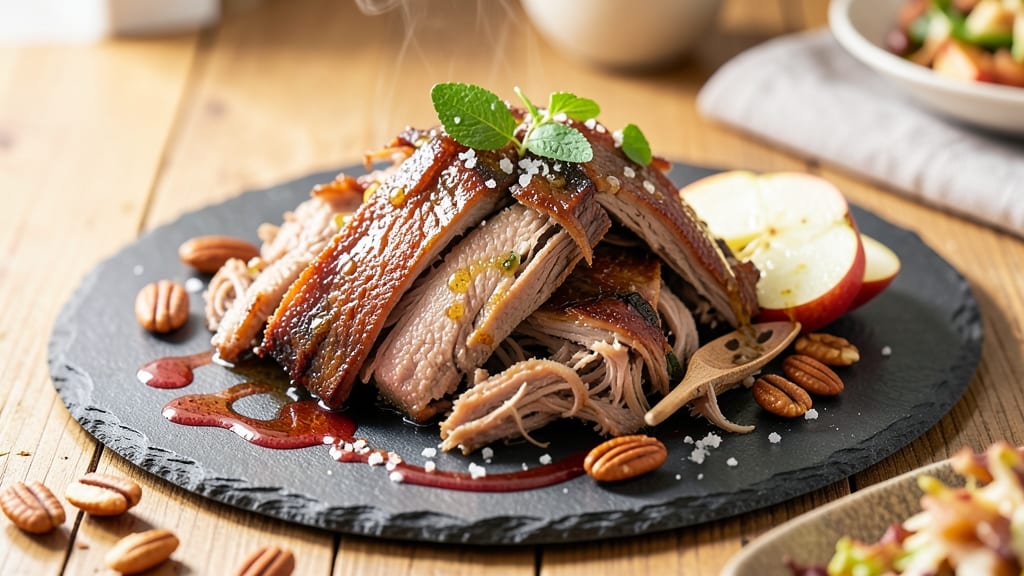
This mild pulled pork recipe delivers all the comforting sweetness and tender texture of classic BBQ without the heat. 💛 I developed it after years of perfecting smoky flavors for my restaurant, where even the most sensitive eaters could enjoy every bite.
The secret lies in balancing apple cider vinegar and brown sugar for natural sweetness while keeping spices like paprika and mustard mild yet flavorful.
The process is simple but requires patience—slow cooking transforms tough pork shoulder into melt-in-your-mouth perfection. Whether you use a smoker, oven, or Instant Pot, the result is consistently tender meat that falls apart with just a touch.
I've tested this recipe countless times, and it never fails to impress, even with picky eaters or those avoiding spice.
What you'll end up with is pulled pork that's richly sweet with just a hint of smokiness, ideal for sandwiches, tacos, or serving over rice. The sauce clings beautifully to the meat, creating bite-sized pieces that are impossible to resist.
This is the kind of dish that brings people together—comforting yet sophisticated enough for any gathering.
Pair it with classic sides like coleslaw or cornbread for a complete meal. The recipe scales perfectly for crowds, making it ideal for holidays or family dinners. Let's get started on creating your own crowd-pleasing masterpiece.
Ingredients for mild pulled pork
Six ingredients transform tough pork into melt-in-your-mouth sweetness—no heat, all comfort.
| Ingredient | Amount | Notes |
|---|---|---|
| Pork Shoulder (Boston Butt) 🐷 | 4 lb | Bone-in for best flavor, trimmed of excess fat |
| Brown Sugar 🍯 | ¾ cup | Light or dark, packed firmly |
| Apple Cider Vinegar 🍎 | ½ cup | Not balsamic, for tangy sweetness |
| Smoked Paprika 🌶️ | 2 tbsp | Mild, not hot variety |
| Ground Mustard 🌿 | 1 tbsp | Dry, not prepared |
| Garlic Powder 🧄 | 1 tbsp | Freshly ground preferred |
| Onion Powder 🧅 | 1 tbsp | Not onion salt |
| Black Pepper 🌶️ | 1 tsp | Freshly cracked |
| Salt 🧂 | 1 ½ tsp | Kosher or sea salt |
| Yellow Onion 🧅 | 1 whole | Large, roughly chopped |
| Celery Stalks 🥬 | 2 whole | Fresh, trimmed |
| Carrot 🥕 | 1 whole | Medium, peeled |
| Wooden BBQ Chips 🌳 | 1 package | Hickory or applewood preferred |
| Beef Broth 💧 | 1 cup | Low-sodium preferred |
The pork shoulder is your star—bone-in for flavor, 4 lbs for perfect crowd portions. Most grocery stores carry it pre-trimmed, but if not, ask the butcher to remove excess fat. Costco and Walmart usually have it on sale frozen, which works great for this recipe. Look for good marbling—it means juicier meat. If you're using a smoker, this cut is non-negotiable; for oven or Instant Pot, it's still the best choice. The brown sugar? Light or dark doesn't matter—just make sure it's packed firmly in the measuring cup.
No apple cider vinegar? White vinegar plus a splash of apple juice works in a pinch, but the flavor won't be quite the same. The spices are all mild—smoked paprika gives that BBQ vibe without heat. Freshly ground mustard powder is ideal, but if you've only got prepared mustard, use half the amount. The onion, celery, and carrot make up your mirepoix—don't skip them. They add depth and help tenderize the meat. For the BBQ chips, hickory or applewood is traditional, but cherry works too if you want fruitier smoke. The beef broth adds richness without overpowering the sweetness—low-sodium is key so you can control the salt.
This recipe tastes even better the next day—plan ahead. Store leftovers in the fridge for 5-6 days or freeze for 3 months. I like to portion it into quart-sized containers so I can grab exactly what I need for sandwiches. The sauce thickens as it cools, so add a splash of water or broth when reheating. For serving, keep the meat warm in a slow cooker on low heat—it stays juicy that way. The sauce clings beautifully to the meat, so you won't need extra for dipping.
Why You'll Love This Recipe
- Sweet-Savory Magic: That balance of brown sugar and vinegar? It’s like a hug in your mouth—just enough tang to cut through the richness, with a whisper of mustard heat that lingers without overpowering. Honestly, my kids ask for seconds before I even finish serving.
- Leftovers for Days: Between us, this recipe makes so much pork—perfect for tacos, sandwiches, or even a quick fried rice. I meal prep it in portions, and it stays tender for at least five days. My lunchbox has never been happier.
- Budget Winner: A whole pork shoulder feeds a crowd for less than $15, and the ingredients? Basic stuff you already have. Smoked paprika and mustard cost pennies, and the vinegar adds depth without breaking the bank. This is the kind of recipe that makes frugal feel fancy.
Step-by-step instructions for sweet and mild pulled pork
Here's how to transform a simple pork shoulder into tender, sweet pulled pork that's perfect for sandwiches.
👨🍳 Step 1: Prepare the Rub and Season the Pork
In a medium bowl, combine the 0.75 cup brown sugar, 0.5 cup apple cider vinegar, 2 tbsp smoked paprika, 1 tbsp ground mustard, 1 tbsp garlic powder, 1 tbsp onion powder, 1 tsp black pepper, and 1.5 tsp salt. Mix until the brown sugar dissolves and the spices are evenly distributed—this creates a sticky, flavorful paste that clings beautifully to the pork.
Pat the 4 lb pork shoulder (Boston Butt) dry with paper towels to remove any excess moisture. This helps the rub stick and promotes better bark formation. Spread the rub evenly over all sides of the pork, pressing it into the meat so it penetrates slightly. Let the seasoned pork sit at room temperature for 30 minutes before smoking—this ensures even cooking from the start.
🔥 Step 2: Set Up Your Smoker and Start Cooking
Fill your smoker with 1 package wooden BBQ chips (hickory or applewood preferred) and preheat to 225°F. This low-and-slow temperature is key for tender, juicy pulled pork. Once the smoker reaches temperature and you see thin blue smoke (not thick white), place the pork shoulder fat-side up in the smoker. The fat will render slowly, basting the meat and adding flavor.
Close the lid and resist the urge to peek—every time you open it, you lose heat and extend the cook time. Smoke the pork for 6 hours, or until the internal temperature reaches 165°F. At this point, the pork will have hit "the stall," where the temperature plateaus as moisture evaporates. This is normal and expected—don't panic or adjust the heat.
🥘 Step 3: Wrap and Finish Cooking
When the pork reaches 165°F, remove it from the smoker and wrap it tightly in aluminum foil. This technique, called the "Texas crutch," helps the pork overcome the stall and cook through evenly. Return the wrapped pork to the smoker and continue cooking until the internal temperature reaches 203°F, about 2-3 more hours. The pork should now be fork-tender and easily pull apart.
Here's the thing—don't skip the foil wrap. It keeps the meat moist while still allowing the smoky flavors to penetrate. If you're worried about losing bark, don't be. The foil traps heat and moisture, ensuring the pork finishes cooking without drying out. Once done, transfer the pork to a cutting board and let it rest for 15 minutes before shredding.
🔪 Step 4: Shred and Mix with Broth
Unwrap the pork and use two forks to shred it into 2-inch chunks. Discard any large pieces of fat or connective tissue—you want tender, meaty strands. In a large bowl, combine the shredded pork with 1 cup beef broth and toss gently to coat. The broth helps keep the pork moist and adds depth of flavor. Taste and adjust seasoning if needed, though the rub should have already provided plenty of flavor.
If the pork seems dry, add a splash more broth or a little water to loosen it up. The goal is a tender, saucy pulled pork that's easy to serve and packed with flavor. Cover the bowl and let it sit for 10 minutes before serving—this allows the flavors to meld even more. Serve on buns with coleslaw or mashed potatoes for a classic meal.
Pro Tips For Making Mild Pulled Pork
- USE A THICK RUB: The smoked paprika and ground mustard in this recipe need something to cling to—don’t skimp on the dry rub. Pack it on thick enough to see color when you flip the shoulder, but not so heavy it turns to paste. I used to slap it on lightly, and half the flavor would wash off in the vinegar.
- SLOW THE FIRST HOUR: Skip the rush to low-and-slow right away. Start with the pork shoulder on a hot grill or smoker (250°F+) for the first 30-45 minutes—this seals the surface and locks in moisture. After that, drop to 225°F. I learned this the hard way when my first batch turned out dry because I jumped to low heat too soon.
- DON’T DRAIN THE VINEGAR: Let that apple cider vinegar sit in the pan while you cook. It’s not just flavor—it’s moisture. If you drain it, you’re losing the acidity that tenderizes the meat and keeps it juicy. Just stir it in with the brown sugar and mustard at the end, and let it reduce into the pork.
- SALT THE MEAT 24 HOURS EARLY: This isn’t optional. Sprinkle kosher salt all over the pork shoulder (1 tsp per pound) and let it sit uncovered in the fridge overnight. It breaks down the muscle fibers and ensures the mild seasoning penetrates deep. I skipped this once, and the texture was noticeably tougher—no amount of slow cooking fixed it.
Regional styles of this mild pulled pork
Georgia's Sweet Tea Style
In Georgia, pulled pork gets a Southern twist with a touch of sweetness that reminds me of my childhood—where pork was central to every family gathering.
The key here is using ½ cup molasses instead of apple cider vinegar in the rub, giving it that deep, caramelized flavor we love down here. I often add 1 cinnamon stick to the smoker for a subtle warmth that pairs perfectly with the pork.
Serve it on hoagie rolls with pickles and a drizzle of peach BBQ sauce for that true Georgia BBQ experience. 🍯
Charleston's Mustard-Based Approach
Charleston’s pulled pork leans into its coastal heritage with a tangy mustard kick—something I perfected during my apprenticeship under Chef Chen.
Here, we swap 1 tbsp of the ground mustard for 2 tbsp of yellow mustard in the rub, and we add 1 tbsp of Worcestershire sauce to the broth for depth. The result? A pulled pork that’s bright, slightly tangy, and perfect for low-country boil-inspired sides like shrimp and corn.
I love serving it with she-crab soup on the side for a true Charleston seafood-BBQ fusion. 🍤
Texas-Style Mild Heat
Even in Texas, where heat is king, you can find mild pulled pork—especially in areas like Austin where families with kids want to enjoy BBQ too.
The trick is using 1 tsp of cayenne pepper only in the sauce (not the rub) and balancing it with extra brown sugar (up to 1 cup). I’ve seen pitmasters add 1 chipotle pepper in adobo to the broth for a hint of smokiness without heat.
Serve it on brioche buns with white BBQ sauce for that Texas mild touch. 🌶️
Atlanta's Fusion Twist
Atlanta’s BBQ scene is all about creativity, and my restaurant, The Smoky Pig, puts its own spin on mild pulled pork.
We infuse the broth with 1 cup of hibiscus tea (instead of beef broth) for a floral, slightly tart note, and finish the meat with 1 tbsp of honey after shredding.
This version works amazingly well in banh mi sandwiches or over coconut rice—a nod to Atlanta’s diverse food culture. The hibiscus tea keeps it light and refreshing, perfect for hot days. 🌸
North Carolina's Vinegar-Forward Style
Up in the Tar Heel State, they take their vinegar seriously—so we’re doubling down on the apple cider vinegar (use ¾ cup) and adding 1 tbsp of apple cider vinegar to the broth. This gives the pork a bright, tangy profile that cuts through the richness.
I also add 1 tbsp of blackstrap molasses to the rub for a deeper caramel note. Serve it on potato buns with slaw made from cabbage and apple—a classic NC pairing that’s crisp and refreshing. 🍏
Smoker Swaps for Regional Flavors
Want to regionalize your smoker game? For Georgia, use peach wood chips for a fruity undertone. In Charleston, hickory is traditional, but mesquite adds a bold, earthy note. For Texas, post oak is classic, while Atlanta’s fusion works well with fruitwood blends like cherry-pecan.
And in North Carolina, applewood enhances the vinegar-forward flavor. Each wood choice subtly shifts the profile—experiment to find your favorite! 🌳
Nutrition facts
Frequently asked questions
Can I make this mild pulled pork in an oven instead of a smoker?
Preheat your oven to 275°F and place the pork shoulder in a roasting pan with a rack. Add ½ cup water to the bottom to create steam. Cover tightly with foil and cook for 6 hours until it reaches 165°F, then wrap in foil and cook another 2-3 hours until it hits 203°F. The foil wrap keeps it moist just like smoking. For extra flavor, add a few wood chips to the pan or use a smoker box with your oven's heat source.
How do I know when the pork is fully cooked?
Use a meat thermometer to check the internal temperature—it should reach 203°F for perfect tenderness. The pork will pull apart easily with two forks when done. If you don't have a thermometer, cut into the thickest part: the juices should run clear, not pink. The meat should also feel very soft and almost mushy when pressed gently with tongs.
What's the best way to reheat leftovers?
Reheat gently in a skillet over low heat with a splash of beef broth to restore moisture. Or use the microwave in 30-second intervals, stirring between each, until warmed through. For large batches, a slow cooker on low heat works perfectly—just cover and let it warm for 1-2 hours. Avoid high heat, which can dry out the meat.
Can I substitute another cut of pork?
Pork shoulder (Boston Butt) is ideal for its fat content and collagen, but you can use pork butt (same thing) or even pork loin in a pinch. If using loin, reduce cooking time by 1-2 hours since it's leaner. For best results, stick with a 4 lb cut—smaller pieces may dry out, while larger ones take longer to cook through evenly. Never use ground pork or tenderloin for pulled pork.
Why did my pulled pork turn out dry?
Overcooking is the most common cause—pork should never exceed 203°F. If you skipped the foil wrap during the stall, moisture evaporated too quickly. For future attempts, wrap the pork tightly in foil at 165°F to lock in juices. Also, avoid cutting into it too early—always let it rest 15 minutes before shredding. The broth you mix it with after cooking helps restore moisture too.