
Main Courses
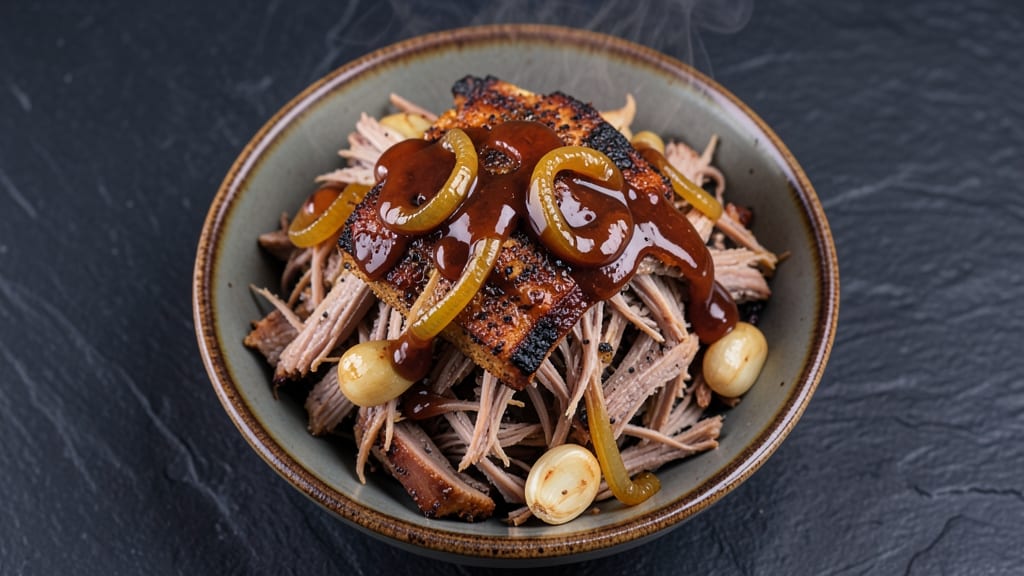
Mastering a Famous Dave's BBQ pulled pork recipe at home requires precision—12 hours of low-and-slow smoking, a crisp bark, and tender meat that falls apart at the touch. This is the recipe I've refined after years of competing on the Southeast BBQ circuit, where judges demand restaurant-quality results.
The secret lies in the pork shoulder's internal temperature reaching 203°F, the perfect balance between tenderness and moisture retention.
We begin with a bold dry rub of paprika, brown sugar, and black pepper that develops a deep mahogany crust during the smoke. The pork rests overnight in the refrigerator before hitting the smoker, ensuring even cooking and maximum flavor penetration.
While the meat smokes, we prepare the signature sauce—a tangy blend of apple cider vinegar, molasses, and spices that transforms into a glossy, sticky glaze when reduced.
What sets this apart is the two-stage sauce application: first while the pork is still hot from the smoker, then again after it rests. This creates that iconic crispy top while keeping the meat juicy inside.
The final result is shoulder meat so tender it shreds easily, coated in a sauce that's both sweet and tangy, with just enough heat to linger.
Serve on toasted brioche buns with pickled jalapeños and coleslaw for the full Famous Dave's experience. This recipe delivers restaurant-quality pulled pork that'll have your guests asking for seconds—and maybe even thirds. Let's get started on this BBQ masterpiece.
Ingredients for famous dave's bbq pulled pork
Twelve ingredients for a BBQ showstopper that'll impress even the toughest judges.
| Ingredient | Amount | Notes |
|---|---|---|
| Bone-In Pork Shoulder 🥩 | 8 lb | With fat cap intact for flavor |
| Yellow Onion 🧅 | 1 whole | Cut into wedges for rub |
| Garlic Cloves 🧄 | 8 cloves | Minced for rub and sauce |
| Smoked Paprika 🌶️ | ½ cup | For deep mahogany crust |
| Light Brown Sugar 🍚 | ½ cup | Packed, for caramelization |
| Kosher Salt 🧂 | ¼ cup | Diamond Crystal preferred |
| Ground Black Pepper 🌶️ | 2 tbsp | Freshly cracked for heat |
| Apple Cider Vinegar 🍎 | 1 cup | For tangy sauce base |
| Molasses 🍯 | ½ cup | Unsulphured for depth |
| Yellow Mustard 🍯 | 2 tbsp | For sauce tang |
| Worcestershire Sauce 🍶 | 2 tbsp | For umami depth |
| Honey 🍯 | ¼ cup | For sauce sweetness |
| Brioche Buns 🍞 | 12 whole | For serving, toasted |
| Pickled Jalapeños 🌶️ | 1 jar | For serving (optional) |
| Wood Chips 🌳 | 2 bags | Hickory or apple preferred |
The pork shoulder is non-negotiable here—bone-in with fat cap is key for that iconic bark and moisture. Grab one from Costco or your local butcher—they'll often cut it to your size. Look for good marbling, not a lean cut. The wood chips? Hickory gives classic BBQ flavor, but apple adds sweetness if you prefer a milder smoke. Smoked paprika is your secret weapon for that deep mahogany crust—Penzeys or bulk bins have the best quality. And trust me on the brown sugar—light brown has more molasses flavor than white, which translates to better caramelization.
No smoked paprika? Regular paprika plus a pinch of cayenne gets you close. Running low on molasses? Maple syrup at half the amount works in a pinch, though it lacks that deep BBQ flavor. The Worcestershire sauce can be swapped for soy sauce plus a dash of liquid smoke if you're avoiding anchovies. For the sauce, if you can't find unsulphured molasses, regular molasses plus a splash of lemon juice removes the sulphur taste. The mustard is crucial—Dijon adds complexity if you've got it, but yellow works fine. And if you're short on time, pre-made BBQ sauce plus extra molasses can be a backup, though it won't be as authentic.
This pork needs 24 hours total time, but most of that is hands-off smoking. The rub stays fresh for 3 months in an airtight container. For the sauce, make it a day ahead—flavors meld better. Store leftovers in the fridge for 5 days, but honestly, it reheats beautifully. I like to portion the sauce separately so I can drizzle it fresh on each serving. The wood chips can be reused 2-3 times—just soak them again before each use. And save those pickled jalapeños—they keep for 6 months in the fridge.
Why You'll Love This Recipe
- Sweet-Smoky Magic: That balance of brown sugar and smoked paprika? It’s like a hug in sauce form. The caramelized onions deepen the flavor, while the garlic keeps it bright—every bite has this addictive, slightly sticky-sweet punch.
- Budget That Won’t Break You: A pork shoulder costs less than half the price of pre-made pulled pork, and it feeds a crowd. Honestly, I’ve made this for game days, potlucks, and lazy Sundays—always a hit, always affordable.
Step-by-step instructions for slow-smoked pulled pork
This is where the magic happens—transforming a tough cut into tender, smoky perfection.
Prepare the Dry Rub and Season the Pork
In a medium bowl, combine the 0.5 cup smoked paprika, 0.5 cup packed light brown sugar, 0.25 cup kosher salt, and 2 tbsp freshly cracked black pepper. Mix until evenly distributed—this is your rub, and it's the secret to that iconic mahogany crust. I like to press the rub firmly into the pork shoulder so it sticks like glue.
Cut the 1 whole yellow onion into wedges and mince the 8 cloves garlic. Set these aside for later. Pat the 8 lb bone-in pork shoulder dry with paper towels—this step is non-negotiable for crispy skin. Then generously coat the pork with the rub, pressing it into every crevice. Let it sit at room temperature for 30 minutes while you prep the smoker. This resting time helps the rub penetrate and the meat cook more evenly.
Set Up the Smoker and Cook Low and Slow
Fill your smoker with 2 bags of hickory or apple wood chips and preheat to 225°F. I use a water pan in the smoker to keep the meat moist during the long cook—this is especially important for pork shoulder. Once the smoker reaches temperature and you see clean, thin blue smoke, place the rubbed pork shoulder fat-side up on the smoker grate. The fat cap will render and baste the meat as it cooks.
Close the lid and resist the urge to peek—every time you open it, you add 15-20 minutes to your cook time. Smoke the pork for 6-8 hours until the internal temperature reaches 165-170°F and the bark is deep mahogany brown. This is where the stall will happen—the temperature will plateau as moisture evaporates. Don't panic; this is normal and part of the process.
Wrap and Finish Cooking
When the pork hits 165-170°F, it's time for the "Texas crutch." Wrap the pork tightly in butcher paper (not foil—it breathes better and preserves the bark). Return it to the smoker and continue cooking until the internal temperature reaches 200-205°F and the meat is fork-tender. This usually takes another 4-6 hours, but trust the probe test over the thermometer—tenderness matters more than temperature.
Here's the thing—real talk, the pork will continue cooking as it rests. The resting period is crucial for juices to redistribute, so don't skip it. Let the pork rest in the butcher paper for at least 1 hour (I prefer 2 hours wrapped in towels in a cooler). This step makes all the difference in the final texture.
Shred and Make the Sauce
Unwrap the pork and transfer it to a cutting board. Remove the bone and fat cap, then shred the meat using two forks. Discard the fat cap (or save it for another use). In a large bowl, combine the shredded pork with the 1 cup apple cider vinegar, 0.5 cup molasses, 2 tbsp yellow mustard, 2 tbsp Worcestershire sauce, and 0.25 cup honey. Mix well to coat the pork evenly in the sauce.
Return the pork to the smoker or transfer it to a slow cooker set to 170°F. Let it simmer for 1-2 hours, stirring occasionally, until the sauce thickens and clings to the pork. The sauce should be glossy and slightly sticky—this is what makes it so irresistible. Taste and adjust seasoning if needed, but it should already be perfectly balanced.
Serve on Toasted Brioche Buns
Toast the 12 whole brioche buns until golden and warm. Spoon the pulled pork onto the buns and top with slices of pickled jalapeños if desired. Serve immediately while the pork is hot and the buns are toasty. This dish is all about the experience—the smoky, sweet, tangy flavors melting together in every bite.
Don't forget to save some of that delicious sauce for dipping! The leftovers taste even better the next day, so you'll want to make extra if you can. Enjoy your Famous Dave's-style pulled pork—it's worth every minute of the slow cook.
Pro Tips For Making Famous Dave'S Bbq Pulled Pork
- CRANK THE HEAT FIRST: The pork shoulder needs that initial sear to lock in flavor, so don’t be shy—get your pan screaming hot before adding the meat. I used to rush this, and the crust would turn out pale and sad. Now I wait for that first sizzle, and it makes all the difference when you pull it later.
- CHOP ONIONS LIKE A PRO: Slice those yellow onions paper-thin and keep them whole instead of dicing—this recipe relies on their slow caramelization for depth. I learned this the hard way after burning three batches of overcrowded onions. Thin slices = even cooking, no burning, and maximum flavor.
- DON’T SKIP THE REST: After pulling the pork, tent it with foil and let it sit for at least 20 minutes before shredding. I know, I know—you’re eager—but rushing this step means dry, stringy meat. Patience here guarantees tender, juicy pulled pork that falls apart with a touch.
- USE THE FAT: The pork shoulder renders its own fat, and that golden pool in the pan is your friend. After searing, pour off most of it, but leave about 2 tablespoons to deglaze with the onions and garlic. That extra richness is what turns good pulled pork into famous pulled pork.
Common mistakes when making this recipe
Skipping the Rest
This is where I see beginners make their first big mistake. The pork needs that 1-2 hour rest after wrapping to redistribute juices—skipping it leads to dry, stringy meat. I've seen people slice into pork immediately after removing it from the smoker, and it's a heartbreaker.
The internal temperature will continue rising 10-15°F during rest, so don't rush this step. Trust me, that extra hour makes all the difference in texture. 💪
Overlooking the Stall
Every pitmaster hits the stall phase—that frustrating plateau around 165°F where the temperature refuses to climb. The fix? Wrapping the pork in butcher paper (not foil) and giving it time. I've seen folks panic and crank up the heat, which actually makes things worse.
Stay patient—this is normal and part of the process. The paper lets moisture escape while keeping the bark intact.
Using the Wrong Wood
Hickory is classic for a reason, but I've had people use mesquite or oak that overpower the pork's natural sweetness. Apple wood adds a subtle sweetness that complements the molasses sauce beautifully.
And never use pine—it imparts a bitter, resinous flavor. Stick to hickory or apple for that authentic Famous Dave's taste. I keep a mix of both on hand for different recipes.
Peeking Too Often
Every time you open that smoker door, you lose 15-20 minutes of cook time. I've seen people check the temperature every 30 minutes, turning a 12-hour cook into a 14-hour marathon.
Set your thermometer to alert you when it hits 165°F and 203°F—no need to peek. This is where a good Meater thermometer saves the day.
Sauce Timing Errors
Adding the sauce too early makes the bark soggy, while waiting too long means the meat dries out. The secret is applying it after the pork rests but before serving.
I like to simmer the pork in the sauce for 1-2 hours on low heat to let those flavors meld. And never skip the apple cider vinegar—it's what gives that signature tang.
Skipping the Fat Cap
The fat cap isn't just for flavor—it acts as a natural basting agent during the smoke. I've seen people trim it off, and the meat ends up dry and tough. Leave that fat cap intact (about ¼ inch thick) and let it render naturally.
It's what creates that perfect balance of moisture and bark. The fat also carries all those delicious rub flavors into the meat. 🌟
Nutrition facts
Frequently asked questions
Can I use a slow cooker instead of a smoker for this recipe?
Yes, but you'll need to adjust the method. Place the rubbed pork in the slow cooker with 1 cup apple juice or broth, cook on low for 8-10 hours until tender. Finish by shredding and tossing with the sauce, then simmer for 1 hour on low to thicken. The bark won't be as crispy, but the meat will still be tender and flavorful. For best results, use a Meater thermometer to monitor internal temperature.
What's the best way to reheat leftovers without drying out the pork?
Reheat in a 350°F oven for 20-30 minutes with a splash of apple cider vinegar or broth to keep it moist. Or use a slow cooker on low for 2 hours with the sauce. Never microwave—it turns the pork rubbery. For sandwiches, reheat just the pork and assemble fresh to keep the buns crispy. Leftovers keep well for 5 days in the fridge.
Can I make the sauce ahead of time?
Make the sauce 1-2 days ahead and store in an airtight container. The flavors deepen over time, and it reheats beautifully. When ready to use, simmer for 10 minutes to thicken. For extra richness, add 1 tbsp butter while warming. The sauce keeps for 2 weeks refrigerated or 3 months frozen. Freeze in ice cube trays for portion control.
How do I know when the pork is done without a meat thermometer?
Use the fork test: When the pork reaches 203°F, it should shred easily with two forks. If it's still slightly resistant, give it 30 more minutes. The bark should be deep mahogany brown with a crisp texture. Another trick: Press your finger into the meat—if it springs back, it needs more time; if it leaves an indentation, it's ready. For best results, invest in a Meater thermometer—it's a game-changer.