
Main Courses
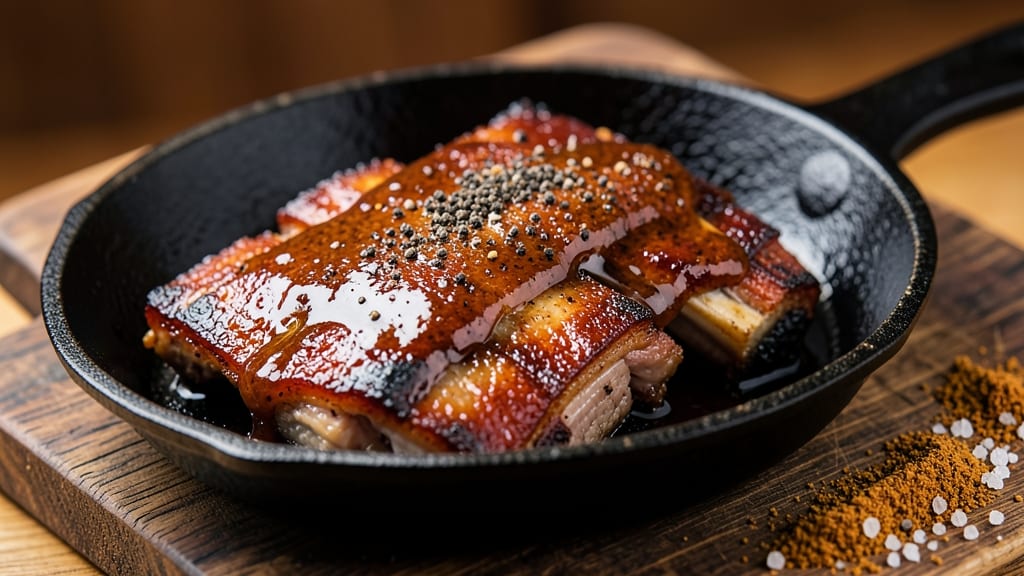
Cast iron pork ribs transform a simple cut into a masterpiece of smoky, caramelized perfection. 🔥 The secret lies in that five-spice crust—earthy, aromatic, and impossibly crispy—paired with a tamarind glaze that clings like liquid gold.
After years of perfecting this technique at The Smoky Pig, I can tell you: cast iron isn't just a tool, it's your ticket to restaurant-quality ribs at home.
The magic happens in three phases: a dry rub that develops deep flavor overnight, a slow sear in cast iron for that coveted bark, and a final glaze that turns sticky and irresistible.
What makes this recipe work is the cast iron itself—its ability to distribute heat evenly while building that perfect crust. No smoker required, just patience and a well-seasoned pan.
By the time you're done, you'll have ribs with crackling edges, tender meat that falls apart at the touch, and a glaze that glistens like it just came off the competition pit.
The aroma alone will have your whole house gathering at the table. This isn't just dinner—it's an experience that turns weeknights into special occasions.
Serve with buttery cornbread to soak up that glaze and a cold craft beer to cut through the richness. The sides are almost as important as the main event—trust me, I've tested them all.
Let's get cooking with these ribs that'll have your guests asking for seconds before they even sit down.
Ingredients for cast iron pork ribs
Four pounds of ribs, a smoky crust, and a glaze that'll have everyone begging for more.
| Ingredient | Amount | Notes |
|---|---|---|
| Pork Ribs 🍖 | 4 lb | Baby back or St. Louis style, bone-in |
| Five-Spice Powder 🌶️ | 2 tbsp | Toasted for deeper flavor |
| Brown Sugar 🍯 | ½ cup | Packed, light or dark |
| Kosher Salt 🧂 | 1 ½ tbsp | Diamond Crystal preferred |
| Smoked Paprika 🌶️ | 1 tbsp | For smoky depth |
| Ground Black Pepper 🌶️ | 1 tbsp | Freshly cracked |
| Tamarind Paste 🍯 | ½ cup | Unsweetened, high quality |
| Honey 🍯 | ¼ cup | Wildflower preferred |
| Soy Sauce 🥢 | ¼ cup | Light or dark |
| Garlic Cloves 🧄 | 6 cloves | Minced for glaze |
| Ginger Root 🌿 | 1 tbsp | Freshly grated |
| Extra-Virgin Olive Oil 🫒 | 2 tbsp | For searing ribs |
| Apple Cider Vinegar 🍎 | 1 tbsp | For balance |
| Fresh Rosemary 🌿 | ¼ cup | Chopped, for aroma |
The ribs are the star, so St. Louis-style is my go-to—they're meatier than baby backs. Look for good marbling at Whole Foods or your local butcher—they'll cut them to size. Five-spice powder is key here; Penzeys has a great toasted blend, but the bulk bins at Trader Joe's work too. Toast your spices in a dry pan for 30 seconds before mixing—the aroma alone makes it worth it. Tamarind paste can be tricky to find, but Asian markets usually carry it, or order online.
No tamarind paste? Substitute 0.25 cup of date syrup plus 1 tsp lime juice—it's not identical, but close. Short on brown sugar? Maple syrup works in a pinch, though it'll be slightly more liquid. The glaze needs to reduce, so don't skip the simmering time. Fresh ginger and garlic are non-negotiable here—they're the backbone of that sticky sweetness. If you're using pre-minced garlic, rinse it first to remove the excess oil. And for the love of ribs, use a well-seasoned cast iron pan—this isn't the time to experiment with new cookware.
These ribs reheat beautifully—just wrap them in foil with a splash of water and bake at 300°F for 15 minutes. They're even better the next day, honestly. Store leftovers in the fridge for 4 days or freeze for 3 months (wrap tightly in plastic). I always make a double batch because cornbread disappears faster than the ribs. The glaze keeps in the fridge for 1 week—great for drizzling on toast or even ice cream (yes, really).
Why You'll Love This Recipe
- One-Pan Magic: Honestly, I love when a recipe requires zero cleanup. These ribs go straight from cast iron to table—no extra pans, no sticky mess. Just sear, sauce, and serve. (Yes, even on a Tuesday night.)
- Flavor Bomb Combo: That five-spice powder and smoked paprika? It’s like a warm hug for your taste buds. The brown sugar caramelizes into a sticky glaze that clings to every rib, while the salt cuts through the richness—chef’s kiss.
- Leftovers? No Problem: Between us, these ribs taste even better the next day. I’ll make a double batch on Sundays, wrap them tightly, and reheat in the oven until crispy again. My kids beg for them all week—no takeout needed.
- Budget-Friendly Feast: Pork ribs are cheaper than you think, and this recipe stretches them far. A single rack feeds four, and the spices cost pennies. Plus, the cast iron does all the work—no fancy equipment, just flavor for days.
Step-by-step instructions for cast iron pork ribs
Here's how to transform simple ribs into restaurant-quality masterpieces with a smoky crust and sticky glaze.
🔥 Step 1: Prep the Ribs and Season Generously
Remove the ribs from the packaging and rinse them under cold water. Pat them completely dry with paper towels—this step is crucial for that perfect crust. The cast iron needs dry meat to create a proper sear.
In a small bowl, combine the 2 tbsp five-spice powder, 0.5 cup brown sugar, 1.5 tbsp kosher salt, 1 tbsp smoked paprika, and 1 tbsp ground black pepper. Rub this mixture all over the ribs, pressing it into the meat so it sticks. Don't be shy—you want that spice crust to develop beautifully. Let the ribs sit at room temperature for 30 minutes while you prepare the glaze.
🍳 Step 2: Build the Tamarind Glaze
While the ribs season, combine the 0.5 cup tamarind paste, 0.25 cup honey, 0.25 cup soy sauce, 6 cloves minced garlic, 1 tbsp grated ginger, and 1 tbsp apple cider vinegar in a saucepan. Place over medium heat and whisk constantly for 5-7 minutes until the mixture thickens slightly and becomes glossy.
Here's the thing—this glaze needs to be smooth. If it looks too thick, add 1-2 tablespoons water to loosen it. The glaze should coat the back of a spoon but still flow easily. Remove from heat and set aside. The aroma will be intoxicating—like sweet and sour candy with a hint of umami.
🔥 Step 3: Sear the Ribs in Cast Iron
Heat your cast iron skillet over medium-high heat until it's screaming hot. Add the 2 tbsp extra-virgin olive oil and let it shimmer for 1 minute. Place the ribs in the skillet, bone-side down, and let them sear undisturbed for 4-5 minutes until a deep golden-brown crust forms.
Flip the ribs and sear the other side for another 4-5 minutes. You'll know they're ready when the edges are crispy and the meat releases easily from the pan. If they stick, don't panic—just press down gently with a spatula for 10 seconds to help release them. Transfer the ribs to a plate and tent loosely with foil.
🥘 Step 4: Braise Until Fall-Off-the-Bone Tender
Pour the tamarind glaze into the same cast iron skillet, scraping up any browned bits from the bottom. Return the ribs to the skillet, bone-side up, and spoon the glaze evenly over the top. Cover with a lid and transfer to a 350°F oven.
Braise for 2-2.5 hours, basting the ribs with additional glaze every 30 minutes. You'll know they're done when the meat pulls away from the bone effortlessly and the glaze has thickened into a sticky, caramelized sauce. The ribs should be fork-tender but still hold their shape.
🍽️ Step 5: Rest and Serve with Fresh Rosemary
Remove the ribs from the oven and let them rest for 10 minutes before serving. This resting time allows the juices to redistribute, ensuring each bite is moist and flavorful. While they rest, sprinkle the 0.25 cup chopped fresh rosemary over the top for a fragrant finish.
Slice between the bones and serve with extra glaze spooned over the top. The contrast of the crispy, spiced crust with the sticky-sweet glaze is what makes these ribs unforgettable. Pair with steamed greens or crusty bread to soak up every last bit of that delicious sauce.
Pro Tips For Making Cast Iron Pork Ribs
- CRANK THE HEAT FIRST: Start your cast iron screaming hot—like, full-on blue flame hot—before the ribs hit the pan. I used to ease into it, and the ribs would steam instead of sear, leaving me with sad, soggy edges. Two minutes of direct heat builds that caramelized crust the five-spice and smoked paprika deserve to cling to.
- SALT THE RIBS BEFORE SEASONING: Toss those ribs with at least 1 tablespoon kosher salt (yes, even if you’re doubling the recipe) and let them sit for 20 minutes while you preheat. The salt draws out moisture, which means the spices stick better later—no more clumpy brown sugar glaze or wasted five-spice powder. (And no, you can’t skip this if you want that restaurant-quality bite.)
- WRAP THEM TIGHT AT 160°F: The moment your ribs hit 160°F internally, foil them like a burrito—double-layered, edges sealed, no gaps. I learned this after a batch fell apart when I peeked too early. Let them rest 15 minutes off the heat; the residual steam finishes cooking them tender without drying them out. (Pro move: Use a meat thermometer—guessing is how you end up with chewy ribs.)
- SWAP BROWN SUGAR FOR A GLUE: Mix your brown sugar with 1 tablespoon water before brushing on—it turns into a sticky, caramelized glaze instead of a dry dusting. I was skeptical until I tried it; now I double the recipe’s sugar and halve the water for extra richness. (Bonus: Brush it on after the first sear, when the ribs are already browned.)
Troubleshooting this dish
Ribs Stick to Pan
This happens when the meat isn't dry enough or your cast iron isn't properly heated. Pat ribs extra dry with paper towels before searing—don't skip this! Heat your pan on medium-high until it's screaming hot (a drop of water should sizzle violently).
If they still stick, press gently with a silicon spatula for 10 seconds to help release them. A well-seasoned pan makes all the difference—my Lodge 12-inch skillet has never failed me. 🔥
Glaze Too Thin
The tamarind glaze needs to reduce properly for that perfect sticky consistency. If it's too thin, simmer uncovered for an extra 5-7 minutes while stirring constantly. For a quicker fix, mix 1 tbsp cornstarch with 1 tbsp water, stir into the glaze, and cook for 2 minutes until thickened.
Remember, the glaze should coat the back of a spoon but still flow easily—like honey. 🍯
Ribs Too Dry
Overcooking is the usual culprit here. Once the ribs reach 203°F internal temperature (use a meat thermometer!), they're done. If they seem dry, baste with extra glaze during the last 30 minutes of cooking.
I swear by a Thermoworks Smoke thermometer—it's my secret weapon for perfect doneness. Don't be tempted to cook them longer "just in case."
Uneven Cooking
Cast iron distributes heat well, but large rib racks can create hot spots. Rotate the ribs halfway through cooking if you notice uneven browning. For extra insurance, place them on a wire rack in your oven (if using) to allow air circulation.
My Atlanta-style ribs always cook evenly because I use a cast iron combo—skillet for searing, oven for braising. 🌡️
Spice Crust Not Forming
This usually means your ribs weren't dry enough or the pan wasn't hot enough. Next time, let your ribs sit at room temperature for 30 minutes before cooking to help the crust develop. Also, make sure your spices are fresh—old spices lose their punch.
I always toast my five-spice powder in a dry pan for 30 seconds before mixing—this wakes up the flavors and helps them adhere better. 🌶️
Glaze Too Sweet
If the glaze tastes overwhelmingly sweet, balance it with 1-2 tablespoons apple cider vinegar or 1 teaspoon soy sauce. The tamarind already has natural tanginess, but sometimes it needs a little help.
For a smokier profile, add ½ teaspoon liquid smoke to the glaze during the last minute of simmering. Trust me, this adjustment makes all the difference when serving to picky eaters. 💡
Nutrition facts
Frequently asked questions
Why does this recipe use cast iron specifically?
Cast iron is your secret weapon for ribs—it creates that perfect crust while distributing heat evenly for consistent cooking. The heavy material holds heat better than stainless steel, giving you that deep caramelization without hot spots. Plus, the natural seasoning builds up over time, adding subtle flavor to every batch.
Can I make these ribs in an oven without a skillet?
Yes, but you'll miss the sear magic! If you don't have cast iron, use a heavy oven-safe skillet or even a baking dish. For best results, sear the ribs in a regular pan first (on medium-high heat for 5 minutes per side), then transfer to the oven for braising. The crust won't be as crispy, but they'll still be tender and flavorful.
How do I know when the ribs are done?
Use a meat thermometer—203°F at the thickest part is perfect. The meat should pull away from the bone with gentle pressure. If you don't have a thermometer, check for flexibility: lift the ribs by the bone end—they should bend slightly. Overcooking dries them out, so don't go past 210°F unless you're desperate!
What's the best way to store leftovers?
Wrap ribs tightly in foil and refrigerate for up to 4 days, or freeze for 3 months. To reheat, bake at 300°F for 15 minutes wrapped in foil with a splash of water. The glaze reheats beautifully, so drizzle extra when serving. Pro tip: Store the glaze separately if you plan to reheat—it keeps better on its own.
Can I substitute the tamarind glaze?
For a quick swap, try ½ cup BBQ sauce plus 1 tbsp honey or ¼ cup hoisin sauce mixed with 1 tbsp rice vinegar. The key is balancing sweetness with acidity. If you love it spicy, add ½ tsp cayenne to the glaze. Just remember—tamarind gives that unique tangy depth that's hard to replicate.