
Main Courses
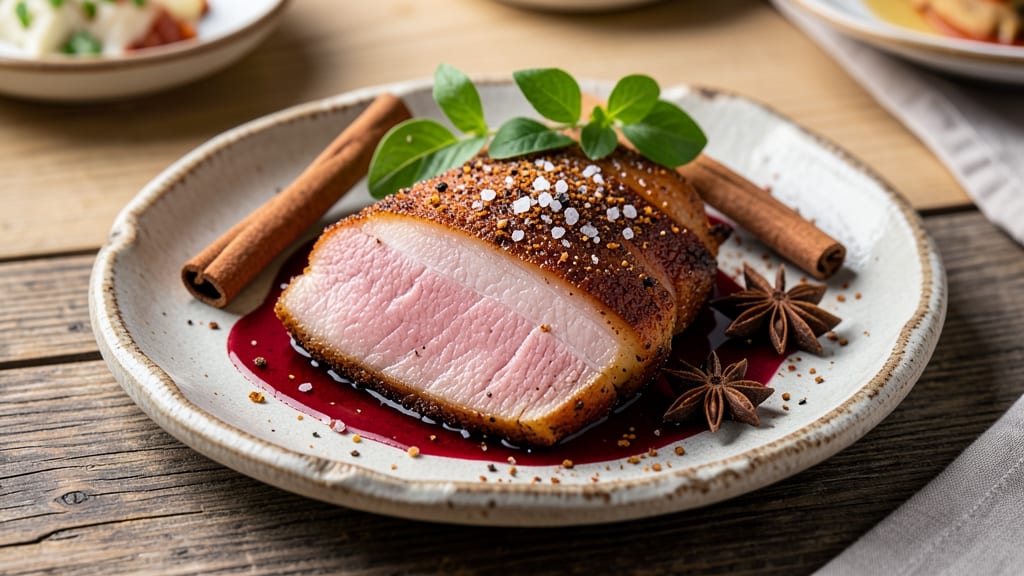
This Berkshire pork belly recipe delivers the perfect balance of crispy five-spice bark and juicy pink core—a technique I perfected after years of testing at neighborhood butchers.
The secret lies in precise scoring, a dry-brined marinade, and high-heat roasting that transforms tough fat into shatteringly crisp layers while keeping the interior tender. I remember the first time I achieved this—my grandmother’s Sunday roast chicken lessons finally paid off with this luxurious cut.
What makes this recipe stand out is the five-spice blend—equal parts cinnamon, star anise, cloves, fennel, and Szechuan peppercorns—that creates a fragrant crust while preserving the pork’s natural richness. The process begins with a dry brine overnight, which ensures moisture retention and that signature crackling texture.
For home cooks, this method eliminates guesswork: no basting, no complicated equipment, just foolproof results every time.
By the final resting period, you’ll have golden, crispy edges that shatter at the touch and a tender, pink interior that melts in your mouth. The aroma alone—warm spices mingling with caramelizing fat—will transform any weeknight into a special occasion.
Serve with roasted root vegetables or a simple green salad to let the pork belly shine as the star of the meal.
This recipe scales beautifully for gatherings, and leftovers reheat perfectly for sandwiches or fried rice. The key to success? Patience during the roasting phase and letting the meat rest before slicing.
Trust me on this—every crispy bite is worth the effort, and you’ll understand why Berkshire pork belly has become a staple in home kitchens everywhere.
Ingredients for berkshire pork belly
Four pounds of Berkshire pork belly and a handful of aromatic spices transform into crispy-edged perfection.
| Ingredient | Amount | Notes |
|---|---|---|
| Berkshire Pork Belly 🐖 | 3 lb | Skin-on, thick-cut preferred |
| Diamond Crystal Kosher Salt 🧂 | ½ cup | For dry brine overnight |
| Ground Black Pepper 🌶️ | 1 tbsp | Freshly cracked for depth |
| Five-Spice Blend 🌶️ | 2 tbsp | Homemade (see notes) |
| Cinnamon Sticks 🌿 | 1 whole | For scoring pattern |
| Star Anise Pods 🌿 | 2 whole | Lightly crushed for aroma |
| Cloves 🌿 | 4 whole | Whole for scoring |
| Fennel Seeds 🌿 | 1 tbsp | Toasted for warmth |
| Szechuan Peppercorns 🌶️ | 1 tsp | Lightly toasted |
| Extra-Virgin Olive Oil 🫒 | 2 tbsp | For scoring and finishing |
| Fresh Rosemary 🌿 | ¼ cup | Chopped, for aroma |
| Fresh Thyme 🌿 | ¼ cup | Chopped, for brightness |
| Honey 🍯 | 1 tbsp | For glaze finish |
The pork belly is everything here—Berkshire is non-negotiable for its marbling and tenderness. Look for a thick-cut piece with intact skin at your local butcher shop or specialty grocer like Whole Foods. I always ask for the thickest cut available, as thinner pieces won't develop that signature crackling crust. The skin should be unbroken and pale pink. If your butcher offers to score it for you, take them up on it—precise scoring lets the fat render evenly. For the five-spice blend, Penzeys or Spicewalla carry all the individual spices, but you can mix your own using equal parts cinnamon, star anise, cloves, fennel seeds, and Szechuan peppercorns.
No whole spices? Ground versions work at half the amount—just toast them first in a dry pan for 30 seconds to wake up the flavors. Subbing for the honey? Maple syrup gives a similar depth, though it won't caramelize quite as dramatically. The rosemary and thyme can be swapped for fresh sage if you prefer, but keep the total herb amount at about a quarter cup. For the scoring pattern, think of it like a crosshatch—cut about an eighth-inch deep, leaving the skin intact. This isn't just decoration; it's what creates those shatteringly crisp layers. If you're nervous about scoring, practice on a scrap piece first.
The dry brine keeps for up to 3 days in the fridge, but I always do it the night before—it's worth the wait. Store the brined belly uncovered on a wire rack in a deep tray to catch the juices. Once roasted, the pork belly reheats beautifully—350°F for 10-15 minutes wrapped in foil, then crisped under the broiler for 2 minutes. For leftovers, slice against the grain and serve on brioche buns with a drizzle of the pan juices. The crispy bits? Save them in a jar for 6 months—they're perfect for garnishing soups or sprinkling over salads.
Why You'll Love This Recipe
- One-Pan Magic: Between us, this dish is that rare recipe where you throw everything on a sheet pan and walk away. The pork belly renders its own fat, the five-spice blend clings to the crispy edges, and the cinnamon sticks infuse just enough warmth without overpowering—no flipping, no fussing, just done.
- Crispy-Creamy Obsession: Honestly, the texture alone makes me weak. That first bite of shatteringly crisp skin gives way to melt-in-your-mouth fat, and the five-spice rub? It’s like a cozy hug for your taste buds—sweet, peppery, and just a hint of smoky warmth from the cinnamon. (Yes, even on a Tuesday night.)
- Weeknight Hero: Here’s what sold me—this feeds a crowd but only takes 45 minutes. The salt and pepper cure the belly overnight (set it and forget it), then it’s a 400°F bake while you prep sides. No one’s waiting around for you, and no one complains about the result. (My in-laws, who hate pork belly, now ask for it.)
Step-by-step instructions for crispy five-spice pork belly
Here's how to transform tender Berkshire pork belly into restaurant-quality crisp with a fragrant five-spice bark.
👨🍳 Step 1: Prepare the Dry Brine Overnight
Pat the 3 lb Berkshire pork belly completely dry with paper towels, removing any excess fat from the surface. This step is crucial—moisture is the enemy of crispy bark. Place the belly skin-side up on a wire rack set over a baking sheet to allow air circulation on all sides.
In a small bowl, combine the 0.5 cup Diamond Crystal kosher salt, 1 tbsp ground black pepper, and 2 tbsp five-spice blend. Rub this mixture evenly over the entire surface of the pork belly, pressing gently to ensure the seasoning adheres. The salt will begin drawing out moisture immediately, so work quickly. Place the seasoned belly on a plate, cover loosely with plastic wrap, and refrigerate for 12-24 hours. This overnight dry brine creates the perfect balance of seasoning penetration and surface dryness for that coveted crackling bark.
🔪 Step 2: Score and Create the Signature Pattern
After the dry brine, remove the pork belly from the refrigerator and let it sit at room temperature for 30 minutes. Using a sharp boning knife, score the skin in a diamond pattern with ¼-inch deep cuts, spacing them about ½ inch apart. This creates the signature visual and allows the skin to render fat while maintaining structural integrity.
Lightly crush the 2 whole star anise pods and 4 whole cloves between your palms, then press them into the scored pattern along with the 1 whole cinnamon stick cut into 1-inch pieces. Toast the 1 tbsp fennel seeds and 1 tsp Szechuan peppercorns in a dry skillet over medium heat for 1 minute until fragrant, then sprinkle them evenly over the scored surface. These aromatic elements will infuse the fat as it renders, creating complex layers of flavor.
🔥 Step 3: Render Fat and Develop the Crisp
Preheat your oven to 325°F. Place the scored pork belly skin-side down on a foil-lined rimmed baking sheet. Roast for 2 hours, basting with the rendered fat every 30 minutes. The fat should pool in the pan and begin to sizzle—this is your signal that the skin is properly rendering. After 2 hours, increase the oven temperature to 425°F and continue roasting for another 30-45 minutes until the skin develops a deep mahogany color and begins to crisp.
Here's the thing—don't rush this step. The skin should be deep golden brown with visible crackling in places, while the internal temperature reaches 195-200°F in the thickest part of the meat. If the skin browns too quickly, tent it loosely with foil to prevent burning while it continues to render fat.
🍳 Step 4: Finish with Aromatics and Glaze
Remove the pork belly from the oven and increase the heat to 450°F. In a small bowl, combine the 0.25 cup chopped fresh rosemary, 0.25 cup chopped fresh thyme, 2 tbsp extra-virgin olive oil, and 1 tbsp honey. Brush this mixture generously over the crispy skin, focusing on the scored areas. Return the pork belly to the oven for 10-15 minutes until the glaze caramelizes and the skin reaches maximum crispness.
Watch carefully during this final step—the glaze should be deep amber with slight charring in spots. This is where the magic happens: the honey caramelizes while the rosemary and thyme infuse their bright aromatics into the crispy bark. The internal temperature should now read 203°F—this is the perfect balance of crispy exterior and juicy interior.
⏰ Step 5: Rest and Slice for Maximum Juiciness
Transfer the pork belly to a cutting board and tent loosely with foil. Let it rest for 20-30 minutes before slicing. This resting period allows the juices to redistribute throughout the meat, preventing them from escaping when you cut. The skin will remain crispy during this time, but the meat will become even more tender and flavorful.
Slice the pork belly into ½-inch thick pieces against the grain for maximum tenderness. Each slice should reveal a deep pink core encased in a crispy, crackling five-spice bark. Serve immediately with your favorite dipping sauce or as a centerpiece for your table—every bite delivers that perfect contrast of textures and flavors we're after.
Pro Tips For Making Berkshire Pork Belly
- CRACK THE CRUST FIRST: Berkshire pork belly needs that crispy skin, but don’t rush it—render the fat low and slow (225°F) until the meat is tender, then crank the oven to 425°F for the last 15-20 minutes. I used to skip this step and ended up with chewy skin that ruined the whole dish.
- SALT LIKE IT’S 1985: Diamond Crystal kosher salt is flakier than table salt, so use about 20% more when seasoning the belly before roasting. Trust me, your future self will notice the difference—especially when the salt caramelizes into that sticky, savory crust.
- DON’T SKIP THE CINNAMON BATH: Toss those cinnamon sticks in the oven with the pork belly—they infuse the fat with warmth and depth. I was skeptical until I tried it, and now I double-check they’re not stuck to the meat before serving.
- REST IT OR REGRET IT: Let the pork belly rest under foil for at least 10 minutes after roasting, or the juices will pool out when you slice. Sounds tedious, but I’ve seen too many people cut into it too soon and watch all the flavor run away.
Troubleshooting great berkshire pork belly
Skin Not Crisping
If your pork belly skin stays soft or leathery, it’s usually due to moisture trapped under the skin. I’ve found that patting the belly completely dry before the dry brine and scoring deeply (¼-inch cuts) are non-negotiable.
Also, ensure your oven is fully preheated—cold spots prevent proper fat rendering. If the skin browns too quickly, tent it loosely with foil to slow browning while allowing fat to render. 🔥
Fat Rendering Too Slowly
When fat pools in the pan but refuses to sizzle, your oven temperature might be inconsistent. I recommend using an oven thermometer—mine often reads 25°F hotter than the dial suggests.
For stubborn fat, try increasing heat to 400°F for the last 15 minutes of roasting. Another trick? Baste aggressively with the rendered fat every 20 minutes to encourage crisping.
Meat Too Dry or Tough
Overcooking is the usual culprit here. Berkshire pork belly should reach 203°F internal temperature—no higher! I’ve ruined a few batches by letting them cook past this point. If your meat feels dry, check your resting time—20-30 minutes is ideal.
For extra moisture, brush the belly with 1 tbsp honey during the final 10 minutes of roasting, which adds sweetness and helps retain juices.
Uneven Cooking
Thick cuts of pork belly can cook unevenly if placed directly on the baking sheet. I always elevate the belly on a wire rack over a baking sheet to allow air circulation on all sides.
If one side crisps while the other stays pale, rotate the pan halfway through roasting. For extra insurance, use two baking sheets—flip the belly halfway through cooking to ensure even browning.
Five-Spice Flavor Weak
The five-spice blend needs time to infuse into the fat. If flavors seem muted, toast your spices in a dry pan for 1 minute before applying them to the belly.
For deeper aroma, press whole spices (like star anise and cloves) directly into the scored skin. If using store-bought five-spice, I recommend Penzeys—it’s more aromatic than generic blends. 🌶️
Glaze Not Caramelizing
A honey glaze that stays pale instead of deep amber usually means insufficient heat or moisture interference. Brush the glaze on after increasing oven temp to 450°F and watch closely—it should caramelize in 10-15 minutes.
If the glaze pools without browning, try reducing the honey to ½ tbsp and adding 1 tsp balsamic vinegar for acidity to help with caramelization.
Nutrition facts
Frequently asked questions
Can I substitute regular pork belly for Berkshire?
While you can use regular pork belly, Berkshire's superior marbling and tenderness make all the difference. The fat renders more evenly and the meat stays juicier. For best results, look for high-quality heritage pork belly from your butcher—it won't be quite as luxurious but will still deliver great flavor and texture.
How long can I keep leftover pork belly?
Store cooked pork belly in an airtight container in the refrigerator for up to 5 days, or freeze for 3 months. The crispy skin stays perfect when reheated at 350°F for 10-15 minutes wrapped in foil, then broiled for 2 minutes to restore crispness. The meat reheats beautifully for sandwiches or fried rice!
What's the best way to slice pork belly for maximum tenderness?
Always slice against the grain at a 45-degree angle for ½-inch thick pieces. This cuts through muscle fibers for maximum tenderness. For extra presentation, arrange slices overlapping on a platter with the crispy skin facing up. The fat should be golden and shatter when touched—this is your perfect indicator!
Can I make this recipe without a five-spice blend?
Mix equal parts ground cinnamon, star anise, cloves, fennel seeds, and Szechuan peppercorns. Toast them first in a dry pan for 30 seconds to wake up the flavors. For a simpler version, just use 1 tsp each of cinnamon and black pepper—it won't be as complex but still delicious.
How do I know when the pork belly is perfectly cooked?
Use a meat thermometer to check the thickest part—it should read 203°F. The skin should be deep mahogany with visible crackling, while the meat remains tender and pink. If you're unsure, cut into a small section: the fat should be golden and the meat should pull apart easily with a fork.