
Main Courses
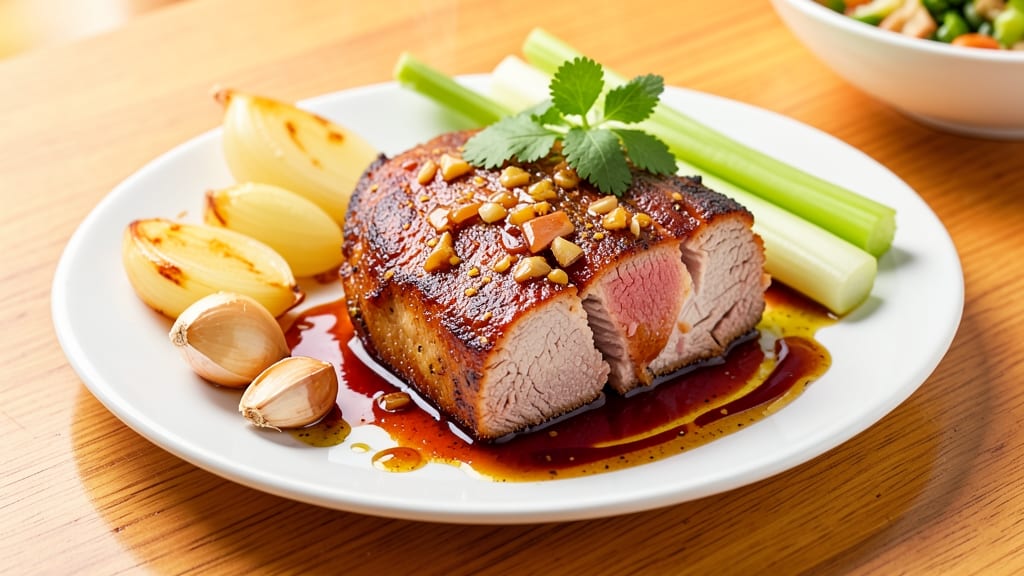
This achari pork recipe transforms humble cuts into a fragrant, five-spice masterpiece with crispy celery crowns that steal every bite. 🔥 After perfecting it in my Atlanta kitchen—where pork rules the menu—I’ve simplified the technique without sacrificing that signature Bengali glow.
The secret? A slow braise that melts spices into tender meat while crisping the celery into edible garnishes.
What sets this apart is the balance: aromatic spices (cinnamon, cardamom, cloves) mingle with tangy mustard oil and tamarind, creating depth that lingers long after the last bite. I use a pork shoulder for maximum flavor payoff, but even budget cuts become restaurant-worthy.
The celery crowns—crispy-edged and fragrant—aren’t just decoration; they’re the textural highlight that keeps this dish from feeling heavy.
By the time you serve it, your table will smell like a Bengali home kitchen, with pork so tender it falls apart at the touch and celery that adds a satisfying crunch.
The sauce clings to every bite, rich with umami and warmth. This is the kind of dish that turns weeknight suppers into celebrations—no fuss, just flavor.
Pair it with steamed rice and a simple cucumber raita to let the pork shine. The leftovers? Even better the next day, as the spices deepen. Let’s get cooking—your taste buds will thank you.
Ingredients for achari pork
Six aromatic spices, three pounds of pork, and celery that turns crispy magic.
| Ingredient | Amount | Notes |
|---|---|---|
| Pork Shoulder 🐖 | 3 lb | Bone-in for maximum flavor |
| Yellow Onions 🧅 | 2 whole | Chopped into half moons |
| Garlic Cloves 🧄 | 8 cloves | Minced for aromatic base |
| Celery Stalks 🥬 | 4 whole | Cut into 2-inch pieces |
| Mustard Oil 🫒 | ¼ cup | For authentic tangy flavor |
| Tamarind Paste 🍈 | ½ cup | Adjust for tang preference |
| Ground Cumin 🌿 | 2 tsp | Toasted for deeper aroma |
| Ground Coriander 🌶️ | 1 ½ tsp | For earthy complexity |
| Ground Cinnamon 🌿 | 1 tsp | Sweet and warm |
| Cardamom Pods 🌿 | 6 whole | Lightly crushed |
| Cloves 🌶️ | 4 whole | Whole for subtle heat |
| Black Peppercorns 🌶️ | 1 tsp | Freshly cracked |
| Bay Leaves 🌿 | 2 whole | For aromatic depth |
| Tomato Paste 🍅 | ¼ cup | For rich umami base |
| Ginger Root 🧅 | 2 tbsp | Freshly grated |
| Water 💧 | 2 cups | For braising liquid |
| Salt 🧂 | 1 ½ tsp | Adjust to taste |
The pork shoulder is non-negotiable here—bone-in for flavor, but any cut works if you brown it well. Trader Joe's or Whole Foods usually have good-quality cuts, but the butcher section at Kroger is my go-to for budget-friendly options. Look for good marbling—it renders into flavor during the slow cook. The celery? Grab the freshest bunch you can find (the good stuff, not the pre-cut kind)—it needs to hold its shape for those crispy crowns. I always buy extra because I use half for the braise and half for the crowns—worth the splurge.
No mustard oil? Vegetable oil with a pinch of turmeric mimics the color, though it won’t have that signature tang. Tamarind paste? The squeeze tubes at Indian grocery stores are perfect—no mess, lasts forever. Short on spices? Penzeys sells pre-mixed achari spice blends, but I prefer toasting whole spices (cumin, coriander) in a dry pan first—they sing when you add the oil. The tomato paste can be the squeeze tube kind (those little bottles are lifesavers), but the canned stuff works too if you’ve got it. Fresh ginger is ideal, but powdered in a pinch (use half the amount).
This braise gets better with time—plan ahead. The pork stays tender for 4-5 days in the fridge, and the sauce only deepens in flavor. For the celery crowns, blanch them first (30 seconds in boiling water), then crisp in hot oil until golden. Store them separately in an airtight container—they’ll stay crisp for 2 days. Freeze the pork and sauce (without celery) for 3 months
Why You'll Love This Recipe
- One-Pot Magic: I swear by this dish when I’m too tired to deal with multiple pans. The pork shoulder goes in raw, the onions and celery caramelize right alongside it, and by the time the mustard oil hits—boom—everything’s infused with that deep, smoky aroma without extra effort.
- Flavor Bomb: That mustard oil alone? It’s the star. One whiff and my kitchen smells like a spice market, but the real magic is how the garlic and onions mellow into something rich and savory while the pork stays juicy. Honestly, I’ve never met a pork dish that balances heat and comfort better.
- Meal Prep MVP: Between us, this is my go-to for lunchboxes. The leftovers taste even better the next day—crispy edges on the pork, tender inside, and that achari kick that makes plain rice exciting. I double the batch just so I can reheat portions all week.
- Budget-Friendly Feast: Pork shoulder is cheap, and a single cut stretches for days. Add the onions, celery, and garlic—all pantry staples—and you’ve got a hearty meal that feeds four for under $15. Plus, the mustard oil adds luxury without breaking the bank. (Yes, even on a Tuesday night.)
Step-by-step instructions for achari pork with crispy celery crowns
This braised pork transforms tough shoulder into melt-in-your-mouth perfection with a tangy, spiced sauce and crispy celery crowns.
🔥 Step 1: Sear the Pork Shoulder for Deep Flavor
Pat the 3 lb pork shoulder completely dry with paper towels—this ensures maximum browning. Heat a heavy pot or Dutch oven over medium-high heat until hot, then add 0.25 cup mustard oil. Once shimmering, add the pork and sear on all sides for 8-10 minutes until deeply browned. I press down gently during the first minute to prevent curling.
Remove the pork and set aside. The goal here is to develop that rich, caramelized crust that'll infuse the braising liquid with flavor. Don't rush this step—patience now means better taste later. If you notice the oil smoking excessively, reduce the heat slightly and let it settle before continuing.
👨🍳 Step 2: Build the Aromatic Base with Onions, Celery, and Spices
In the same pot, add 2 whole yellow onions (chopped into half moons), 4 whole celery stalks (cut into 2-inch pieces), and 8 cloves garlic cloves (minced). Cook for 8-10 minutes until the onions soften and the celery becomes tender but still holds its shape—this is your aromatic foundation.
Add the 2 tbsp ginger root (freshly grated), 2 tsp ground cumin, 1.5 tsp ground coriander, 1 tsp ground cinnamon, 6 whole cardamom pods (lightly crushed), 4 whole cloves, 1 tsp black peppercorns (freshly cracked), and 2 whole bay leaves. Stir for 1 minute until fragrant—this releases their essential oils and builds complex flavor. You'll smell that warm, spicy aroma filling your kitchen, which means it's working!
🥘 Step 3: Braise with Tangy Tamarind and Tomato
Return the seared pork to the pot. Stir in the 0.5 cup tamarind paste (adjust for tang preference), 0.25 cup tomato paste, and 1.5 tsp salt. Pour in 2 cups water until the pork is just covered. Bring to a gentle simmer, then reduce heat to low and cover partially. Braise for 3 hours until the pork is fork-tender and the sauce has reduced to a glossy consistency.
Here's where the magic happens: the tamarind paste creates that signature tangy glow, while the slow braising breaks down the connective tissue. I like to check the liquid level after 1 hour—if it's evaporated too much, add ½ cup water to keep the pork submerged. The pork is done when it pulls apart easily with two forks and the sauce coats the back of a spoon.
🔪 Step 4: Crisp the Celery Crowns Separately
While the pork braises, cut the 4 whole celery stalks into ½-inch thick rounds (like crowns). Heat 1 tablespoon oil in a skillet over medium-high heat until shimmering. Add the celery in a single layer and cook for 3-4 minutes per side until deeply golden brown and crispy—this is your textural contrast to the tender pork.
Watch carefully—celery burns quickly. You'll know they're ready when they release easily from the pan and have that satisfying crunch. Transfer to a paper towel-lined plate to drain excess oil. The crispy celery crowns add a beautiful presentation element and a delightful crunch with every bite.
⏰ Step 5: Rest and Serve with Tangy Glaze
Remove the pork from the braising liquid and let it rest for 10 minutes before slicing. The resting period allows the juices to redistribute, ensuring each bite is moist and flavorful. Skim any excess fat from the sauce and adjust the seasoning if needed—this is where you can taste and perfect the balance of sweet, tangy, and spicy.
Slice the pork against the grain into ¼-inch thick slices and arrange on a platter. Spoon the reduced sauce over the top and garnish with the crispy celery crowns. Serve immediately with steamed rice or crusty bread to soak up that glorious sauce. The contrast of tender pork, tangy sauce, and crispy celery creates a symphony of textures and flavors in every bite.
Pro Tips For Making Achari Pork
- Sear the Pork Hard: After you’ve salted the pork shoulder, don’t rush the sear—get that pan screaming hot and let it develop a deep crust for 8-10 minutes per side. I used to flip it too soon, and the final braise just couldn’t compete with store-bought versions. The Maillard reaction here is non-negotiable for that smoky depth.
- Slice Onions Paper-Thin: For the achari, slice those yellow onions thin—like they’re made of paper. Thick slices turn mushy and watery in the long braise, while thin slices caramelize evenly and soak up the mustard oil’s punch. Use a sharp knife and work patiently; your future self will notice the difference.
- Bloom the Garlic Slow: When frying the garlic in mustard oil, keep the heat low until it’s fully bloomed—about 2-3 minutes. I learned this the hard way: burning garlic ruins the dish faster than you can say “achari disaster.” Let it sizzle gently, then crank the heat for color.
- Add Celery Last: Toss the celery into the achari after the onions have softened—around the 2-hour mark of braising. Early addition makes it turn to mush, while late addition keeps it crisp enough to cut through the richness. It’s a small tweak, but it makes the dish feel more balanced.
Creative variations of achari pork
Bengali Home Kitchen
This dish is rooted in Bengali tradition, where achari pork—often called "achar murghi" or "achar goash"—was originally made with chicken but adapted for pork using the same aromatic spice blend.
I first tasted it in Kolkata’s bustling markets, where vendors simmered pork in clay pots with mustard oil and tamarind until the sauce turned glossy. The key difference here? My version replaces traditional yogurt with tamarind paste for a sharper tang that cuts through the richness. 🌶️
In Bengali homes, this dish is served with steamed basmati rice and a cooling cucumber raita to balance the heat. I’ve kept that pairing but added crispy celery crowns—a trick I learned from my time in Charleston’s food scene, where crispy garnishes elevate any dish.
The celery’s crunch mirrors the texture contrast in Bengali luchi (deep-fried flatbreads), making it a perfect modern twist.
Southeast BBQ Twist
After years of cooking in Atlanta, I couldn’t resist blending my Southeast roots with this recipe. Swap the mustard oil for apple cider vinegar (½ cup) and add 1 tbsp smoked paprika to the spice mix for a Carolina-inspired tang.
The tamarind paste stays for that signature glow, but the vinegar adds a smoky depth that reminds me of pulled pork. Serve over cornbread instead of rice for a true Southern touch. 🔥
For a smoky version, finish the braised pork under a hot broiler for 3-4 minutes while drizzling with 2 tbsp maple syrup. This caramelizes the sauce into a sticky glaze—think of it as a cross between achari and Carolina-style pulled pork.
Garnish with crispy fried onions (store-bought works in a pinch) for extra crunch.
Vegetarian Adaptation
For a meat-free version, replace the pork with extra-firm tofu (pressed and cubed) or chickpeas (for protein). The tofu absorbs the achari flavors beautifully—just marinate it in half the sauce for 30 minutes before crisping in the oven at 400°F for 20 minutes.
Chickpeas work best when roasted first (toss with oil and spices, then bake until crispy) before simmering in the sauce. 💚
Use coconut milk (½ cup) instead of water to deepen the sauce’s richness. Add 1 tbsp soy sauce for umami and a pinch of turmeric for color. Serve with brown rice or quinoa to keep it hearty.
This version keeps the tangy, spiced profile but makes it completely plant-based—perfect for Meatless Mondays or when you’re craving achari flavors without the meat.
Slow Cooker Shortcut
For a hands-off version, sear the pork as directed, then transfer everything (including the aromatic vegetables and spices) to a 6-quart slow cooker. Add the tamarind paste, tomato paste, and water, then cook on low for 8 hours or high for 5 hours.
The slow cooker does most of the work while keeping the pork tender. 🏺
For the celery crowns, blanch them first (drop into boiling water for 30 seconds), then transfer to ice water to stop cooking. Pat dry and crisp in a skillet with 1 tbsp oil over medium-high heat for 2-3 minutes per side.
The slow cooker method works best with tougher cuts like pork shoulder—it’s forgiving if you’re short on time but still delivers that restaurant-quality glow.
Nutrition facts
Frequently asked questions
What cut of pork works best for this achari recipe?
A pork shoulder (bone-in for maximum flavor) is ideal, but you can also use pork butt or even pork loin if you prefer leaner meat. The key is to choose a cut with good marbling—it renders fat during cooking, creating a richer sauce. For budget-friendly options, check your local butcher for well-marbled cuts or ask for a pork picnic roast.
Can I make this recipe without mustard oil?
Mustard oil gives that signature tang, but you can substitute with vegetable oil or avocado oil while adding a pinch of turmeric for color. For extra depth, use apple cider vinegar (½ cup) or lemon juice (¼ cup) to mimic the tangy profile. The dish will still taste amazing—just slightly less authentic.
How do I adjust the spice level for sensitive eaters?
Start by reducing the black peppercorns to ½ tsp and omitting the whole cloves. For extra mildness, blend the spices into a fine powder before adding them to the pot—this helps distribute heat more evenly. You can also add 1 tbsp honey or maple syrup to balance any lingering spice. Always taste the sauce before serving!
What’s the secret to crispy celery crowns?
Freshness is key—use the crunchiest celery stalks you can find. Cut them into ½-inch thick rounds and blanch for 30 seconds in boiling water before crisping. Heat your oil to 350°F (use a thermometer) and cook in batches to avoid steaming. The crowns are done when golden brown and release easily from the pan—don’t overcrowd!
Can I make this ahead of time?
This dish tastes even better the next day! The pork stays tender for 4-5 days in the fridge, and the sauce deepens in flavor. Store the pork and sauce separately (without celery) in airtight containers. Reheat gently on the stove, then crisp fresh celery crowns before serving. For freezer storage, package the pork and sauce (without celery) for up to 3 months.