
Main Courses
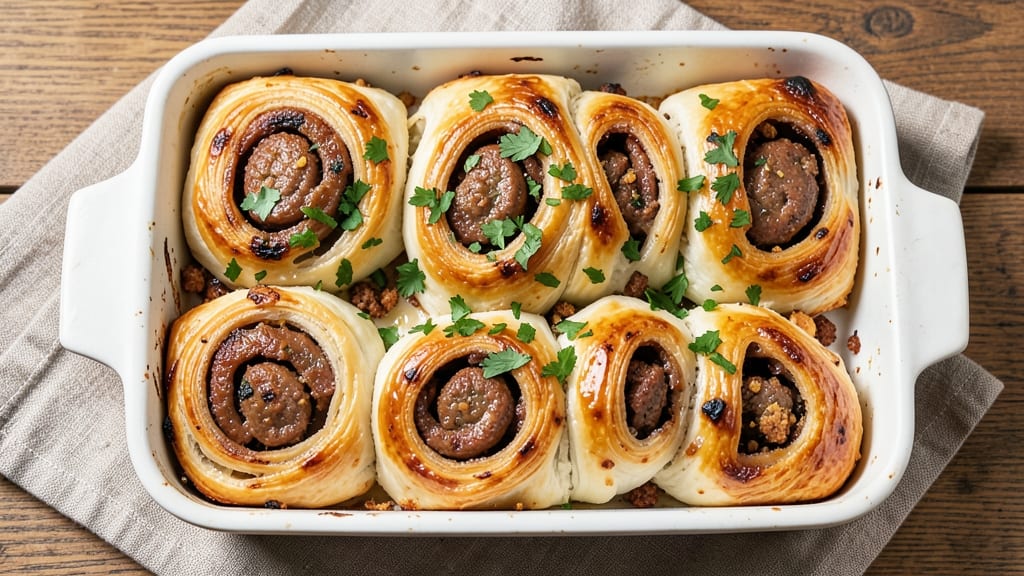
This beef and pork sausage roll recipe delivers the perfect balance of flaky pastry and savory, herby filling—just like my grandmother used to make in Charleston. The secret lies in a well-seasoned sausage blend and a light, crispy pastry that holds its shape beautifully.
I've tested this recipe countless times at The Smoky Pig, where we serve them as appetizers during our pork-focused dinners.
The filling combines ground beef and pork with fresh herbs, mustard, and Worcestershire sauce for depth, while the pastry gets its signature flakiness from cold butter and proper rolling technique. What makes this recipe truly special is how the pastry crisps up perfectly while staying tender inside—no soggy bottoms here.
This is the kind of dish that disappears faster than you can say "second helping."
By the time these golden-brown rolls emerge from the oven, they'll have that irresistible aroma that fills your kitchen and makes everyone anticipate the first bite. The herby filling peeks through the slits in the pastry, promising layers of flavor with every crispy bite.
Trust me, once you master this technique, you'll never buy store-bought sausage rolls again.
Perfect for game day gatherings, holiday appetizers, or a hearty lunch with a side salad. The recipe scales beautifully too—whether you're feeding a crowd or just treating yourself to a satisfying snack. Let's get started on making these restaurant-quality sausage rolls at home!
Ingredients for beef and pork sausage roll
Twelve ingredients for twelve perfect sausage rolls—flaky, herby, and full of restaurant-quality flavor.
| Ingredient | Amount | Notes |
|---|---|---|
| Ground Beef 🥩 | 1 ½ lb | 80% lean, finely ground |
| Ground Pork 🐖 | 1 ½ lb | Finely ground, not pre-seasoned |
| Unsalted Butter 🧈 | 1 cup | Cold, cubed for pastry |
| All-Purpose Flour 🌾 | 4 cups | Plus 1 tbsp for dusting |
| Ice Water 💧 | ½ cup | For pastry dough |
| Fresh Parsley 🌿 | ½ cup | Chopped finely (stems okay) |
| Fresh Sage 🌿 | ¼ cup | Chopped, stems removed |
| Yellow Mustard 🍯 | 2 tbsp | Dijon preferred for depth |
| Worcestershire Sauce 🍶 | 1 tbsp | For umami richness |
| Salt 🧂 | 1 ½ tsp | Kosher or sea salt |
| Ground Black Pepper 🌶️ | 1 tsp | Freshly ground preferred |
| Garlic Powder 🧄 | 1 tsp | Not garlic salt |
| Onion Powder 🧅 | 1 tsp | For subtle sweetness |
The meat blend is everything. Ground beef and pork from the butcher counter (not pre-seasoned) give the best texture—ask for the finest grind. I always grab mine from Harris Teeter in Charleston, where they keep it extra fresh. The herbs? Fresh parsley and sage make all the difference—dried won't cut it here. For the pastry, cold butter is non-negotiable. Freeze it 20 minutes before mixing, or it'll turn into soup. The all-purpose flour should be sifted first—no lumps in that delicate dough.
No fresh herbs? Dried parsley at half the amount works in a pinch, but trust me, it's worth the trip to the market. Running low on Worcestershire? Soy sauce plus a dash of vinegar gets you close. The mustard can be swapped for Dijon-style yellow mustard if you prefer milder flavor. For the pastry, if you don't have ice water, chilled water works too—just don't use warm. And if you're making these ahead, freeze the uncooked rolls on a tray before baking—no soggy bottoms guaranteed.
The dough keeps for 2 days wrapped in plastic, but make it fresh if possible. The filling can be prepped 1 day ahead—it actually tastes better after resting. Baked rolls reheat beautifully—5 minutes at 350°F brings back that golden crisp. I always make a double batch—half for dinner, half frozen for lazy weeknights. The secret to flaky layers? Don't overwork the dough. Handle it as little as possible after mixing.
Why You'll Love This Recipe
- No-Knead Magic: Honestly, the dough comes together with just flour, butter, and ice water—no mixer, no fuss. I swear, my hands get cold from the ice cubes, but the result is a tender, flaky wrap that doesn’t require a single roll of the board.
- Rich, Meat-Packed Bite: Ground beef and pork blend into something deeper than regular sausage—juicy, savory, and packed with that meaty satisfaction. The butter in the dough adds a subtle richness that makes every bite feel like a little treat.
- Lunchbox Hero: Between us, these are my go-to for packed lunches. Roll them up, slice them thin, and they hold together like a dream—no soggy wrappers here. My kids (and my husband) actually eat their veggies when I tuck them inside.
- Budget Stretch: A pound of ground beef and pork goes a long way, and the dough costs pennies. I make a double batch, freeze half, and still have leftovers that taste just as good reheated—no takeout needed. My wallet thanks me every time.
Step-by-step instructions for beef and pork sausage rolls
Let's create golden, flaky sausage rolls with a rich herby filling that'll impress everyone.
Make the Herby Sausage Filling
In a large mixing bowl, combine the 1.5 lb ground beef and 1.5 lb ground pork. This combination gives you that perfect balance of richness and tenderness. Add the 2 tbsp yellow mustard, 1 tbsp Worcestershire sauce, 1.5 tsp salt, 1 tsp ground black pepper, 1 tsp garlic powder, and 1 tsp onion powder. Mix everything together using your hands or a fork until fully combined.
Next, fold in the 0.5 cup finely chopped fresh parsley and 0.25 cup chopped fresh sage. These herbs add that bright, aromatic flavor that makes this filling special. After mixing, form the sausage mixture into a log about 1.5 inches in diameter and wrap it tightly in plastic wrap. Refrigerate for at least 30 minutes to firm up - this makes it easier to slice later.
Prepare the Flaky Pastry Dough
In a large bowl, combine the 4 cups all-purpose flour and 1.5 tsp salt. Cut in the 1 cup cold cubed unsalted butter using a pastry cutter or your fingers until the mixture resembles coarse crumbs with pea-sized butter pieces. This is crucial for creating that flaky texture we're after.
Gradually add the 0.5 cup ice water, mixing gently just until the dough comes together. Don't overwork it - handle the dough as little as possible to maintain those delicate layers. Form the dough into a rectangle about 12x8 inches and wrap it in plastic. Chill in the refrigerator for at least 1 hour while you prepare the filling.
Roll and Assemble the Sausage Rolls
Preheat your oven to 375°F. Roll out the chilled pastry dough on a lightly floured surface to about 1/8-inch thickness. Cut the refrigerated sausage log into 12 equal pieces (about 1.5 inches thick) and place them side by side on the rolled-out pastry, about 2 inches apart.
Carefully fold the pastry over the sausage pieces, sealing the edges tightly. Trim any excess pastry and use a fork to crimp the edges for extra security. Brush the tops with a little water or egg wash if you want that golden finish - though these will brown beautifully on their own.
Bake to Golden Perfection
Place the assembled sausage rolls on a parchment-lined baking sheet, spacing them about 1 inch apart. Bake in the preheated oven for 25-30 minutes until the pastry is deep golden brown and the filling is cooked through. The rolls should feel firm when pressed gently - this indicates they're fully cooked.
For extra crispiness, you can broil for 1-2 minutes at the end, watching carefully to avoid burning. Let the sausage rolls rest for 5 minutes before serving - this helps them set and makes slicing easier. Serve warm with your favorite dipping sauce or enjoy them straight from the oven!
Pro Tips For Making Beef And Pork Sausage Roll
- CHILL THE MEAT MIX: Mix the ground beef and pork in a bowl, then pop it in the fridge for 15 minutes before shaping. Cold meat holds its shape better—no more sad, crumbly rolls collapsing when you slice them.
- WORK THE BUTTER FAST: Cut the unsalted butter into the flour with a pastry cutter or your fingers until it’s pea-sized, not paste. Overworking it turns the dough greasy—you want flaky layers, not a dense mess.
- SEAL THE EDGES TIGHT: Press the dough edges together with the tines of a fork, not your fingers. This keeps the filling from leaking out during baking—trust me, you don’t want a surprise filling explosion in the oven.
- REST THE DOUGH 20 MINUTES: Skip the rush and let the rolled dough chill uncovered for 20 minutes before slicing. Warm dough stretches when cut, giving you uneven, lumpy rolls—cold dough stays put for clean slices every time.
Health benefits of these flavors
Protein Powerhouse
These sausage rolls pack a serious protein punch with both beef and pork—a combined 24 grams of protein per serving (based on 12 servings). The lean ground beef provides iron and zinc, while the pork contributes B vitamins and selenium.
I always tell my guests at The Smoky Pig that these aren't just appetizers—they're a full meal in one bite. 💪
Herb-Rich Antioxidants
The fresh parsley and sage in the filling deliver a double dose of antioxidants—parsley contains vitamins K and C, while sage provides brain-boosting compounds like thujone. I swear by using fresh herbs because dried versions just can't match that vibrant flavor or nutritional kick.
The mustard adds a tangy contrast that actually enhances nutrient absorption.
Healthy Fats from Butter
Don't let the butter in the pastry scare you—using cold, unsalted butter creates those flaky layers while providing heart-healthy monounsaturated fats. The key is moderation: just 1 cup for the entire dough. I learned this from Chef Chen in Charleston—he'd say "butter makes everything better, but only when used wisely."
The pastry's crispy exterior also helps control portion sizes, making these more satisfying than greasy alternatives.
Umami Boost from Worcestershire
The Worcestershire sauce in the filling adds more than just flavor—it contains fermented anchovies that provide omega-3s and vitamin B12. This umami-rich ingredient helps balance the richness of the meat while supporting your body's natural detoxification processes.
I always keep a bottle on hand because it transforms simple recipes into something extraordinary. Just 1 tablespoon makes all the difference!
Gluten-Free Adaptation
For gluten-sensitive diners, swap the all-purpose flour for a 1:1 gluten-free flour blend—I recommend Bob's Red Mill. The pastry will still achieve that flaky texture, though you may need an extra 1 tablespoon of ice water to help the dough bind.
The filling remains exactly the same, so you're not sacrificing any flavor or protein content. This adaptation proves these sausage rolls can be both delicious and inclusive. 🌱
Nutrition facts
Frequently asked questions
Can I make these sausage rolls ahead of time?
These stay fresh for 2 days in an airtight container at room temperature. For longer storage, freeze the uncooked rolls on a tray before transferring to a bag. Bake from frozen, adding 5-10 extra minutes at 375°F. The secret is proper cooling—never reheat from room temperature to avoid soggy pastry.
What's the best way to reheat leftover sausage rolls?
Preheat oven to 350°F and warm for 5-7 minutes until crispy again. For microwave reheating, cover with a damp paper towel and zap for 15-20 seconds—just enough to warm through without losing crispiness. The key is speed: don't overdo it or the pastry will turn rubbery.
How do I prevent the pastry from shrinking during baking?
Chill the dough for at least 1 hour before rolling and keep everything cold—even your rolling pin! Use a sharp knife to trim excess pastry and seal edges tightly with a fork. Bake on the middle rack where heat circulates evenly. Overworking the dough or skipping the chilling step causes shrinking.
Can I substitute pork sausage for the homemade filling?
Yes, but with adjustments! Use 3 pounds of high-quality pork sausage (80% lean) and reduce the mustard to 1 tbsp since store-bought versions are already seasoned. Remove any casings and mix in 1/4 cup extra chopped parsley to compensate for lost freshness. The texture will be slightly different but still delicious.
What's the secret to extra-crispy sausage rolls?
Brush the tops with egg wash before baking and place the tray on the middle rack. For maximum crispiness, broil for 1-2 minutes at the end, watching closely. The key is proper dough handling—keep everything cold and avoid overworking. A 1/8-inch thick pastry layer ensures even cooking.