
Main Courses
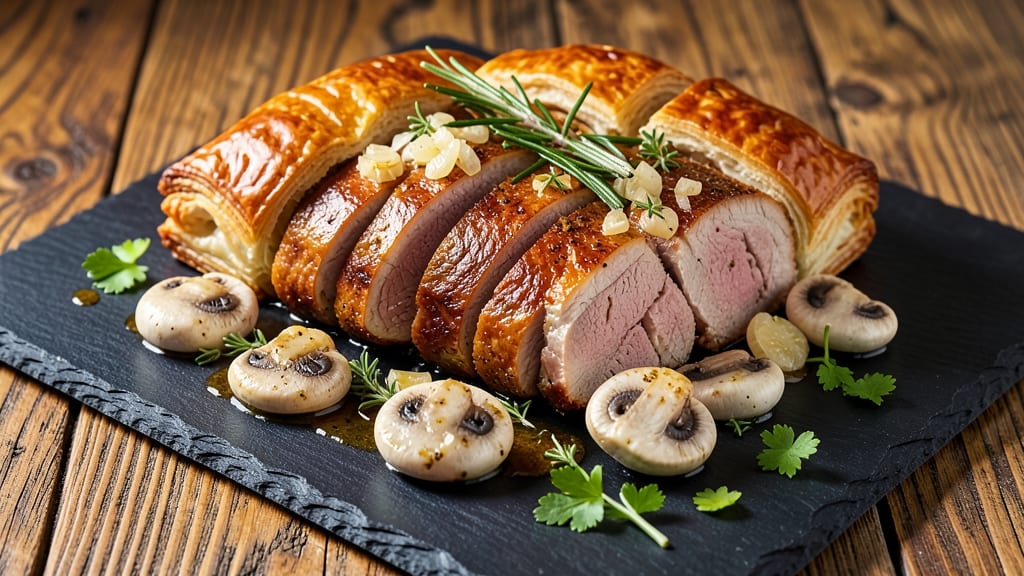
Alton Brown's pork Wellington recipe delivers a showstopping centerpiece that combines tender pork, aromatic duxelles, and flaky pastry in perfect harmony. 🔥 As someone who's spent years perfecting pork preparations, I can tell you this dish is where technique meets theater—every slice reveals layers of flavor and texture that make it unforgettable.
The secret lies in searing the pork to lock in juices before wrapping it in a rich herb crust, then encasing it in puff pastry that crisps beautifully.
What sets this Wellington apart is Alton Brown's signature approach to the duxelles—finely chopped mushrooms, shallots, and herbs cooked down until they form an intense, flavorful paste. This isn't just a recipe; it's a masterclass in balancing textures: the crisp pastry shell, tender pork, and velvety mushroom filling.
The chilling step before baking is crucial—it prevents the pastry from shrinking and ensures that golden, crackly crust we all crave.
By the time you serve this dish, you'll have created something restaurant-worthy with a technique that's surprisingly approachable. The aroma alone will have everyone gathering at the table, while the presentation—with its elegant scoring pattern—makes it perfect for special occasions.
Pair it with a bold red wine reduction or roasted seasonal vegetables to complete the experience.
This is the kind of recipe that transforms a simple pork loin into a centerpiece worthy of any holiday table or dinner party. The methods I'll share have been tested and refined to ensure success, whether you're making your first Wellington or perfecting your technique.
Let's get started on creating this herb-crusted masterpiece.
Ingredients for alton brown pork wellington
The perfect harmony of tender pork, rich duxelles, and golden pastry—just 14 ingredients for a showstopping centerpiece.
| Ingredient | Amount | Notes |
|---|---|---|
| Center-Cut Pork Loin 🐖 | 2 lb | Thick-cut, 1.5-inch thick |
| White Mushrooms 🍄 | 1 lb | Finely chopped, stems reserved |
| Shallots 🧅 | 4 whole | Minced, about 0.25 cup |
| Fresh Thyme 🌿 | ½ oz | Leaves only, finely chopped |
| Fresh Rosemary 🌿 | ¼ oz | Leaves only, finely chopped |
| Fresh Parsley 🌿 | ¼ cup | Flat-leaf, finely chopped |
| Unsalted Butter 🧈 | ½ cup | Cold, cubed for searing |
| Puff Pastry 🥧 | 1 sheet | Store-bought or homemade |
| Large Egg 🥚 | 1 whole | Beaten for egg wash |
| Diamond Crystal Kosher Salt 🧂 | 1 ½ tsp | For seasoning |
| Freshly Ground Black Pepper 🌶️ | ½ tsp | For seasoning |
| Olive Oil 🫒 | 1 tbsp | For mushroom cooking |
| Red Wine 🍷 | ¼ cup | Dry, for deglazing |
| Vegetable Oil 🫒 | 1 tbsp | For pastry brushing |
The pork loin is non-negotiable here—center-cut and thick ensures even cooking and maximum tenderness. Costco or high-end butchers carry the best quality, but any well-marbled loin works if you can't find it there. Trim any visible fat before searing, but leave a thin layer for flavor. For the mushrooms, fresh cremini or baby bella add depth, but white mushrooms work just fine. The key is chopping them finely—almost paste-like, so they blend seamlessly into the duxelles. Trader Joe's sells pre-sliced mushrooms if you're short on time, but they won't be as finely textured.
No fresh thyme or rosemary? Dried works at half the amount, but the aroma won't be the same. The shallots can be swapped for green onions if needed, though they'll add a milder flavor. For the red wine, Cabernet Sauvignon or Merlot are ideal, but any dry red will do—just avoid cheap cooking wine. The puff pastry is where the magic happens—Pepperidge Farm or store-brand both work, but avoid pre-baked sheets. If you're feeling ambitious, homemade puff pastry gives the best results, though it requires more time. The butter should be cold and cubed—this ensures a good sear on the pork without melting into a greasy mess.
This dish is all about patience—chill the assembled Wellington for at least 30 minutes before baking to prevent pastry shrinkage. Store any leftover duxelles in an airtight container for up to 3 days in the fridge, or freeze for 3 months. The pastry can be prepped a day ahead and wrapped in plastic, but don't assemble the Wellington until you're ready to bake. Leftovers? Reheat in a 350°F oven until warm—it reheats beautifully, though the pastry won't be quite as crisp. For a crowd, double the recipe, but use two pork loins to keep the size manageable.
Why You'll Love This Recipe
- No Fuss Wrapping: I swear by the puff pastry trick—it’s pre-made, pre-flaked, and takes zero rolling or fussing. Just spread the mushroom-duxelles (that’s your shallots, thyme, and rosemary) on the pork, wrap it like a burrito, and bake. Honestly, the hardest part is deciding whether to slice it thick or thin.
- Herb-Packed Punch: That rosemary and thyme? They’re not just garnish—they infuse the pork while it bakes, giving every bite a bright, earthy aroma. The mushrooms soak up all the flavor too, so you’re basically eating a little herb garden with every forkful. (Yes, even on a Tuesday night.)
- Sunday Dinner Ready: This isn’t just a weeknight hack—it’s the star of holiday tables, potlucks, or when your in-laws ask what’s for dinner. Slice it thick for a crowd, or serve individual portions with pan sauce drizzled over mashed potatoes. My daughter picks out the rosemary sprigs, but still asks for seconds.
- Leftovers That Don’t Suck: Cold pork Wellington? Surprisingly good. The pastry stays crisp, the pork stays juicy, and the mushrooms add texture. I’ve packed it for lunches, sliced it for sandwiches, and even tossed chunks into a grain bowl. (Between us, it’s my secret weapon for avoiding takeout.)
Step-by-step instructions for alton brown's pork Wellington
Here's how to assemble this showstopping dish with perfect layers and golden pastry.
👨🍳 Step 1: Prepare the Pork Loin and Herb Butter
Start by trimming any excess fat from the 2 lb center-cut pork loin, leaving about ¼-inch of fat cap for flavor. Pat the meat completely dry with paper towels—this ensures maximum browning. Season both sides generously with 1.5 tsp Diamond Crystal kosher salt and 0.5 tsp freshly ground black pepper, pressing the seasoning into the meat so it adheres.
In a small bowl, combine 0.5 cup cold, cubed unsalted butter, 0.5 oz finely chopped fresh thyme, 0.25 oz finely chopped fresh rosemary, and 0.25 cup finely chopped fresh parsley. Mix until evenly distributed. Spread this herb butter evenly over the entire surface of the pork, including the fat cap. Let the pork sit at room temperature for 30 minutes while you prepare the filling.
🍳 Step 2: Cook the Mushroom and Shallot Filling
Heat 1 tbsp olive oil in a large skillet over medium heat. Add the 1 lb finely chopped white mushrooms and cook, stirring occasionally, for 8-10 minutes until they release their moisture and begin to brown. Add the 4 minced shallots and continue cooking for another 5 minutes until the shallots are translucent and the mushrooms are deeply golden.
Pour in the 0.25 cup dry red wine and scrape up any browned bits from the bottom of the pan. Let the wine simmer for 3-4 minutes until reduced by half. Remove from heat and let the mixture cool completely before using—this prevents the pastry from becoming soggy.
🥘 Step 3: Assemble the Wellington
Preheat your oven to 375°F. Lay the 1 sheet puff pastry on a lightly floured surface and gently roll it out to about 12x15 inches to create a large rectangle. Place the pork loin in the center of the pastry, fat-side up, and spread the mushroom-shallot mixture evenly over the top, leaving a 1-inch border around the edges.
Fold the long sides of the pastry inward first, then fold the short ends over the top. Press the edges firmly to seal, then trim any excess pastry. Brush the surface with the beaten 1 whole large egg mixed with 1 tbsp vegetable oil for a golden finish. Place the Wellington seam-side down on a parchment-lined baking sheet.
🔥 Step 4: Bake to Golden Perfection
Bake the Wellington for 45-50 minutes until the pastry is deep golden brown and the internal temperature reaches 145°F at the thickest part of the pork. The pastry should be crisp and flaky, with no soft spots. If the top browns too quickly, tent it loosely with foil for the last 10 minutes of baking.
Remove from the oven and let the Wellington rest for 15 minutes before slicing. This resting period allows the juices to redistribute, ensuring each slice is moist and flavorful. Slice into ½-inch thick portions and serve immediately with your favorite sides.
Pro Tips For Making Alton Brown Pork Wellington
- Trim the Fat First: Pork loin can hide a thin layer of fat on the edges—scrape it off before seasoning. I learned this the hard way when my first Wellington had uneven cooking; the fat didn’t render like it should, leaving some parts dry. Use a sharp knife to keep the surface clean and even.
- Sauté Shallots Low and Slow: Shallots burn faster than you’d think. Cook them on medium-low heat for 5–6 minutes until just translucent, not golden. I used to rush this step, and the bitterness ruined the whole dish—especially when paired with the mushrooms later.
- Press the Duxelle Flat: After mixing mushrooms, shallots, and herbs into a paste, press it into the pork loin firmly with your fingers or a spoon. This isn’t just for looks—it guarantees even cooking and prevents the filling from oozing out when you slice it later.
- Chill the Dough Wrapped: Roll out the puff pastry after chilling the dough for at least 30 minutes in the fridge. I skipped this once and the pastry stuck to the rolling pin like glue—now I wrap it in plastic and let it rest while I prep the filling. (Yes, even if you’re impatient like me.)
Perfect pairings for this alton brown pork wellington
Red Wine Reduction
No Wellington is complete without a bold red wine reduction to complement its rich flavors. I recommend using the same dry red wine you cooked with earlier—Cabernet Sauvignon or Merlot work beautifully.
Simmer 1 cup of that wine with 1 tbsp brown sugar and 1 sprig rosemary until reduced by half, then strain and drizzle over each slice. The acidity cuts through the richness while enhancing the herbaceous notes. 🍷
Roasted Seasonal Vegetables
For a classic pairing, roast harvest vegetables like butternut squash, Brussels sprouts, and carrots until caramelized. Toss 2 lbs mixed veggies with 2 tbsp olive oil, 1 tsp thyme, and ½ tsp salt, then roast at 400°F for 25 minutes.
The natural sweetness contrasts perfectly with the savory Wellington. I love adding a sprinkle of toasted pecans for crunch.
Creamy Polenta
A velvety polenta adds a comforting element to balance the Wellington’s richness. Cook 1 cup polenta with 4 cups chicken broth and 2 tbsp butter until thick, then stir in ½ cup grated Parmesan.
Serve warm with a drizzle of truffle oil—just ½ tsp adds an elegant touch. This dish is especially popular in the Southeast, where it’s a staple at holiday feasts.
Classic Green Salad
Brighten the plate with a simple arugula and radicchio salad tossed with lemon vinaigrette. Whisk 3 tbsp olive oil with 1 tbsp lemon juice, 1 tsp Dijon mustard, and a pinch of salt.
Top with shaved fennel and toasted walnuts for texture. The peppery greens cleanse the palate between rich bites, making it a perfect foil for the Wellington’s depth. 🥗
Port Wine Sauce
For a decadent twist, prepare a port wine sauce by simmering ½ cup ruby port with 1 cup beef stock and 1 tbsp balsamic vinegar until reduced by half. Swirl in 1 tbsp cold butter> for a glossy finish.
This sauce adds a luxurious touch that pairs beautifully with the Wellington’s herb-crusted pork. I often serve it on the side for dipping.
Cheese Board Finale
End the meal with a Southeast-inspired cheese board featuring aged cheddar, sharp gouda, and brie alongside honeycomb, candied pecans, and fresh figs. The contrast of creamy and sharp cheeses complements the Wellington’s savory notes.
Add a dry sparkling wine like Champagne or Prosecco** to toast your success—this is the perfect way to celebrate a dish this impressive. 🥂
Nutrition facts
Frequently asked questions
Can I use chicken or beef instead of pork in this Wellington?
While this recipe is specifically designed for pork, you can adapt it for chicken breast (boneless, skinless) or beef tenderloin. For chicken, reduce cooking time to 35-40 minutes and use 135°F as your internal temp. Beef requires 45-50 minutes at 145°F. The herb butter and mushroom filling work beautifully with all three proteins, but pork's natural richness makes it Alton Brown's signature choice.
What's the best way to store leftover Wellington?
Wrap tightly in aluminum foil and refrigerate for up to 3 days. For longer storage, freeze the whole Wellington (unopened) for up to 3 months. To reheat, bake at 350°F for 20-25 minutes until warmed through. The pastry will lose some crispness but still taste amazing. For best results, slice and reheat individual portions in a skillet with a splash of broth.
Why does my puff pastry keep shrinking during baking?
This usually happens when the Wellington isn't chilled before baking or the pastry isn't properly sealed. Always chill the assembled Wellington for at least 30 minutes before baking. Press the edges firmly when folding and trim excess pastry close to the filling. If it still shrinks, try baking at 350°F instead of 375°F for a more gentle cook. The pastry should be cold when going into the oven.
Can I make the Wellington ahead of time?
Assemble the Wellington up to 24 hours ahead and refrigerate uncovered to dry the pastry slightly. Just before baking, brush with egg wash and bake as directed. For a make-ahead feast, you can even freeze the assembled Wellington (unbaked) for up to 1 month. Thaw overnight in the fridge before baking, adding 10-15 minutes to your baking time.
What's the secret to scoring the pastry beautifully?
Use a sharp chef's knife and work quickly after removing from the oven. Make shallow cuts in a diamond or crosshatch pattern, about ¼-inch deep. For extra flair, score in a herringbone pattern. The key is to do it immediately after baking while the pastry is still warm and pliable. If the pastry has cooled too much, the cuts won't be as crisp and clean.