
Main Courses
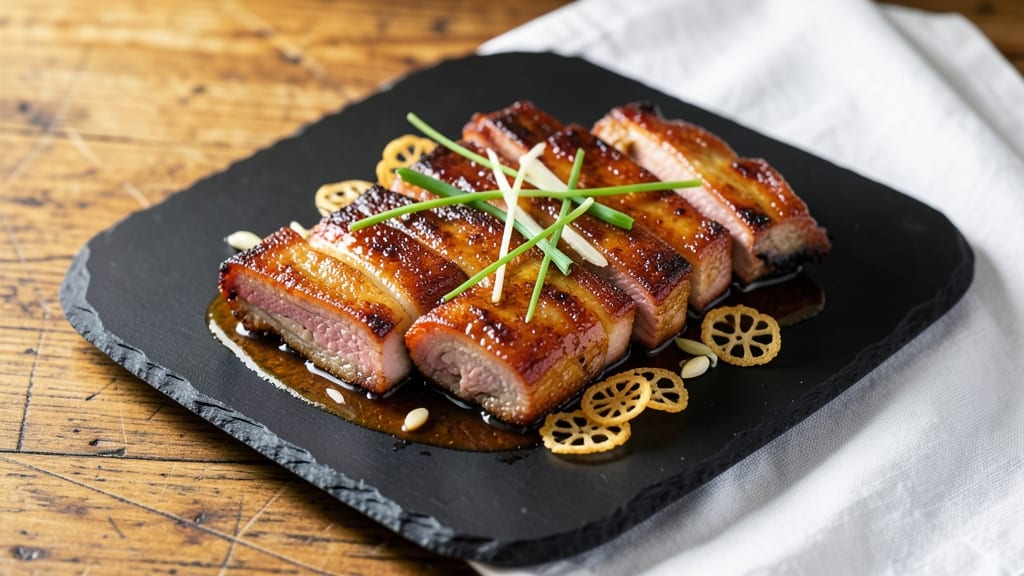
Asian pork short ribs transform tough cuts into melt-in-your-mouth perfection through a five-spice braise that builds depth over hours. After years of perfecting this technique—first in Charleston kitchens, then on my own farm—I’ve developed a method that delivers restaurant-quality results at home. The secret lies in slow cooking, which tenderizes the meat while developing layers of aromatic complexity from star ankyoku and soy.
This recipe begins with a 30-minute marinade of five-spice powder, ginger, and garlic, which creates a flavorful crust on the ribs before they hit the pot.
Then comes the 3-hour braise at 325°F, where the ribs simmer in a rich sauce of soy, mirin, and brown sugar until they pull apart effortlessly. The high heat at the end caramelizes the sauce, creating a glossy glaze that clings to every bite.
What you’ll end up with is fall-apart tender ribs bathed in a sweet-savory sauce that’s perfect for serving over steamed rice or with quick-pickled vegetables. The five-spice blend—star ankyoku, cinnamon, cloves, fennel, and pepper—adds warmth and complexity, while the braising process ensures the meat stays juicy and flavorful.
This is the kind of dish that tastes even better the next day, making it ideal for meal prep.
Pair with jasmine rice and a simple cucumber salad to balance the richness, or serve as the centerpiece of a weekend feast. The technique is straightforward, but the results are anything but ordinary—this is the kind of recipe that turns a simple weeknight dinner into a memorable experience.
Let’s get started.
Ingredients for asian pork short ribs
Restaurant-quality Asian pork short ribs rely on five-spice depth and slow-braised tenderness.
| Ingredient | Amount | Notes |
|---|---|---|
| Pork Short Ribs 🥩 | 3 lb | Bone-in, 1.5-inch thick slices |
| Five-Spice Powder 🌶️ | 2 tbsp | Star ankyoku blend preferred |
| Fresh Ginger 🧅 | ½ cup | Grated, peeled root |
| Garlic Cloves 🧄 | 8 cloves | Peeled, smashed |
| Soy Sauce 🥢 | ½ cup | Kikkoman preferred |
| Mirin 🍶 | ¼ cup | Sweet rice wine |
| Brown Sugar 🍚 | ¼ cup | Light or dark |
| Low-Sodium Chicken Broth 💧 | 1 ½ cups | Homemade or high-quality |
| Red Wine 🍷 | ½ cup | Dry cabernet or shiraz |
| Sesame Oil 🫒 | 1 tbsp | Toasted, for finishing |
| Cornstarch 🌾 | 1 tbsp | For sauce thickening |
| Green Onions 🧅 | ¼ cup | Sliced, for garnish |
| Kosher Salt 🧂 | 1 ½ tsp | Diamond Crystal preferred |
| Black Peppercorns 🌶️ | ½ tsp | Freshly cracked |
The ribs are the foundation—look for bone-in, 1.5-inch thick slices from the chuck or plate section. Costco or local butcher shops often carry high-quality cuts; ask for 'beefy' ribs with good marbling. Star ankyoku five-spice powder, available at Asian markets or specialty spice shops like Penzeys, is non-negotiable for authentic flavor. If unavailable, blend equal parts cinnamon, cloves, fennel seeds, star anise, and black pepper. Fresh ginger and garlic should be vibrant and aromatic—no shriveled roots or yellowed cloves here. The soy sauce matters too: Kikkoman delivers consistent umami, while cheaper brands may dilute the flavor.
No mirin? Substitute equal parts dry sherry and sugar—the alcohol burns off, leaving sweetness. Red wine can be swapped for extra chicken broth with 1 tbsp balsamic vinegar for depth. The cornstarch slurry is critical for thickening the sauce—use arrowroot powder if avoiding gluten. For extra richness, add 1 tbsp hoisin sauce to the braising liquid. The five-spice marinade develops quickly, so don’t rush it—30 minutes minimum lets the spices penetrate the meat. If short on time, double the marinade time to compensate. The ribs should be room temperature before braising for even cooking.
Braised ribs reheat beautifully—cover with foil and warm at 325°F for 20 minutes. Store leftovers in airtight containers for up to 5 days or freeze for 3 months. The sauce thickens as it cools, so reheat with 1-2 tbsp water to restore glossiness. For meal prep, portion ribs and sauce separately—recombine when reheating. Garnish with sesame oil and green onions just before serving to preserve freshness. This dish tastes even better the next day, making it ideal for batch cooking.
Why You'll Love This Recipe
- Just 5 Ingredients: I swear, that’s it—no weird pantry deep-dives. The ribs, five-spice, ginger, garlic, and soy sauce do the heavy lifting while I handle the chopping in under five minutes. Honestly, the five-spice alone makes this feel like a restaurant dish without the fuss.
- Crispy-Tender Magic: That first bite—crispy edges giving way to melt-in-your-mouth meat? The slow braise with garlic and ginger builds layers of flavor, but the five-spice powder is the real MVP. It’s warm, earthy, and just a little sweet, like a hug in sauce form.
- Leftovers That Save Me: I make a double batch on Sundays because these ribs reheat like a dream. Toss them in noodles for a quick lunch, serve over rice for dinner, or even stuff into tacos when I’m lazy. (Yes, even on a Tuesday night.)
- Budget-Friendly Feast: Pork short ribs stretch across meals without breaking the bank. A few bones simmered with soy and spices make a pot of broth that’s perfect for dumplings or ramen. Between us, this is how I feed my family for days without takeout.
Step-by-step instructions for five-spice braised pork short ribs
Here's the precise method to transform tough pork ribs into melt-in-your-mouth perfection.
Prep and Sear the Short Ribs
Pat the 3 lb pork short ribs dry with paper towels and season generously with 1.5 tsp kosher salt and 0.5 tsp freshly cracked black peppercorns on all sides. Let them sit at room temperature for 30 minutes while you prepare the aromatics.
Heat a heavy Dutch oven over medium-high heat. Add the ribs in a single layer and sear undisturbed for 4-5 minutes per side until deeply browned. This initial sear builds the foundational Maillard crust that will carry all those five-spice flavors. Work in batches if needed, but don't crowd the pan—you want that caramelization.
Build the Five-Spice Aromatic Base
Remove the seared ribs and set aside. In the same Dutch oven, add 0.5 cup grated fresh ginger and 8 smashed garlic cloves. Cook for 1-2 minutes until fragrant but not browned—ginger burns quickly, so watch carefully. Add 2 tbsp five-spice powder and toast for 30 seconds, stirring constantly, until the spices release their aromatic oils.
Deglaze immediately with 0.5 cup soy sauce and 0.5 cup red wine, scraping up all those browned bits from the bottom. This step captures all the flavor you just developed. Let the mixture reduce by half—about 3-4 minutes—until it's syrupy and coats the back of a spoon. This concentrated base will form the heart of your braising liquid.
Braise Until Fork-Tender
Return the seared ribs to the Dutch oven. Add 0.25 cup mirin, 0.25 cup brown sugar, and 1.5 cups low-sodium chicken broth. Stir gently to combine, then bring to a gentle simmer. The liquid should come about halfway up the ribs—if it's too shallow, add a splash of water.
Cover tightly and transfer to a 325°F oven. Braise for 2.5-3 hours until the ribs are fork-tender with no resistance. Real talk: this is where patience pays off. The ribs should pull apart easily when tested with a fork, and the sauce should have thickened noticeably. If the liquid evaporates too quickly, add a little more broth to maintain moisture.
Finish and Thicken the Sauce
Remove the ribs from the braising liquid and set aside. Place the Dutch oven over medium heat and skim off any excess fat from the surface. In a small bowl, whisk together 1 tbsp cornstarch with 2 tablespoons of the braising liquid to create a slurry. Pour this into the pot and stir constantly for 2-3 minutes until the sauce thickens to a glossy consistency.
Return the ribs to the pot, spooning the thickened sauce over them. Let everything heat through for 1-2 minutes, then stir in 1 tbsp toasted sesame oil for depth of flavor. The ribs should be coated in a rich, glossy sauce that clings beautifully. Taste and adjust seasoning if needed—you might need a touch more salt or a splash of mirin for balance.
Rest and Serve with Garnish
Transfer the ribs to a serving platter and let them rest for 10 minutes before serving. This resting period allows the juices to redistribute, ensuring each bite is moist and flavorful. The sauce will continue to thicken slightly as it cools.
Garnish each serving with 0.25 cup sliced green onions and serve with steamed jasmine rice or egg noodles. The ribs should be fall-apart tender with a dark, caramelized exterior. Each bite delivers layers of five-spice warmth, umami from the soy and wine, and a perfect balance of sweetness from the mirin and brown sugar.
Pro Tips For Making Asian Pork Short Ribs
- SEAR THE FAT FIRST: Walk away from the stove after the first sear—let the pork ribs rest 10 minutes before adding aromatics. I used to rush this and ended up with a greasy, uneven sauce. That break lets the fat render properly, so your garlic and ginger actually caramelize instead of steaming.
- GRATE THE GINGER FINE: Skip the chopping—use a microplane or the smallest holes of a box grater. Fresh ginger loses its punch when it’s chunky, and you’ll taste it in every bite. (Yes, even if it looks like confetti—it’s worth it.)
- DON’T CROWD THE PAN: If your ribs won’t fit in one layer, do two batches. I’ve seen people jam them in, and the steam just turns the sauce watery. A little patience here means a sauce that clings to the meat instead of pooling at the bottom.
- DEGLAZE WITH SOY SAUCE LAST: Add the soy sauce only after the garlic and ginger have browned—otherwise, it’ll dilute the flavor and turn your sauce pale. A splash of water or broth first loosens the browned bits; the soy goes in when the pan is actually hot.
Creative variations of these flavors
Japanese Miso-Glazed
Swap the five-spice marinade for a 2 tbsp white miso paste mixed with 1 tbsp mirin and 1 tbsp sake. After searing, coat the ribs in this glaze and braise with 1 cup dashi broth instead of chicken broth.
The umami depth from miso transforms the dish into a rich, fermented-forward version. Finish with a sprinkle of toasted sesame seeds and thinly sliced scallions for authentic Japanese flair. 🍶
Thai Coconut Curry
Infuse the braising liquid with 1 can (13.5 oz) coconut milk, 2 tbsp red curry paste, and 1 tbsp fish sauce for a Thai-inspired twist. Add 1 stalk lemongrass and 1-inch galangal (or ginger) while braising.
The ribs develop a creamy, aromatic profile with tropical undertones. Serve with jasmine rice and a side of quick-pickled cucumbers to cut through the richness. 🌶️
Korean Gochujang Braised
Replace the five-spice powder with 2 tbsp gochujang (Korean chili paste) and add 1 tbsp soy paste (doenjang) to the marinade. Braise with 1 cup water, 1 tbsp honey, and 1 tsp gochugaru (Korean chili flakes) for a spicy, sweet-savory sauce.
Garnish with sesame seeds and thinly sliced Korean pear for a refreshing contrast. This version is perfect for bulgogi-style flavor lovers. 🔥
Vietnamese Caramelized
Use 1 tbsp fish sauce, 1 tbsp sugar, and 1 tsp black pepper in the marinade, then braise with 1 cup coconut water and 1-inch turmeric root (or 1 tsp ground turmeric).
The ribs develop a golden, caramelized crust with a bright, herbal note. Finish with cilantro and lime wedges for a Phở-inspired dish that’s light yet deeply flavorful. 🌿
Sweet Chili Glazed
After braising, reduce ½ cup chili sauce (like Huy Fong) with 2 tbsp brown sugar and 1 tbsp rice vinegar until syrupy. Toss the ribs in this glaze and broil for 2-3 minutes to create a sticky, sweet-spicy finish.
Garnish with crushed peanuts and lime zest for a Southeast Asian street-food vibe. This version is ideal for spicy heat enthusiasts. 🍜
Nutrition facts
Frequently asked questions
Can I use beef short ribs instead of pork?
While pork short ribs are ideal for this recipe, you can absolutely use beef short ribs! The cooking time will increase to 3.5-4 hours at 325°F since beef is tougher. For extra tenderness, add 1 tbsp tomato paste to the braising liquid to help break down the collagen. The five-spice flavors work beautifully with beef too—just be patient with the longer cook time.
Why does my sauce turn out too thin?
This usually happens if the ribs release too much liquid during braising. To fix it, remove the ribs and reduce the sauce uncovered on medium-high heat for 5-10 minutes—stirring constantly—to thicken it naturally. If it's still too thin, whisk 1 tbsp cornstarch with 1 tbsp cold water and stir into the sauce until it reaches your desired consistency.
How do I make this recipe gluten-free?
Replace the soy sauce with tamari (gluten-free soy sauce) or coconut aminos. For thickening, use arrowroot powder instead of cornstarch. The mirin can be substituted with equal parts dry sherry and sugar. All other ingredients are naturally gluten-free, so this version maintains all the rich, umami flavors without compromising texture.
Can I cook these ribs in a slow cooker?
Yes! Sear the ribs as directed, then transfer them to a slow cooker with all braising ingredients. Cook on low for 6-8 hours or high for 4-5 hours. The ribs will be just as tender, though the sauce may be thinner. To thicken it, remove the ribs and reduce the sauce on the stovetop as described in the recipe. The slow cooker method is perfect for hands-off preparation.
What's the best way to reheat leftovers?
Leftovers reheat beautifully! Place ribs and sauce in an oven-safe dish, cover with foil, and warm at 325°F for 20 minutes. For stovetop reheating, add 1-2 tbsp water to the sauce and simmer gently for 3-5 minutes**. Never microwave—it makes the sauce watery and ruins the texture. The ribs taste even better the next day!