
Main Courses
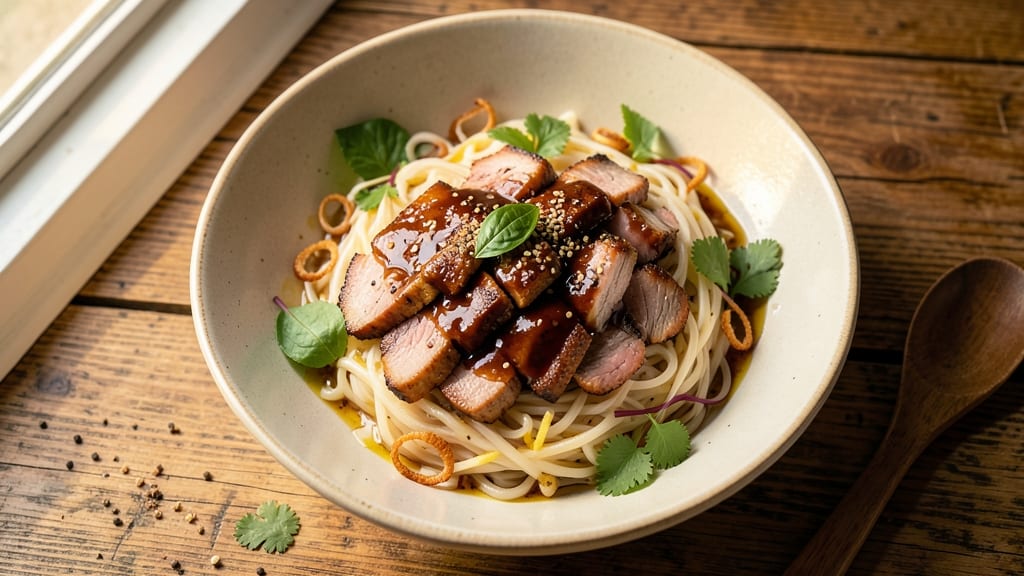
This Asian pork noodle bowl recipe transforms simple ingredients into a restaurant-quality meal that's perfect for weeknight dinners. The secret lies in the fragrant five-spice pork, tender rice noodles, and a silky sauce that ties everything together.
I developed this recipe after years of perfecting pork techniques in my kitchen—where every bite delivers that perfect balance of savory, aromatic, and umami flavors.
The pork starts with a simple marinade of five-spice powder, soy sauce, and a touch of brown sugar, creating a fragrant crust that locks in moisture while developing deep flavor. Meanwhile, the rice noodles soak just long enough to become silky but still hold their shape.
The sauce—a blend of soy, ginger, and a hint of sesame oil—adds that signature Asian depth without overpowering the dish.
By the time you assemble the bowl, you'll have perfectly seared pork slices with crisp edges, tender rice noodles that glide against the bowl, and a sauce that clings to every strand.
The dish is complete with fresh scallions, toasted sesame seeds, and a squeeze of lime for brightness. It's the kind of meal that feels indulgent yet comes together in under 30 minutes.
This recipe scales beautifully for a crowd or works perfectly as a single serving. Whether you're feeding a family or treating yourself to a homemade feast, the combination of textures and flavors makes it impossible to resist. Let's get started on creating your perfect bowl.
Ingredients for asian pork noodle bowl
Eight simple ingredients transform into a fragrant, restaurant-quality noodle bowl feast.
| Ingredient | Amount | Notes |
|---|---|---|
| Pork Shoulder 🐖 | 1 ½ lb | Thinly sliced against the grain |
| Five-Spice Powder 🌶️ | 1 tbsp | For fragrant marinade |
| Soy Sauce 🥢 | ¼ cup | Low-sodium preferred |
| Brown Sugar 🍯 | 1 tbsp | Light or dark variety |
| Rice Noodles 🍜 | 8 oz | Thin or medium width |
| Sesame Oil 🫒 | 1 tbsp | Toasted for aroma |
| Fresh Ginger 🧄 | 2 tbsp | Grated, not powdered |
| Scallions 🧅 | ¼ cup | Thinly sliced |
| Sesame Seeds 🌰 | 1 tbsp | Toasted for crunch |
| Lime 🍋 | 1 whole | Juiced for brightness |
| Vegetable Oil 🫒 | ¼ cup | High smoke point |
| Garlic Cloves 🧄 | 3 cloves | Minced for sauce |
| Salt 🧂 | 1 tsp | Kosher or sea salt |
| Black Pepper 🌶️ | ½ tsp | Freshly ground |
The pork shoulder is the star—ask your butcher to slice it thinly against the grain for tender bites. Five-spice powder is non-negotiable here; grab it at Asian markets or the international aisle at Whole Foods. I always double-check the jar's date—freshness makes all the difference. For the rice noodles, 8 oz makes 4 servings, but if you're feeding a crowd, stock up on 16 oz bags—they keep for months in a cool, dry place. The sesame oil should smell nutty and toasty, not stale. If yours smells flat, toss it.
No five-spice powder? Mix 1/4 tsp each of cinnamon, star anise, cloves, fennel, and pepper—it's the same thing. Fresh ginger is ideal, but powdered works in a pinch. The pork marinade can wait until you're ready to cook, but the noodles need to soak 10-15 minutes before draining. For extra crunch, toast your sesame seeds in a dry pan for 2 minutes—they'll smell amazing. Lime juice? Freshly squeezed is best, but bottled works if you're in a hurry. The sauce comes together in minutes, so don't stress if you're short on time.
Pork marinates best overnight, but 30 minutes minimum works in a pinch. Store raw pork in the fridge and cook within 2 days. Rice noodles dry out fast—cover them tightly with plastic wrap to keep them fresh. The sauce keeps for 5 days in the fridge, and the pork reheats beautifully. I always make extra sauce—it's perfect for dipping or tossing with stir-fried veggies. The whole bowl reheats well, but the noodles get softer, so serve fresh if possible.
Why You'll Love This Recipe
- Honestly, the sauce is the star: soy, brown sugar, and a splash of water simmered down until it’s glossy and sticky. Drizzle it over noodles, and suddenly you’ve got that restaurant-quality shine with zero effort.
- Pork Gets Tender Itself: I swear, the five-spice powder and brown sugar combo transforms that tough pork shoulder into melt-in-your-mouth bites—no fancy marinating required. Just sear it, braise it low and slow, and you’ve got flavor without the fuss.
- Sauce in Minutes: Honestly, the sauce is the star: soy, brown sugar, and a splash of water simmered down until it’s glossy and sticky. Drizzle it over noodles, and suddenly you’ve got that restaurant-quality shine with zero effort.
- Lunchbox Magic: Between us, this is my go-to for meal prep—pack the noodles dry, reheat with the pork and sauce, and boom, lunch is sorted. (Yes, even on a Tuesday night when I’m running late.)
Step-by-step instructions for Asian pork noodle bowl
This fragrant five-spice pork transforms simple ingredients into an aromatic, restaurant-worthy dish.
Prepare the Five-Spice Pork Marinade
In a small bowl, combine the 1 tbsp five-spice powder, 0.25 cup soy sauce, 1 tbsp brown sugar, 1 tsp salt, and 0.5 tsp black pepper. Mix until the powder dissolves completely into a smooth paste. This marinade is the flavor foundation—don't skip blending it thoroughly.
Slice the 1.5 lb pork shoulder thinly against the grain into ¼-inch thick strips. Place the pork in a resealable plastic bag and pour the marinade over it. Seal the bag and massage the marinade into the pork, ensuring every strip is evenly coated. Let it marinate in the refrigerator for at least 30 minutes (or up to 4 hours for deeper flavor). The longer it marinates, the more aromatic and tender the pork becomes.
Cook the Marinated Pork
Heat 0.25 cup vegetable oil in a large skillet over medium-high heat until shimmering. Working in batches to avoid crowding, add the marinated pork strips and cook for 3-4 minutes per side until golden brown and fully cooked through. The pork should release easily from the pan—if it sticks, reduce the heat slightly and let it cook longer.
Once all pork is cooked, transfer it to a plate and set aside. Leave the rendered fat in the skillet—this is packed with flavor that will infuse your sauce. Reduce the heat to medium and add the 3 minced garlic cloves, cooking for 30 seconds until fragrant. Immediately pour in 0.25 cup soy sauce (the remaining amount) and 1 tbsp brown sugar, scraping up any browned bits from the bottom of the pan. Simmer for 2 minutes until slightly reduced and glossy.
Assemble the Noodle Bowl
While the pork cooks, prepare the rice noodles. Soak the 8 oz rice noodles in hot water for 5-7 minutes until pliable but still slightly firm to the bite. Drain and rinse briefly under cold water to stop the cooking process. Divide the noodles evenly among 4 bowls. Drizzle each bowl with 1 tsp sesame oil and toss gently to coat.
Add the cooked pork strips to the bowls, arranging them over the noodles. Sprinkle with 2 tbsp grated fresh ginger and 0.25 cup thinly sliced scallions for freshness. The ginger adds a bright, zesty kick that cuts through the richness of the pork.
Finish with Toppings and Lime
Toast the 1 tbsp sesame seeds in a dry skillet over medium heat for 1-2 minutes until golden and fragrant. Immediately sprinkle them over each bowl while still warm. The toasted sesame seeds add a nutty crunch that contrasts beautifully with the silky noodles.
Finish each bowl with a generous squeeze of lime juice from the whole lime—this brightens the entire dish and balances the savory flavors. Serve immediately while the pork is still warm and the noodles are tender. The aroma alone will make your kitchen smell like a bustling Asian street market!
Pro Tips For Making Asian Pork Noodle Bowl
- CUT PORK INTO EVEN STRIPS: I learned this the hard way—uneven pieces cook at wildly different speeds. Use a sharp knife or meat slicer to cut the pork shoulder into ½-inch-wide strips (not too thick, or they’ll stay chewy). If you’re lazy like me, freeze the meat for 20 minutes first; it’ll slice cleaner than fighting a stubborn slab.
- SEAR THE PORK IN BATCHES: Crowding the pan turns your crispy pork into soggy rubber. Work in 2-3 batches over medium-high heat, giving each batch 3-4 minutes per side until deeply browned. The first batch will be perfect; the second will be fine. The third? Just pray the noodles are ready.
- USE COLD NOODLES FOR CRISPINESS: Hot noodles steam instead of searing, and nobody wants mushy rice noodles. Soak your noodles in ice water for 10 minutes before draining and tossing with a splash of oil—this keeps them firm when they hit the pan. (Yes, even if you’re impatient like me.)
- BALANCE THE SAUCE WITH A PINCH OF ACID: Five-spice and soy sauce can get heavy fast. After cooking the pork with brown sugar, toss in ½ teaspoon of rice vinegar or a squeeze of lime—just enough to brighten the flavors. I was skeptical until I tried it; now I can’t skip it.
Regional styles of this dish
Chinese Five-Spice Classic
This version stays true to the original recipe but leans into the bold flavors of Chinese cuisine. The five-spice marinade becomes even more aromatic when paired with a splash of Shaoxing wine (just 1 tbsp) in the sauce.
I like to add 1 tsp chili bean paste to the sauce for a subtle heat that lingers. Serve with quick-pickled cucumbers—slice ½ English cucumber into half-moons, toss with 1 tbsp rice vinegar, ½ tsp sugar, and a pinch of salt.
Let them sit for 10 minutes before adding to your bowl for a refreshing crunch. 🌶️
For extra authenticity, use dried shiitake mushrooms instead of scallions. Slice 4 dried shiitake and soak in hot water for 10 minutes to rehydrate. Thinly slice them and add to your bowl along with the pork.
The umami depth they bring is unmatched. Garnish with toasted black sesame seeds instead of white for a deeper, nuttier flavor profile.
Japanese Tonkatsu Twist
Transform this into a Japanese tonkatsu-inspired bowl by panko-breading the pork. After marinating, dip each strip in ½ cup beaten egg, then coat with 1 cup panko breadcrumbs mixed with 1 tsp garlic powder. Pan-fry in vegetable oil until golden and crispy—this adds a satisfying crunch.
Replace the soy-based sauce with a tonkatsu sauce made from 3 tbsp ketchup, 2 tbsp Worcestershire sauce, 1 tbsp honey, and 1 tsp Dijon mustard. Serve over udon noodles instead of rice noodles for a thicker, chewier texture. 🍜
For garnish, top with thinly sliced bonito flakes (if you're comfortable with fish) or crispy fried shallots for a luxurious touch. A squeeze of yuzu juice (or sub ½ lime) brightens the dish perfectly. The contrast between the crispy pork and silky udon is pure comfort food magic.
Thai Peanut Sauce Fusion
Give your bowl a Thai-inspired upgrade by swapping the soy sauce for a creamy peanut sauce. Blend ½ cup smooth peanut butter, 2 tbsp soy sauce, 1 tbsp lime juice, 1 tbsp honey, 1 tsp sriracha, and 2 tbsp water until smooth.
Thin with a splash of warm water if needed. The sauce should coat the back of a spoon but still be pourable. Drizzle generously over the assembled bowl and toss gently to coat the noodles. 🥜
Add thinly sliced red bell pepper and shredded carrots for crunch and color. Garnish with crushed peanuts and cilantro instead of sesame seeds. For the pork, marinate with an extra ½ tsp coriander and ¼ tsp turmeric for a golden hue.
The peanut sauce adds richness, while the lime keeps the dish from feeling too heavy.
Vietnamese Pho-Inspired
Turn this into a Vietnamese pho-inspired noodle bowl by infusing the pork with star anise and cinnamon sticks while marinating. Add 1 star anise pod and 1 cinnamon stick to the marinade, then remove them before cooking.
Simmer the pork in 4 cups low-sodium chicken broth with 1 tsp fish sauce, 1 tsp sugar, and 1 slice ginger for 10 minutes until tender. Shred the pork and serve over rice noodles in a deep bowl. 🍜
Top with bean sprouts, thinly sliced jalapeños, and hoisin sauce for dipping. The broth adds depth, while the fresh toppings keep the bowl light and vibrant.
For extra aroma, garnish with fresh cilantro and a sprinkle of crushed peanuts. This version feels like a lighter, noodle-based pho—perfect for a quick but hearty meal.
Nutrition facts
Frequently asked questions
Can I use ground pork instead of sliced pork shoulder?
Ground pork works, but the texture will be different—it won't have the same tender, shredded quality. If you prefer ground, try forming it into small patties or meatballs and pan-frying them until crispy. For the best results, stick with thinly sliced pork shoulder against the grain. The slice-and-sear method creates those perfect crispy edges that make this dish so satisfying.
How do I adjust the spice level for picky eaters?
Skip the five-spice powder entirely and use 1 tsp each of cinnamon and cloves instead for mild warmth. For the sauce, reduce the ginger to 1 tbsp and omit the sesame oil (or use just ½ tsp for aroma). The lime juice adds brightness without heat, so keep that in. The dish will still taste delicious but with a gentler profile.
What's the best way to reheat leftovers?
Reheat the pork and sauce separately in a skillet over medium heat for 2-3 minutes until warmed through. Add the noodles last and toss with a splash of water to prevent drying. The noodles will soften further, so serve immediately. For extra moisture, drizzle with a little more sesame oil or a splash of water before reheating.
Can I make this gluten-free?
Yes! Use tamari or coconut aminos instead of soy sauce in the marinade and sauce. For the noodles, choose rice noodles (already gluten-free) or chickpea-based noodles for extra protein. Double-check all ingredients—some sesame oils and spices may contain gluten traces. The flavor profile will be just as rich and satisfying.
Why did my noodles turn mushy?
Over-soaking is the most common cause. Rice noodles should be pliant but still firm after 5-7 minutes—they'll finish cooking in the hot bowl. If they're too soft, they'll break apart when tossed. For extra insurance, rinse them briefly in cold water after draining to stop the cooking process. Always use fresh, uncooked noodles for best results.