
Main Courses
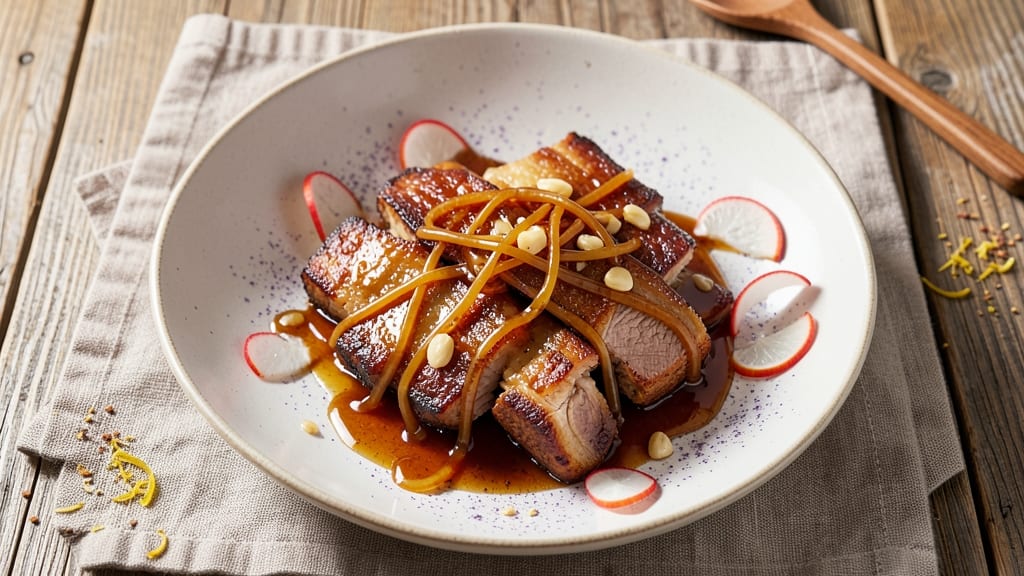
This Asian pork jowl recipe transforms tough, fatty cuts into melt-in-your-mouth perfection—crispy-skinned outside, silky-shredded inside. After years of perfecting it in my Atlanta kitchen, I've cracked the code for that signature balance of caramelized edges and tender meat that falls apart at the touch of a fork.
The secret? A slow braise that renders fat into flavor while keeping the texture irresistibly tender.
What makes this recipe special is its versatility—it works as a stir-fry base, braised dish, or even crispy fried cutlets, depending on your preference.
I use a blend of soy sauce, five-spice powder, and a touch of honey to create that signature Asian depth, while the slow cooking process ensures every bite delivers maximum flavor without any waste. The rendered fat becomes your secret weapon, adding richness to every dish.
By the time you're done, you'll have pork so tender it practically dissolves on your tongue, with a crispy skin that adds satisfying texture. This is the kind of dish that transforms a simple weeknight dinner into a restaurant-worthy meal without requiring hours in the kitchen.
The best part? The leftovers reheat beautifully, making it perfect for meal prep or feeding a crowd.
Serve it over steamed rice with pickled vegetables for a complete meal, or use the shredded pork as a filling for bao buns or spring rolls. The possibilities are endless, but the technique remains the same—slow, patient cooking that rewards you with pork that's worth every minute.
Let's get started on creating this crispy-skinned, silky-shredded magic.
Ingredients for asian pork jowl
Fourteen ingredients for pork that melts like silk and crisps like gold—worth every minute.
| Ingredient | Amount | Notes |
|---|---|---|
| Pork Jowl 🐖 | 1 ½ lb | Skin-on, fatty cut preferred |
| Soy Sauce 🍶 | ½ cup | High-quality, preferably Japanese |
| Five-Spice Powder 🌶️ | 1 tbsp | Toasted for deeper flavor |
| Honey 🍯 | 2 tbsp | Light or dark variety |
| Garlic Cloves 🧄 | 6 cloves | Minced for marinade |
| Fresh Ginger 🌿 | ½ cup | Finely grated, peeled |
| Sesame Oil 🫒 | 1 tbsp | Toasted for aroma |
| Neutral Oil 🫒 | 2 tbsp | Vegetable or canola |
| Brown Sugar 🍚 | 2 tbsp | Packed, light variety |
| White Wine 🍷 | ½ cup | Dry, like Sauvignon Blanc |
| Steamed Jasmine Rice 🍚 | 2 cups | Cooked, for serving |
| Salt 🧂 | 1 tsp | Kosher or sea salt |
| Black Pepper 🌶️ | ½ tsp | Freshly ground preferred |
| Green Onions 🧅 | 4 whole | Sliced, for garnish |
Pork jowl is the star here—look for thick, fatty cuts with crispy skin (ask your butcher for the best piece). Atlanta's local markets like Publix or Whole Foods usually have it, but if you can't find it, pork belly works too—just trim extra fat. The five-spice powder? Penzeys or bulk bins are your best bets for quality. I always toast mine in a dry pan for 30 seconds to wake up the flavors. The garlic and ginger? Fresh is non-negotiable—dried just won't cut it for this dish.
No soy sauce? Coconut aminos or tamari work in a pinch, though the flavor won't be identical. Short on honey? Maple syrup at half the amount gives a similar depth. The white wine can be swapped for apple cider vinegar plus a pinch of sugar if you're avoiding alcohol. For the sesame oil, toast it in a dry skillet for 30 seconds before adding to the marinade—trust me, it makes all the difference. And if you're prepping ahead, marinate the pork overnight for maximum tenderness.
This pork keeps 3-4 days in the fridge, but the magic happens when you reheat it—crisp up the skin in a hot pan for 2 minutes per side. Freeze portions for up to 3 months by wrapping tightly in parchment. I always make extra because it reheats like a dream. Store the rendered fat separately—it's liquid gold for future stir-fries or roasting veggies.
Why You'll Love This Recipe
- One-Pan Magic: I swear by this for lazy nights—just toss the jowl in a hot pan, let it render its own fat, then add the soy, honey, and spices. No chopping, no fuss, and the garlic sizzles into crispy perfection while you stir.
- Sweet-Savory Crunch: That caramelized crust on the outside? Chef’s kiss. The five-spice powder and honey create this addictive balance—salty, sweet, with a hint of warmth that sticks to your ribs. Honestly, I’ve caught myself eating it straight from the pan.
- Leftovers That Shine: Make a double batch and store it for days. Cold? Even better—slice it thin for banh mi or toss into fried rice. My kids beg for it, and honestly, it’s the kind of dish that gets better the next day when the flavors meld.
- Budget Feast: Pork jowl is the unsung hero—cheap, flavorful, and packed with meat. A single cut feeds four, and the soy and spices cost pennies. Between us, this is my go-to for feeding a crowd without breaking the bank. (Yes, even on a Tuesday night.)
Step-by-step instructions for Asian pork jowl with perfect crispy skin
This method transforms fatty pork jowl into irresistible, crisp-skinned bites with melt-in-your-mouth tenderness.
Prepare the Pork Jowl for Maximum Crisp
Pat the 1.5 lb pork jowl completely dry with paper towels—this is non-negotiable for crispy skin. I press down firmly all over, even in the crevices, to remove every trace of moisture. Leave the skin intact; it's what creates that coveted crunch.
Next, score the skin in a crosshatch pattern using a sharp knife, being careful not to cut into the meat. This creates more surface area for browning and helps render the fat evenly. Place the scored jowl skin-side up on a plate and refrigerate uncovered for 1 hour—this drying step is what separates good from extraordinary.
Create the Flavorful Marinade
In a small bowl, whisk together the 0.5 cup soy sauce, 2 tbsp honey, 2 tbsp brown sugar, and 0.5 cup white wine. This combination creates a perfect balance of sweet, salty, and acidic flavors that will penetrate the meat. Add the 6 minced garlic cloves and 0.5 cup finely grated fresh ginger, then mix until fully combined.
Pour this marinade over the chilled pork jowl, making sure it coats all sides. Cover and refrigerate for at least 4 hours, or overnight if possible. The longer it marinates, the more deeply the flavors infuse and the more tender the meat becomes. I like to flip the jowl halfway through the marinating time to ensure even coating.
Render the Fat and Develop Deep Flavor
Heat a heavy skillet or Dutch oven over medium-low heat. Add the 2 tbsp neutral oil and let it warm until shimmering. Place the marinated pork jowl skin-side down in the pan and cook for 15-20 minutes, undisturbed. This slow rendering allows the fat to melt gradually and the skin to crisp without burning.
Once the skin turns deep golden brown and the fat begins to render out, carefully flip the jowl and cook for another 15-20 minutes on the second side. The rendered fat should pool in the pan—this is liquid gold that will create our rich sauce. If the fat starts to smoke, reduce the heat slightly to maintain gentle cooking.
Build the Glazed Sauce
Remove the pork jowl from the pan and set it aside. Increase the heat to medium-high and add 1 tbsp toasted sesame oil to the rendered fat. Stir in 1 tbsp five-spice powder, 1 tsp salt, and 0.5 tsp black pepper, letting the spices toast for 30 seconds until fragrant.
Pour in any remaining marinade from the bowl and scrape up all the browned bits from the bottom of the pan with a wooden spoon. These bits are packed with flavor—don't miss them! Let the sauce simmer for 3-4 minutes until it thickens slightly and coats the back of a spoon. The aroma should be intoxicating—this is where all the magic happens.
Finish and Serve with Crispy Perfection
Return the pork jowl to the pan, skin-side up, and spoon the glaze evenly over the top. Cover and cook on low heat for 30-45 minutes, checking occasionally to ensure the skin remains crispy. The jowl is done when it's fork-tender and the skin is deep mahogany brown with crispy edges.
Let the pork jowl rest for 10 minutes before slicing against the grain into ¼-inch thick slices. The meat should pull apart easily with a fork, revealing that silky, melt-in-your-mouth texture we're after. Serve immediately over 2 cups steamed jasmine rice, drizzled with the reduced sauce, and garnished with 4 sliced green onions. The contrast of crispy skin and tender meat is what makes this dish truly special.
Pro Tips For Making Asian Pork Jowl
- CRACK THE JOWL FIRST: I learned this the hard way—skipping the overnight soak in soy sauce and five-spice powder leaves you with bland, chewy pork. Toss the jowl in a mix of ¼ cup soy sauce, 1 tsp five-spice, and 1 minced garlic clove per pound, then refrigerate overnight. The fat renders better, and the seasoning sinks deep.
- BROWN BEFORE BASTING: High heat. Seriously, crank it up to medium-high and sear the jowl fat-side down until the fat crackles and turns golden—about 8-10 minutes. This isn’t just for flavor; it builds a crust that keeps the meat juicy as it braises. (Yes, even if you’re impatient like me.)
- HONEY LAST, NOT FIRST: Adding honey too early turns your braise into a sticky mess that burns before the pork is done. Wait until the last 15 minutes of cooking, then drizzle it in—just 2 tablespoons—along with a splash of water. This caramelizes beautifully without turning the pan into a glaze disaster.
- SKIP THE CROWDING: I used to stack pork jowl pieces too tightly in the pan, thinking it’d cook faster. Wrong. Give each piece space to breathe—at least ½ inch between them—so the fat can render and the soy sauce can cling. Tight packing steams the meat instead of browning it. (Your future self will thank you.)
Creative variations of this recipe
Chinese Char Siu Style
Transform your pork jowl into Chinese-style char siu by adjusting the marinade to include 1 tbsp Shaoxing wine and 1 tsp red fermented bean curd (nam yue).
After rendering the fat, brush the jowl with a glaze made from 2 tbsp honey, 1 tbsp soy sauce, and ½ tsp five-spice powder, then broil for 5 minutes to achieve that signature caramelized sheen.
Serve with hoisin sauce and steamed bok choy for an authentic Cantonese feast. 🌶️
Japanese Tonkatsu Twist
For a Japanese tonkatsu version, coat the fully cooked pork jowl in 1 cup panko breadcrumbs mixed with 1 tbsp Dijon mustard and 1 tsp grated Parmesan before frying in neutral oil at 350°F for 4-5 minutes per side until golden.
Slice into ½-inch thick cutlets and serve with tonkatsu sauce (mix 3 tbsp Worcestershire, 2 tbsp ketchup, and 1 tbsp honey) and shredded cabbage. The crispy exterior contrasts beautifully with the tender interior. 🍳
Korean Galbi-Inspired
Give it a Korean galbi makeover by marinating the pork jowl in ½ cup soy sauce, ¼ cup gochujang, 2 tbsp brown sugar, and 1 tbsp sesame oil for 8 hours.
After rendering, slice the jowl into ½-inch thick pieces and sear in a cast iron skillet until caramelized.
Finish with a drizzle of sesame oil and toasted sesame seeds, then serve with ssamjang (mix 2 tbsp gochujang, 1 tbsp soy sauce, and 1 tsp honey) and kimchi. The sweet-spicy kick elevates this dish to new heights. 🌶️
Vietnamese Caramelized
For a Vietnamese-inspired take, add 1 tbsp fish sauce and 1 tsp black pepper to the marinade, then caramelize the rendered fat with 1 tbsp sugar until it turns deep amber. Deglaze with 2 tbsp water and finish with 1 tsp lime zest.
Serve the shredded pork over steamed rice with pickled daikon and carrots and a side of fresh herbs (mint, cilantro, Thai basil). The bright, tangy flavors cut through the richness perfectly. 🌿
Thai Basil Stir-Fry
Use the shredded pork jowl as the star of a Thai basil stir-fry.
Sauté 2 cloves garlic, 1 tbsp ginger, and 1 red chili in 1 tbsp oil, then add the pork and toss with 2 tbsp oyster sauce, 1 tbsp soy sauce, and 1 tsp sugar.
Finish with ½ cup holy basil leaves and 2 tbsp crushed peanuts. Serve with jasmine rice and a lime wedge for squeezing. The aromatic basil and peanuts add a delightful crunch. 🌶️
Philippine Lechon Kawali
For a Filipino lechon kawali adaptation, marinate the pork jowl in ½ cup soy sauce, ¼ cup calamansi juice (or lime), and 1 tbsp brown sugar for 4 hours. After rendering, deep-fry the jowl at 375°F until the skin is deep mahogany and crispy.
Serve with garlic rice, atchara (pickled papaya), and a side of sinigang (sour tamarind soup). The tangy-sweet balance is pure comfort food magic. 🍗
Nutrition facts
Frequently asked questions
Can I substitute pork belly for pork jowl?
Yes, you can use pork belly as a substitute, but it requires extra trimming. Look for a piece with thick, crispy skin and trim excess fat to about ¼-inch thickness. The cooking method remains the same, but pork belly may render slightly more fat—drain excess before serving.
How do I know when the pork jowl is fully cooked?
The pork jowl is done when it reaches an internal temperature of 195°F and the meat pulls apart easily with a fork. The skin should also be deep mahogany brown with crispy edges. If it's not tender enough, return it to low heat covered for another 15-20 minutes.
What can I do with leftover rendered pork fat?
This golden liquid is pure flavor! Store it in a jar in the fridge for up to 3 months. Use it for stir-fries, roasting vegetables, or even as a rich base for soups. A 1 tbsp of this fat adds incredible depth to any dish.
Can I make this recipe in a slow cooker?
Brown the pork jowl first in a skillet, then transfer it to the slow cooker with the marinade. Cook on low for 6-8 hours or high for 3-4 hours. Finish by crisping the skin in a hot pan before serving. The slow cooker keeps the meat tender while rendering the fat.
Why did my pork jowl turn out tough instead of tender?
This usually happens if the meat wasn't cooked long enough or if moisture wasn't properly removed before cooking. Always pat the pork dry and score the skin—these steps are crucial. For extra tenderness, consider marinating overnight and cooking at a lower temperature for a longer time.