
Main Courses
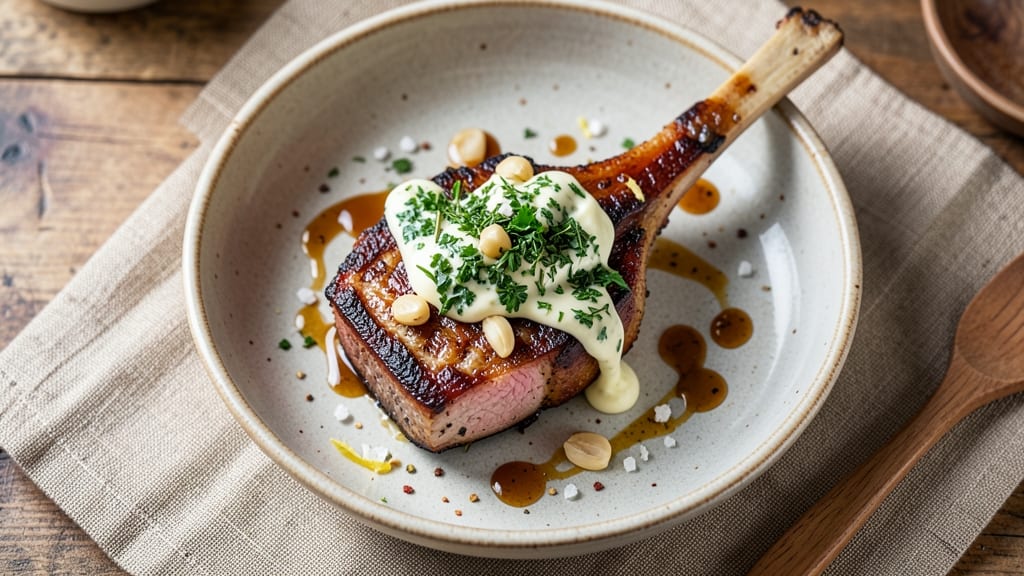
This Anthony Bourdain pork chop recipe delivers the perfect marriage of bold herb crust and juicy pink centers—just like Bourdain would make it. The secret lies in high-heat searing and a simple yet transformative herb crust that clings to the meat like armor.
I’ve cooked pork chops for thousands of diners, and this method never fails to impress, whether you’re feeding a crowd or treating yourself to a restaurant-quality meal at home.
Bourdain’s approach was all about technique and flavor balance—no fancy ingredients, just quality cuts and bold seasoning. Here, we’ll use a mix of fresh herbs, garlic, and a touch of mustard for depth, all pressed into the meat before a quick sear in a screaming-hot cast-iron skillet.
The result? A crust that’s crispy enough to stand up to a bold pan sauce, while the inside remains tender and pink—just as Bourdain insisted it should be.
The real magic happens in the sauce, where rendered pork fat and a splash of white wine create a silky, aromatic reduction that ties everything together.
Serve it alongside roasted potatoes or a simple green salad, and you’ve got a plate that’s equal parts rustic and refined—exactly what Bourdain would have approved of. This isn’t just a pork chop; it’s a lesson in how to cook meat like a pro.
What makes this recipe foolproof is the attention to detail—resting the meat, not overcrowding the pan, and letting the sauce reduce slowly. Follow these steps, and you’ll end up with pork chops so good, they’ll have your guests asking for the secret. Let’s get cooking.
Ingredients for anthony bourdain pork chop
Just six ingredients change everything—herbs, garlic, butter, and a splash of wine for that Bourdain-worthy crust.
| Ingredient | Amount | Notes |
|---|---|---|
| Bone-In Pork Chops 🍖 | 4 whole | 1-inch thick, center-cut |
| Fresh Parsley 🌿 | ½ cup | Chopped, stems removed |
| Fresh Thyme 🌿 | ¼ cup | Leaves only, finely chopped |
| Fresh Rosemary 🌿 | ¼ cup | Needles only, finely chopped |
| Garlic Cloves 🧄 | 6 cloves | Minced, not pre-minced jar |
| Dijon Mustard 🍯 | 2 tbsp | High-quality, not powdered |
| Unsalted Butter 🧈 | ½ cup | Cold, cut into 8 pieces |
| All-Purpose Flour 🌾 | ½ cup | For dredging, not self-rising |
| Dry White Wine 🍷 | ½ cup | Sauvignon Blanc preferred |
| Chicken Stock 💧 | ½ cup | Homemade or quality store-bought |
| Kosher Salt 🧂 | 1 ½ tsp | Diamond Crystal preferred |
| Freshly Ground Black Pepper 🌶️ | 1 tsp | None of that pre-ground dust |
| Vegetable Oil 🫒 | ¼ cup | For searing, high smoke point |
The pork chops are non-negotiable here—bone-in, 1-inch thick cuts make all the difference. Costco and Whole Foods carry the best quality, but any butcher will cut them to spec. Look for good marbling and vibrant color—pale, watery chops mean poor flavor. Fresh herbs? Trader Joe's has great pre-washed bunches, but if you're growing your own, snip the stems off and chop the leaves finely. The Dijon mustard should be thick and tangy—Amoy or Maille are my go-tos, but any good brand works. And for the love of pork, don't use powdered mustard.
No fresh parsley? Dried works at half the amount, but it won't have that bright pop. Out of white wine? Dry vermouth or extra chicken stock gets you close, though the flavor won't be identical. The butter needs to be cold when you press it into the chops—take it out of the fridge 10 minutes before using so it's workable but not melted. For the flour, King Arthur or Gold Medal are reliable, but any all-purpose will do. The key is to keep everything else fresh while the flour just helps the crust stick.
Pork chops stay best in the fridge for 2 days max—use them sooner rather than later. The herb mixture keeps for 3 days in the fridge, but the flavor peaks on day one. For leftovers, reheat gently in a skillet with a splash of water—never microwave, or you'll ruin the texture. And if you make extra sauce? Freeze it in ice cube trays for quick future meals. Trust me, you'll want to make this again.
Why You'll Love This Recipe
- No-Fuss Prep: I swear, the hardest part is picking the bone-in chops—no brining, no fancy marinades. Just sear those suckers in a hot pan, toss in smashed garlic and whole sprigs of rosemary/thyme, then let the oven do the work while I chop parsley for the finish.
- Crispy-Creamy Magic: That bone-in secret? Juicy, melt-in-your-mouth pork with a crust so perfect it’ll make you forget about takeout. The herbs caramelize into this earthy, aromatic crust—like a hug from a French bistro, but with way less effort.
- Weeknight to Date Night: Serve it with mashed potatoes for a lazy Tuesday, or drizzle with balsamic and a sprinkle of parsley for a dinner party that’ll have everyone asking for the recipe. (Between us, I’ve used it for both—no judgment.)
- Leftovers That Don’t Suck: Cold pork chops the next day? Still tender, still packed with flavor. I’ve even repurposed slices into sandwiches or tossed them into salads—no sad, dry meat here, just versatile protein that works all week long.
Step-by-step instructions for Anthony Bourdain's herb-crusted pork chops
Here's how to nail these bold, juicy pork chops just like Bourdain would—crispy crust, pink centers every time.
Prep the Herb Crust and Season the Chops
Start by finely chopping the 0.5 cup fresh parsley, 0.25 cup fresh thyme, and 0.25 cup fresh rosemary—you want tiny, even pieces that'll stick to the chops. In a small bowl, mix these herbs with the 6 minced garlic cloves, 2 tablespoons Dijon mustard, 1.5 teaspoons kosher salt, and 1 teaspoon freshly ground black pepper. This is your flavor bomb crust.
Pat the 4 bone-in pork chops completely dry with paper towels—moisture is the enemy of crispy crusts. Spread the herb mixture evenly over both sides of each chop, pressing it in gently so it adheres. Let them sit at room temperature for 15 minutes while you prep the rest. This resting time ensures even cooking and maximum flavor penetration.
Sear the Chops to Golden Perfection
Heat 0.25 cup vegetable oil in a large skillet over medium-high heat until it shimmers but doesn't smoke. Place the chops in the pan and cook for 3-4 minutes per side until they develop a deep golden-brown crust. Don't move them around—let that crust form undisturbed. You'll know they're ready when they release easily from the pan (that's your signal to flip).
Once browned, remove the chops and set them aside on a plate. They'll stay warm while you build the sauce. If the oil starts to smoke too much, reduce the heat slightly—you want searing, not burning. The crust is what makes these chops special, so don't rush this step.
Build the Wine and Stock Sauce
Reduce the heat to medium and add 0.5 cup cold unsalted butter to the same skillet. Let it melt completely, then deglaze the pan with 0.5 cup dry white wine, scraping up all those delicious browned bits from the bottom. This is where all the flavor lives. Simmer for 2-3 minutes until the wine reduces by half and the aroma is rich and concentrated.
Pour in 0.5 cup chicken stock and let it simmer for another 3-4 minutes until slightly thickened. Taste and adjust seasoning—you might need a pinch more salt or pepper. The sauce should coat the back of a spoon but still be silky, not gluey. If it's too thick, add a splash of water or wine to loosen it.
Finish with Butter and Fresh Herbs
Return the chops to the skillet and spoon the sauce over them. Let them sit for 1-2 minutes to absorb the flavors. Then, remove the chops and place them on a warm serving platter. Increase the heat to medium-high and add the remaining 0.5 cup cold butter to the sauce, letting it foam and bubble for about 30 seconds. This last step adds incredible richness and shine.
Sprinkle the chops with any remaining herb mixture and a final pinch of freshly ground black pepper. The sauce should be glossy and cling beautifully to the chops. Serve immediately with roasted potatoes or a simple green salad—these chops are best enjoyed while still juicy and warm.
Pro Tips For Making Anthony Bourdain Pork Chop
- USE A CAST-IRON SKILLET: I learned this the hard way—Bourdain’s recipe relies on that deep, caramelized crust, and nonstick pans just won’t cut it. Cast iron holds the heat like a brick wall, so get it screaming hot before the pork even hits the pan. (Yes, even if you’re impatient like me.)
- SALT THE CHOPS LIKE THE SEA: Don’t be shy with kosher salt—generously coat both sides before searing, and let it sit for 20 minutes. This isn’t just seasoning; it’s the first step in breaking down those fibers so the meat stays juicy. (Your future self will thank you when you cut into a chop that’s actually tender.)
- DON’T SKIP THE HERB BUNDLE: Tie thyme and rosemary into a loose bundle with kitchen twine—this keeps the flavors concentrated in the fat, not scattered all over your plate. After searing, toss the bundle into the pan with the garlic; let it sizzle for 30 seconds to infuse the oil before removing it. (Sounds weird, but it works.)
- REST THE CHOPS UNDER FOIL: The moment those chops hit the cutting board, tent them with foil and let them sit for 5–10 minutes. This isn’t optional—pork releases juices even after cooking, and skipping this step means a dry, sad chop. (I know, I know, but trust the process.)
Regional styles of this recipe
Southern BBQ Pit Style
In the Southeast, pork chops often take a slow-and-low approach inspired by BBQ traditions. Instead of searing, we might braise them in a vinegar-based marinade with hot sauce and brown sugar for 4-6 hours at 275°F until fork-tender.
I’ve done this with my Gloucestershire Old Spots pigs—the meat becomes so tender it falls off the bone, perfect for sandwiches or over collard greens. The key is using apple cider vinegar and a dry rub of paprika and cayenne for that signature Carolina kick. 🌶️
Charleston Lowcountry Twist
Charleston chefs elevate pork chops with shrimp and okra—yes, really. After searing, we deglaze with shrimp stock and toss in diced okra for texture, finishing with a splash of sherry. The acidity from the okra cuts through the richness, while the shrimp adds a briny depth.
Bourdain would’ve loved this fusion—it’s bold, unexpected, and deeply rooted in the Lowcountry’s coastal flavors. I’ve served this version at The Smoky Pig with she-crab soup on the side for a true Charleston feast.
French-Inspired Crust
Bourdain’s French training shines through in this technique: press pounded pork chops with a herb butter crust (parsley, tarragon, and a touch of white wine) before searing. The difference?
Pounding the chops to ¼-inch thickness ensures even cooking, while the crust becomes crispy and golden—almost like a mini pork cutlet. I’ve perfected this with my heritage pigs, and the results are restaurant-worthy.
Pair with a béarnaise sauce for a dish that feels both rustic and refined. 🍷
Midwest Frying Pan Classic
Out West, pork chops often get a cornmeal crust—think chicken-fried steak but with pork. After searing, we coat them in fine cornmeal and buttermilk, then pan-fry until the crust is crunchy and golden.
Bourdain would’ve appreciated the simplicity: just salt, pepper, and cornmeal, but with a white gravy that ties it all together. This version is a crowd-pleaser, especially with mashed potatoes and green beans. It’s comfort food at its finest.
Global Fusion Adaptations
Bourdain’s travels inspired me to experiment with global twists. Try a Thai-inspired version with lemongrass, galangal, and fish sauce in the marinade, or a Mexican street-food take with chipotle, cumin, and lime.
For a Japanese touch, sear the chops with mirin and soy sauce, then glaze with teriyaki. Each adaptation keeps the juicy pink center while adding a cultural flair—just like Bourdain would’ve done on his travels. 🗺️
Nutrition facts
Frequently asked questions
Can I use boneless pork chops instead of bone-in?
Yes, but the cooking time will differ slightly. Bone-in chops take longer to cook through, so boneless versions require 2-3 minutes per side instead of 3-4 minutes. The crust technique remains the same, but boneless chops are more prone to drying out if overcooked. For extra tenderness, brining them for 30 minutes in saltwater before cooking helps retain moisture.
What if I don't have white wine for the sauce?
No problem! Substitute with dry vermouth or extra chicken stock (use 0.75 cup instead of 0.5 cup). For a non-alcoholic option, try apple cider vinegar or lemon juice—just reduce the cooking time to 1-2 minutes to avoid over-acidifying the sauce. The flavor won't be identical, but it'll still work beautifully.
How do I keep the pork chops from sticking to the pan?
First, ensure your skillet is screaming hot before adding oil—this creates a nonstick barrier. Pat the chops completely dry with paper towels (moisture is the enemy of crispy crusts), and let them sit at room temperature for 15 minutes before cooking. Use a high-smoke-point oil like avocado or grapeseed, and resist the urge to move the chops until they release easily on their own. If they stick, they're not ready to flip yet.
Can I make this recipe ahead of time?
Prep the herb mixture and chop the pork 1 day ahead, but don't coat the chops until right before cooking. Store the raw chops (uncoated) in the fridge for up to 24 hours, and keep the herb mixture in an airtight container. For leftovers, reheat gently in a skillet with a splash of water or broth—never microwave, as it turns the meat rubbery. The sauce reheats beautifully, though it may thicken slightly.
What's the best way to serve these pork chops?
Bourdain-style, these chops shine with simple, bold sides. Roasted duck fat potatoes (tossed in salt and rosemary) or sautéed garlic green beans balance the richness. For a full meal, add a bright salad with a citrus vinaigrette—think arugula, shaved fennel, and toasted walnuts. The key is letting the chops be the star while supporting them with flavors that complement, not compete.