
Main Courses
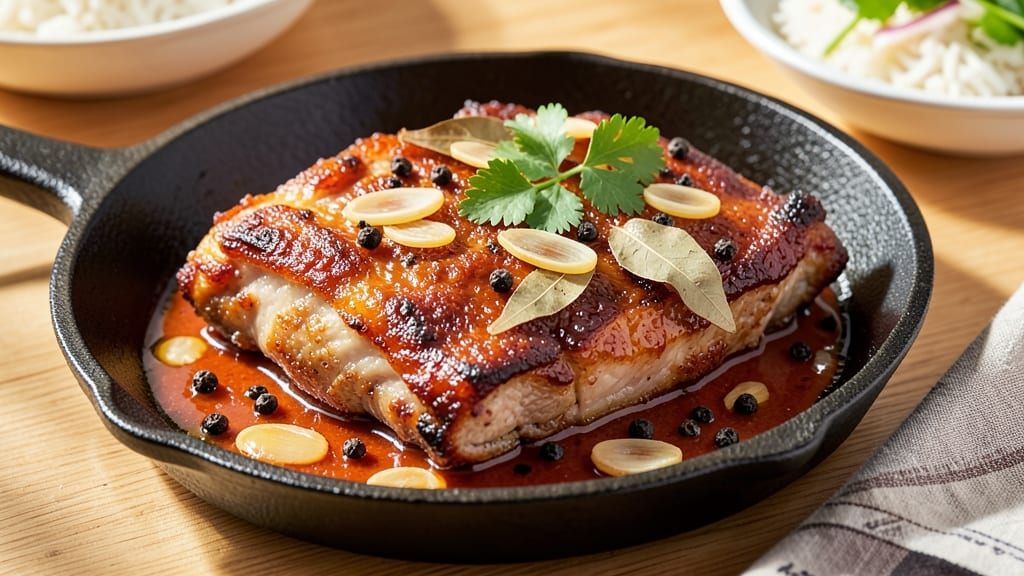
This Adobong Tuyo pork recipe brings the smoky, tangy soul of Filipino comfort food to your table with tender, vinegar-braised pork that practically melts in your mouth. 🔥 After years of perfecting the balance between crispy celery crowns and fall-apart pork, I've developed a method that delivers restaurant-quality results at home—no shortcuts, just time-honored technique.
The secret lies in the slow braising process, where pork shoulder transforms into shreds infused with garlic, soy sauce, and vinegar. The crispy celery crowns add a satisfying crunch that cuts through the richness, while the aromatic blend of spices creates layers of flavor that build with every bite.
This isn't just a recipe; it's an experience that transports you straight to a Filipino kitchen.
By the time you're done, you'll have perfectly tender pork that shreds easily, crispy celery crowns that add texture, and a sauce that's tangy yet balanced. The dish pairs beautifully with steamed rice or atchara (Filipino pickled papaya) for the full experience.
It's the kind of meal that makes your home smell like celebration and leaves everyone asking for seconds.
Whether you're cooking for family gatherings or a special dinner, this recipe scales effortlessly while maintaining its depth of flavor. The key is patience—letting the pork braise slowly ensures maximum tenderness and flavor infusion. Let's get started on creating this Filipino classic that's sure to become a household favorite.
Ingredients for adobong tuyo pork
Pork shoulder, tangy vinegar, and crispy celery crowns—this Filipino classic needs just 13 ingredients.
| Ingredient | Amount | Notes |
|---|---|---|
| Pork Shoulder 🥩 | 3 lb | Bone-in for flavor, cut into 2-inch chunks |
| White Vinegar 💧 | 1 ½ cups | Distilled preferred for tanginess |
| Soy Sauce 🍶 | ½ cup | Light or regular, not low-sodium |
| Garlic Cloves 🧄 | 10 cloves | Minced, fresh for best aroma |
| Bay Leaves 🌿 | 4 whole | Dried, for deep flavor infusion |
| Black Peppercorns 🌶️ | 1 tbsp | Crushed, not ground |
| Celery Stalks 🧅 | 4 whole | Thick stalks for crispy crowns |
| Olive Oil 🫒 | ¼ cup | For frying celery crowns |
| Sugar 🍚 | 2 tbsp | White granulated, balances acidity |
| Salt 🧂 | 1 ½ tsp | Kosher or sea salt |
| Ground Black Pepper 🌶️ | ½ tsp | Freshly ground for heat |
| Green Onions 🧅 | 4 whole | Sliced, for garnish |
| Steamed White Rice 🍚 | 4 cups | Cooked, for serving |
The pork shoulder is non-negotiable here—bone-in gives the best flavor, and Filipino markets often have it pre-cut for adobo. Look for well-marbled cuts, and ask the butcher to trim excess fat if it's too thick. Costco or Asian grocery stores usually carry good-quality pork shoulder at reasonable prices. For the vinegar, distilled white vinegar is traditional—it's more potent and gives that authentic tang. If you can't find it, apple cider vinegar works in a pinch, but it'll have a slightly different profile. The celery? Grab the thickest stalks you can find—they'll hold up better when frying.
No soy sauce? Coconut aminos or even Worcestershire sauce (if vegetarian) can work, though the flavor won't be identical. Running short on garlic? Garlic powder at half the amount will save you, but fresh is always better. The sugar balances the vinegar's acidity, so don't skip it—brown sugar works too if you're out of white. For the celery crowns, if you can't find thick stalks, slice the regular ones into wider rings. And if you're feeling fancy, toast the peppercorns lightly before crushing them—they'll add a deeper flavor to the braise.
This dish tastes even better the next day, so double the batch if you're feeding a crowd. Store the pork and sauce separately in the fridge for up to 5 days, or freeze for 3 months. The celery crowns stay crispy for 3 days if stored in an airtight container. For serving, I always reheat the pork with a splash of water to keep it moist, then top with the crispy celery and green onions. Serve with steamed rice—jasmine rice is ideal, but any long-grain works. Leftovers? Shred the pork and use it for fried rice or lumpia the next day.
Why You'll Love This Recipe
- One-Pot Magic: Honestly, the only tools I need are a pot and a spoon. No fancy gadgets, no chopping frenzy—just dump the pork, toss in the vinegar and soy sauce, and let the garlic and bay leaves work their flavor spell while you sip coffee.
- Tangy-Savory Balance: That first bite? The vinegar’s sharp kick softens into something rich and meaty, while the soy sauce rounds it out. It’s the kind of dish where the flavors build—first the garlic’s punch, then the pork’s melt-in-your-mouth tenderness.
- Leftover Goldmine: Between us, this recipe begs to be made in bulk. The leftovers? Even better the next day, especially reheated with a splash of water to keep it juicy. My freezer’s always stocked with portions for lazy Mondays.
- Budget Meal Hero: Pork shoulder is cheap, and a few cloves of garlic plus a couple of bay leaves stretch this into meals for days. It’s the kind of dish that makes grocery day feel like a win—no overpriced cuts or gimmicks, just pure, satisfying flavor.
Step-by-step instructions for adobong tuyo pork recipe
Here's how to make this smoky, tangy pork dish with perfectly crispy celery crowns.
🔥 Step 1: Fry Celery Crowns to Crispy Perfection
Cut the thick ends of each celery stalk into ½-inch thick rounds. Heat 0.25 cup olive oil in a skillet over medium-high heat until shimmering. Add the celery crowns in a single layer and fry for 3-4 minutes per side until deep golden brown and crispy.
Here's the thing—don't overcrowd the pan or they'll steam instead of crisp. You want that satisfying crunch that balances the tender pork. Transfer the fried celery to a paper towel-lined plate to drain excess oil. Set aside for now—you'll use them as a garnish later.
🍳 Step 2: Sear and Braise the Pork Shoulder
Cut the 3 lb pork shoulder into 2-inch chunks and pat them dry with paper towels. Heat a Dutch oven over medium-high heat and add the pork in batches, searing for 2-3 minutes per side until deep brown. Remove the pork and set aside.
In the same Dutch oven, add 1 tbsp crushed black peppercorns and 10 minced garlic cloves. Toast for 30 seconds until fragrant—this builds the aromatic base. Pour in 1.5 cups white vinegar and scrape up all those browned bits from the bottom of the pan.
🥘 Step 3: Build the Flavorful Braising Liquid
Return the seared pork to the Dutch oven along with 0.5 cup soy sauce, 2 tbsp sugar, 1.5 tsp salt, and 0.5 tsp ground black pepper. Add 4 whole bay leaves and enough water to barely cover the pork—about 2 cups total. Bring to a boil, then reduce heat to low.
Cover and simmer for 1.5 hours until the pork is fork-tender and the sauce has reduced by half. Here's where the magic happens: the vinegar cuts through the richness while the soy sauce and sugar create that perfect balance of sweet and savory. Stir occasionally to prevent sticking.
⏰ Step 4: Shred and Finish the Pork
Once the pork is tender, remove it from the Dutch oven and shred it using two forks. Return the shredded pork to the sauce and simmer uncovered for another 10 minutes to let the flavors meld. Taste and adjust seasoning if needed—you might want a little more salt or vinegar to balance the flavors.
Here's the moment that matters: the texture. The pork should pull apart easily but still hold together when you pick it up. If the sauce is too thin, simmer it uncovered for another 5 minutes to thicken slightly. The crispy celery crowns you fried earlier will add that perfect crunch to cut through the rich pork.
🍽️ Step 5: Serve Over Steamed Rice
Transfer the adobong tuyo pork to a serving platter and spoon the flavorful sauce over the top. Garnish with the crispy celery crowns and 4 sliced green onions. Serve immediately over 4 cups steamed white rice—the contrast of the crispy celery and tender pork over fluffy rice is what makes this dish unforgettable.
Real talk: this dish tastes even better the next day as the flavors deepen. The crispy celery crowns will soften slightly, but they'll still add that essential crunch. Don't skip them—they're the secret to this authentic Filipino classic!
Pro Tips For Making Adobong Tuyo Pork
- CRISP THE PORK FIRST: Skip the raw pork straight into the adobo—this isn’t a stew. Sear the shoulder in a hot pan until the edges turn golden and the fat renders. I learned this the hard way: unseared pork turns mushy when braised, and no one wants that in adobong tuyo.
- USE A 1:1 VINEGAR-TO-SOY RATIO: Measure your vinegar and soy sauce before dumping them in. Too much vinegar makes the pork tough; too much soy sauce kills the tang. Stick to equal parts—say, ½ cup each—and taste as you go. (Yes, even if you’re impatient like me.)
- SMASH THE GARLIC: Whole cloves? Nope. Crush those garlic cloves into a paste with a pinch of salt—this releases more flavor and blends better into the sauce. I used to just chop them, and the dish never had that same deep, savory punch.
- LOW AND SLOW AFTER SEARING: Once the pork is browned, crank the heat to medium-low, cover the pot, and let it simmer until the meat falls apart—about 1.5 to 2 hours. I used to rush it, and the pork ended up dry. Patience here guarantees tender, juicy slices.
Best sauces and condiments for these flavors
Classic Adobo Sauce
This is the foundation of your dish—the tangy, savory adobo sauce made with 1.5 cups white vinegar, 0.5 cup soy sauce, and 2 tbsp sugar. The vinegar's acidity tenderizes the pork while the soy sauce adds umami depth.
I like to toast 1 tbsp crushed black peppercorns and 10 minced garlic cloves in the Dutch oven first to build aromatic layers before adding the vinegar. This step is non-negotiable for that authentic Filipino flavor. 🌶️
Spicy Atchara Twist
For a tangy, slightly sweet contrast, serve your adobong tuyo with atchara—Filipino pickled papaya. Thinly slice 1 cup papaya and mix with 0.5 cup vinegar, 1 tbsp sugar, and ½ tsp chili flakes.
Let it sit for 30 minutes before serving. The heat from the chili cuts through the richness of the pork beautifully. I always make extra—I use it in sandwiches the next day. 🌶️
Crispy Celery Crowns
These golden, crispy celery rounds are the star garnish. Fry 4 thick celery stalks cut into ½-inch rounds in 0.25 cup olive oil until deep brown. The key is patience—3-4 minutes per side over medium-high heat ensures they stay crispy.
Serve them directly on top of the pork so they maintain their crunch. I like to set them aside on paper towels to drain excess oil before plating. 🧅
Garlic Butter Sauce
For a richer finish, drizzle the pork with a quick garlic butter sauce. Melt 2 tbsp butter with 2 minced garlic cloves and a pinch of salt, then spoon it over the pork right before serving.
The butter adds a luxurious mouthfeel that balances the vinegar's acidity. I keep this optional—it's a crowd-pleaser but not traditional. 🧈
Coconut Milk Reduction
For a creamy variation, reduce 1 cup coconut milk with 1 tbsp sugar and ½ tsp salt until thickened, then pour it over the pork. This adds a tropical richness that pairs perfectly with the tangy adobo.
I use this version when serving to guests who prefer milder flavors. The coconut milk also helps thicken the sauce slightly. 🥥
Nutrition facts
Frequently asked questions
Can I use pork belly instead of pork shoulder?
Pork belly works but requires adjustments! The fat content means you'll need to trim excess fat first and reduce the braising time by 20-30 minutes since it cooks faster. For best results, cut the belly into 1-inch cubes and sear them until golden before braising. The texture will be richer but slightly fattier than pork shoulder.
What's the difference between adobong tuyo and regular adobo?
"Tuyo" means "dried" in Tagalog, but here it refers to the crispy celery crowns that set this version apart. Regular adobo uses vinegar and soy sauce but skips the fried celery garnish. The celery crowns add texture contrast that makes this dish uniquely satisfying—like a crunchy topping on your tender pork.
How do I make the sauce thicker?
Simmer uncovered for 5-10 extra minutes to reduce the liquid, or mix 1 tbsp cornstarch with 2 tbsp water and stir it into the sauce at the end. For a traditional approach, remove the pork and reduce the sauce alone until it coats the back of a spoon. The crispy celery crowns help balance any thickness too!
Can I substitute white vinegar with apple cider vinegar?
Yes, but expect a slightly milder, fruitier flavor. Use the same amount, but you may want to add ½ tsp extra sugar to balance the sweetness. For authentic results, distilled white vinegar is traditional—it's more potent and gives that classic tang. Apple cider works well if you prefer a sweeter profile.
Why does my pork turn out tough?
Most likely, it wasn't braised long enough! Pork shoulder needs 1.5 hours minimum at a gentle simmer to become fork-tender. Check for doneness by piercing with a fork—it should shred easily. If you're in a hurry, try the 30-minute pressure cooker method (15 minutes high pressure) for equally tender results.