
Main Courses
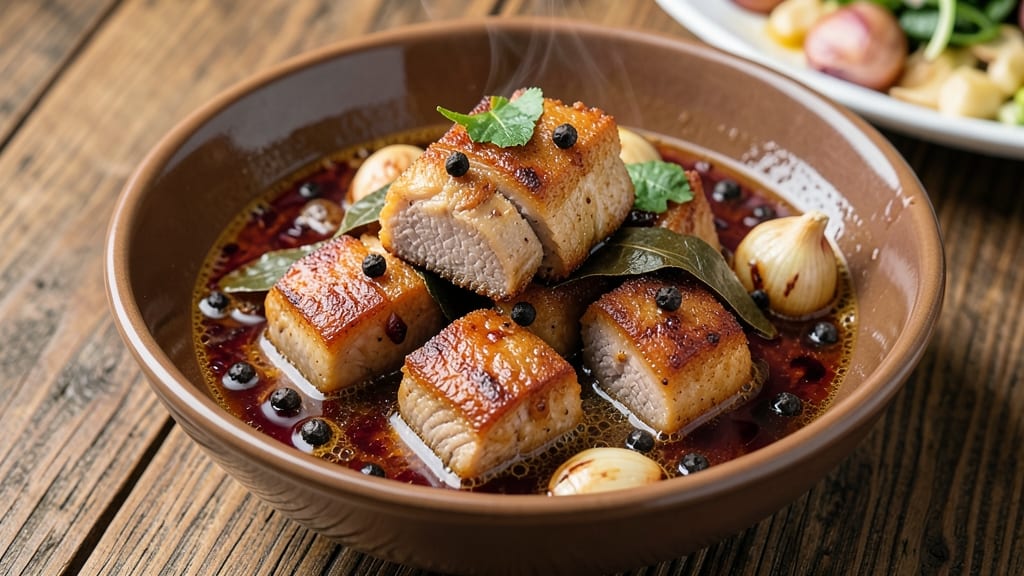
This adobong pork recipe panlasang Pinoy delivers the rich, smoky-sweet flavors of Filipino comfort food in a single, satisfying pot. The secret lies in slow-braising pork with soy sauce, vinegar, and garlic until it becomes fork-tender, while the sauce reduces to a glossy, caramelized glaze.
I’ve perfected this version to balance traditional tang with deep umami, creating a dish that’s both nostalgic and restaurant-worthy.
The process starts with marinating pork belly or shoulder in soy sauce, vinegar, and spices, then braising it until the meat falls apart easily. The sauce thickens into a sticky, aromatic coating that clings to every bite, while the aromas of garlic, bay leaves, and black pepper fill your kitchen.
This method ensures tender meat and a sauce that’s rich enough to serve over steamed rice without needing extra gravy.
What makes this recipe special is its versatility—serve it with classic Filipino sides like atchara (pickled papaya), steamed eggplant, or even a simple green salad to cut through the richness.
The dish also adapts well: use more vinegar for a sharper adobo or reduce it for a soy-forward version. The result is a hearty, flavor-packed meal that feels like home.
Ready in about 2 hours (mostly hands-off time), this adobong pork is perfect for family dinners, potlucks, or meal prep. The leftovers taste even better the next day as the flavors meld further. Let’s get cooking—your taste buds (and your rice bowl) will thank you.
Ingredients for adobong pork recipe panlasang pinoy
Six core ingredients transform tough pork into melt-in-your-mouth adobo magic.
| Ingredient | Amount | Notes |
|---|---|---|
| Pork Belly or Shoulder 🥓 | 3 lb | Cut into 2-inch chunks, skin removed |
| Coconut Aminos 🍶 | ½ cup | Or substitute soy sauce if unavailable |
| Cane Vinegar 🍋 | ½ cup | White vinegar works in a pinch |
| Garlic Cloves 🧄 | 8 cloves | Minced, not powdered |
| Bay Leaves 🌿 | 2 whole | Dried, crumbled after cooking |
| Black Peppercorns 🌶️ | 1 tsp | Crushed, not ground |
| Sugar 🍚 | ¼ cup | White or brown, adjust to taste |
| Olive Oil 🫒 | 2 tbsp | For searing pork |
| Water 💧 | 1 ½ cups | Enough to braise pork |
| Salt 🧂 | 1 ½ tsp | Kosher or sea salt |
| Onion 🧅 | 1 whole | Large, sliced into half-moons |
| Green Onions 🌱 | ¼ cup | Chopped, for garnish |
The pork cut matters—belly gives you that signature fat marbling, while shoulder offers leaner, meatier bites. Filipino markets or Asian grocery stores carry pre-cut pork belly, but if you're at a regular supermarket, grab the thickest cut of pork shoulder you can find. Look for pieces with good marbling (that white fat streaked through the meat)—it keeps the pork juicy during the long braise. If your store doesn't carry coconut aminos, soy sauce works perfectly, though it'll be slightly less sweet. For vinegar, cane vinegar is traditional, but white vinegar gives a sharper tang that some people prefer.
No coconut aminos? Soy sauce plus 1 tbsp brown sugar mimics the flavor profile. Running short on garlic? Garlic powder at half the amount works, but fresh is non-negotiable for that authentic aroma. The sugar here isn't just for sweetness—it helps caramelize the sauce at the end. If you're watching sugar, reduce to 2 tbsp and add 1 tbsp more vinegar for balance. For the onions, yellow or red both work, but avoid sweet onions—they'll make the sauce too mild. And if you're feeling fancy, add 1 tbsp fish sauce for extra umami depth (though this makes it non-vegetarian).
This dish tastes even better the next day as the flavors meld. Store leftovers in the fridge for up to 5 days, or freeze for 3 months—portion into single servings for easy reheating. The sauce thickens as it cools, so add a splash of water when reheating. For meal prep, double the recipe—the pork stays tender for days, and the sauce only gets more concentrated. Garnish with green onions right before serving, or they'll wilt in the hot pot.
Why You'll Love This Recipe
- One-Pan Magic: That’s right—just a single pan, minimal chopping, and you’re done. The pork belly renders its own juices while the vinegar and coconut aminos simmer into a glossy, sticky sauce without any extra pots or pans.
- Tangy-Sweet Fix: Here’s what sold me—the cane vinegar cuts through the richness of the pork, while coconut aminos add that deep umami punch. The garlic and bay leaves? They turn this into a flavor bomb that lingers in the best way.
- Lunchbox Hero: Between us, this is my go-to for meal prep. The leftovers taste even better the next day—just reheat and serve over rice, or toss cold slices into a rice bowl for a no-fuss lunch. My kids actually ask for it.
- Budget Flex: Pork shoulder is cheaper than you think, and a little goes a long way. The vinegar and coconut aminos stretch the flavor, so you’re not just feeding a crowd—you’re doing it on a budget that won’t make you wince.
Step-by-step instructions for adobong pork recipe panlasang Pinoy
This one-pot wonder delivers melt-in-your-mouth pork with a perfect balance of tangy, smoky, and sweet flavors.
Sear the Pork for Deep Flavor
Heat the 2 tablespoons olive oil in a large Dutch oven or heavy pot over medium-high heat. Once shimmering, add the 3 lb pork belly or shoulder cut into 2-inch chunks in a single layer. Let them sear undisturbed for 4-5 minutes until golden brown on all sides—this creates a flavorful crust that won't dissolve in the braising liquid.
Be patient here. If the pork releases easily from the pan, it's ready to flip. Work in batches if needed to avoid crowding. Once all pieces are seared, transfer them to a plate and set aside. You'll notice the pan has beautiful browned bits—don't scrape them out yet. These are packed with flavor that will form the base of your sauce.
Build the Braising Base
In the same pot, reduce heat to medium and add the 1 whole onion sliced into half-moons. Cook for 3-4 minutes until softened and just beginning to caramelize. Add the 8 cloves minced garlic and cook for 30 seconds until fragrant—this prevents the garlic from burning, which would make the dish bitter.
Next, add the 1 teaspoon crushed black peppercorns and cook for another 30 seconds, stirring constantly. This step develops the aromatic foundation of your adobo. The peppercorns will release their warmth, creating a subtle spice that pairs perfectly with the pork's richness. Now's the time to add the 2 whole bay leaves—they'll infuse the dish with their earthy depth as it simmers.
Combine Wet Ingredients for Perfect Balance
Pour in the 0.5 cup cane vinegar and 0.5 cup coconut aminos, stirring to deglaze the pan and lift those flavorful browned bits from the bottom. This combination creates the signature tangy-savory profile of adobo. Let it simmer for 2-3 minutes until slightly reduced by half—this concentrates the flavors before adding the remaining ingredients.
Add the 0.25 cup sugar and 1.5 teaspoons salt, stirring until completely dissolved. The sugar helps balance the acidity while adding a subtle caramel note. Pour in the 1.5 cups water and bring the mixture to a gentle simmer. Return the seared pork to the pot, making sure each piece is submerged in the liquid. This ensures even cooking and maximum tenderness.
Braise Until Fork-Tender
Cover the pot and reduce heat to low. Let the pork braise for 1 hour and 15 minutes, stirring occasionally. The liquid should reduce to about 1 cup by the end—this creates a thick, glossy sauce that clings beautifully to the pork. You'll know it's ready when a fork slides into the thickest piece with minimal resistance and the meat pulls apart easily.
Here's the thing—don't rush this step. The low and slow cooking breaks down the tough collagen in the pork, transforming it into silky tenderness. If the liquid reduces too quickly, add 1-2 tablespoons water to maintain the proper consistency. The sauce should coat the back of a spoon but still be pourable.
Finish and Garnish
Once the pork reaches perfect tenderness, remove the 2 bay leaves and discard them. Taste the sauce and adjust seasoning if needed—you might want to add a splash more coconut aminos for saltiness or a touch more vinegar for tang. Return the pork to the pot and let it simmer uncovered for 5-10 minutes to thicken the sauce further.
Garnish with 0.25 cup chopped green onions just before serving. These add a fresh contrast to the rich, smoky pork. Serve immediately with steamed rice to soak up every last drop of that glorious sauce. The pork should be fork-tender with a beautiful caramelized exterior, and the sauce should be thick enough to coat each bite perfectly.
Pro Tips For Making Adobong Pork Recipe Panlasang Pinoy
- CRANK THE HEAT FIRST: Start with a screaming-hot pan—no simmering nonsense. The pork needs to sear fast to lock in juices before the vinegar turns it into a sad, watery mess. I learned this the hard way after making adobo three times with undercooked pork that fell apart.
- MINCE THAT GARLIC: No half-hearted chopping here. Use 12-15 cloves, minced tiny—think paste, not confetti. My grandmother swore by this, and she was right: fine garlic fuses into the sauce instead of floating like decorative bits. (Yes, even if you’re impatient like me.)
- SAVE THE BAY LEAVES: Toss them in last and remove them before serving—unless you want your adobo to taste like a spice cabinet exploded. I skip this step sometimes, but the dish is noticeably cleaner when I don’t.
- USE COCONUT AMINOS SPARINGLY: Start with ½ cup, then taste. Too much turns your savory-sour adobo into a salty, soy-heavy disappointment. My shortcut? Mix a little with the vinegar first to balance the acidity before adding it all. (Your future self will thank you.)
Wine and beer pairings for these flavors
Filipino-Inspired Wines
For adobong pork, I recommend Filipino red wines like Tara Vineyards Cabernet Sauvignon—its bold fruit notes complement the dish's smoky-sweet profile. If you can't find Filipino wine, Malbec or Syrah work beautifully, offering dark berry flavors that stand up to the tangy sauce. 🍷
Craft Beer Pairings
A crisp Filipino lager like San Miguel Pale Pilsen cuts through the richness perfectly, with its clean, citrusy finish. For craft beer lovers, try a Belgian-style witbier—the coriander and orange peel notes balance the dish's depth. Avoid heavy IPAs, as they can overpower the delicate pork flavors.
Local Filipino Options
If you're in the Philippines, pair your adobo with Calamansi juice (a tangy citrus drink) for a refreshing contrast. For a non-alcoholic option, hibiscus tea (sampalok) adds a bright, floral note that cleanses the palate. These local pairings elevate the dish to its cultural roots. 🌿
Sweet Contrast Pairings
For dessert, serve halo-halo (Filipino shaved ice dessert) or leche flan—the creamy, caramelized flavors provide a sweet finish that rounds out the meal. If you prefer wine, a Moscato d'Asti offers light sweetness that pairs surprisingly well with the savory adobo.
Regional Adaptations
In Visayas, locals often pair adobo with banana cue (sweet fried bananas) to balance the dish's tang. Meanwhile, Mindanao might serve it with pinakbet (a sour vegetable stew) for a more complex flavor profile. These regional pairings show how versatile adobo truly is. 🗺️
Nutrition facts
Frequently asked questions
Can I use pork shoulder instead of pork belly?
Yes! Pork shoulder works perfectly—it's leaner but still delivers great flavor. For best results, cut it into 2-inch chunks and braise for 1 hour and 30 minutes instead of 1 hour and 15 minutes. The longer cook time ensures tenderness. If you're worried about dryness, add 1 extra tablespoon olive oil when searing.
What makes this adobo different from other recipes?
This version balances soy sauce and vinegar for a richer, less acidic profile than traditional adobo. The slow braise creates a caramelized sauce that clings to the pork, while coconut aminos (or soy sauce) add depth. Many recipes skip the sugar, but here it helps balance the tang and adds subtle sweetness.
Can I make this in a slow cooker?
Sear the pork first, then transfer everything to your slow cooker. Cook on low for 6-7 hours or high for 3-4 hours. The pork will be fork-tender, and the sauce will thicken naturally. For extra richness, add 1 tablespoon cornstarch mixed with 2 tablespoons water during the last 30 minutes to thicken the sauce faster.
How do I fix if the sauce is too thin?
Simmer uncovered for 5-10 extra minutes—this reduces the liquid. If it's still too thin, mix 1 tablespoon cornstarch with 2 tablespoons cold water, stir into the sauce, and simmer for 2-3 minutes until thickened. Avoid adding flour directly, as it can make the sauce cloudy.
What sides pair best with adobong pork?
Classic Filipino sides like steamed rice, atchara (pickled papaya), or ginataang gulay (coconut veggies) work perfectly. For a lighter option, try a crisp green salad with lime dressing. The tangy, sweet flavors balance the rich pork beautifully—just avoid heavy sides that overpower the dish.