
Main Courses
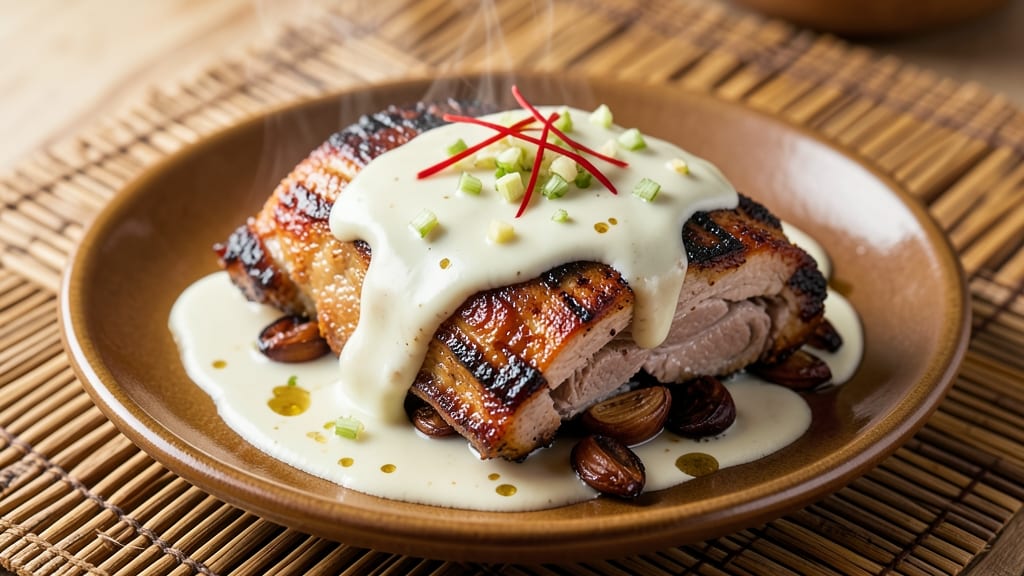
This adobo sa puti pork recipe delivers the perfect balance of tender meat and rich, creamy coconut sauce—just like my abuela used to make.
The secret lies in slow-braising the pork until it practically melts in your mouth, then finishing it with a velvety coconut milk velouté that transforms a simple dish into something truly special.
Growing up in small-town Georgia, I learned that pork connects people, and this recipe brings that warmth to every table.
The magic begins with marinating the pork in a blend of white vinegar and garlic, which tenderizes the meat while building deep, tangy flavor. Then, we braise it low and slow until fork-tender, ensuring every bite is juicy and satisfying.
The coconut milk velouté—thickened just right—adds a luxurious creaminess that balances the vinegar's sharpness, creating a sauce that clings beautifully to the shredded pork.
What you'll end up with is restaurant-quality adobo sa puti: perfectly tender pork bathed in a glossy, creamy sauce that's rich yet not overly heavy. The aroma alone will have everyone gathered around the table, and the first bite delivers that perfect harmony of tangy, sweet, and savory flavors.
This dish is a celebration of Filipino comfort food, elevated to something extraordinary.
Serve it with steamed jasmine rice to soak up every last drop of that velvety sauce, and you've got a meal that's as impressive for guests as it is comforting for family.
The technique is straightforward, but the result is anything but—this is pork cooking at its finest. Let's get started.
Ingredients for adobo sa puti pork
Six ingredients transform simple pork into restaurant-worthy adobo sa puti. The secret's in the slow braise and coconut milk velouté.
| Ingredient | Amount | Notes |
|---|---|---|
| Pork Shoulder 🥩 | 3 lb | Bone-in for flavor, cut into chunks |
| White Vinegar 🍶 | 1 cup | Distilled preferred for tang |
| Garlic Cloves 🧄 | 8 cloves | Peeled, smashed for infusion |
| Coconut Milk 🥥 | 2 cans | Full-fat, 13.5 oz each |
| Fresh Ginger 🌿 | 2 tbsp | Grated, aromatic peel only |
| Olive Oil 🫒 | ¼ cup | For searing pork |
| Bay Leaves 🍃 | 2 whole | Dried, for depth |
| Salt 🧂 | 1 ½ tsp | Kosher or sea salt |
| Black Peppercorns 🌶️ | 1 tsp | Cracked for texture |
| Sugar 🍚 | 1 tbsp | White or brown |
| Jasmine Rice 🌾 | 3 cups | Uncooked, for serving |
| Cornstarch 🍚 | 1 tbsp | For thickening sauce |
| Fresh Cilantro 🌿 | ¼ cup | Chopped, for garnish |
The pork shoulder is non-negotiable here—bone-in cuts add flavor you can't replicate with boneless. Costco or local butchers usually have it pre-cut, but if you're buying a whole shoulder, ask for the fat cap left on. That's where the flavor hides. For the vinegar, distilled white vinegar gives the cleanest tang, but apple cider vinegar works too if that's what you've got. The garlic? Peel and smash the cloves before adding to the marinade—it infuses better. Coconut milk can be a splurge, but Trader Joe's has the best-priced full-fat cans.
No fresh ginger? Ground ginger at half the amount works in a pinch, but nothing beats the fresh stuff. The olive oil matters for searing—use something with a high smoke point like avocado oil if you're worried about burning. Bay leaves are optional but add that subtle earthiness that makes this dish sing. For the sugar, white sugar dissolves better than brown, but if you're using brown, reduce by 1 tsp. The jasmine rice? Any long-grain white rice works, but jasmine has that floral aroma that pairs perfectly. And if you're wondering about substitutions, half-and-half coconut milk and heavy cream gives a similar texture if you're out of coconut milk.
This sauce gets better the next day—make extra if you can. Store leftovers in the fridge for up to 5 days, or freeze for 3 months. The pork will be even more tender after resting overnight. For serving, steam the rice in coconut milk for extra richness—just add 1/2 cup coconut milk to the cooking water. And if you're feeling fancy, garnish with fried shallots from the Asian aisle. Trust me, it's worth the effort.
Why You'll Love This Recipe
- One-Pot Magic: The pork shoulder simmers right in the same pot—no extra dishes, no fuss. Honestly, I just dump everything in and let it work its magic while I chop veggies for the side.
- Creamy-Tangy Bliss: That balance of vinegar’s sharp bite and coconut milk’s richness? It’s like a flavor hug. The ginger and garlic melt into the pork, leaving it tender and packed with layers you’ll want to savor.
- Leftovers That Shine: This dish tastes even better the next day—yes, really. I make a double batch on Sundays because reheating it for lunches is my lazy (but delicious) secret weapon.
- Budget-Friendly Feast: Pork shoulder stretches for a crowd, and the ingredients won’t break the bank. Between us, this is the kind of meal that makes grocery day feel like a win.
Step-by-step instructions for adobo sa puti pork
Here's how to create velvety coconut milk sauce over melt-in-your-mouth pork—simple but packed with flavor.
Sear the Pork Shoulder for Deep Flavor
Pat the 3 lb pork shoulder dry with paper towels—this ensures a better sear. Heat 0.25 cup olive oil in a large Dutch oven over medium-high heat until shimmering. Working in batches if needed, add the pork in a single layer and sear for 4-5 minutes per side until deep golden brown forms on all surfaces.
Real talk: Don't crowd the pan or the temperature will drop and you'll get steamed pork instead of seared. Once browned, remove the pork and set it aside. You'll notice the oil will darken—that's where all the flavor lives, so we'll use it later.
Build the Aromatic Base
In the same Dutch oven, add 8 cloves garlic cloves and 2 tbsp fresh ginger (the grated kind). Sauté for 1-2 minutes until the garlic turns light golden and the ginger becomes fragrant. Be careful here—ginger burns quickly, so watch closely.
Add 1 cup white vinegar, scraping up any browned bits from the bottom of the pan. This deglazing step captures all that meaty flavor. Bring to a simmer and let it reduce by half—about 5 minutes. You'll see the vinegar mellow out and lose its sharpness, which is exactly what we want.
Simmer the Pork in Vinegar
Return the seared pork to the Dutch oven along with 1.5 tsp salt, 1 tsp black peppercorns, 1 tbsp sugar, and 2 whole bay leaves. Pour in just enough water to come about halfway up the pork—about 2 cups. Bring to a boil, then reduce heat to low, cover, and simmer for 1 hour. This initial cooking tenderizes the pork and infuses it with the tangy vinegar.
After 1 hour, check the pork—it should be fork-tender but still holding its shape. If it's not quite there, add another ½ cup water and continue simmering for another 30 minutes. The goal is tender but not falling-apart meat that can handle the long braise to come.
Create the Creamy Coconut Sauce
Once the pork is tender, carefully remove it from the Dutch oven and set it aside. Strain the cooking liquid through a fine-mesh sieve into a bowl, discarding the bay leaves. Return the liquid to the pot and stir in 2 cans coconut milk. Bring to a gentle simmer over medium heat for 5 minutes to blend the flavors.
In a small bowl, whisk together 1 tbsp cornstarch with 2 tablespoons water to make a slurry. Slowly pour this into the simmering coconut milk while stirring constantly. The sauce will thicken dramatically—keep stirring until it reaches a velvety, spoon-thick consistency, about 3-4 minutes. If it's too thick, add 1-2 tablespoons water to loosen it.
Finish and Serve
Return the pork to the Dutch oven and let it simmer in the coconut sauce for 10-15 minutes to absorb all that creamy goodness. The pork should be shredding easily at this point. Taste and adjust seasoning—you might need a pinch more salt or a splash more vinegar to balance the flavors.
Shred the pork directly in the pot using two forks, then stir it into the sauce. Garnish with 0.25 cup fresh cilantro and serve immediately over 3 cups cooked jasmine rice. Each bite should deliver tender pork with a rich, velvety sauce that's perfectly balanced between tangy and creamy.
Pro Tips For Making Adobo Sa Puti Pork
- Brown the Pork First: Don’t skip the initial sear—pat the pork shoulder dry, then brown it in a hot pan with a little oil until deep golden. I used to skip this, thinking the vinegar would handle everything, but that crust locks in flavor and keeps the meat from turning mushy later.
- Minimize Vinegar Burn: After simmering the pork in vinegar, add the coconut milk gradually—start with half, let it thicken slightly, then add the rest. I learned this the hard way when I dumped it all in at once and ended up with a split sauce.
- Grate Ginger Fresh: No substitutions here—fresh ginger is non-negotiable. Use about 2 inches, grated fine, and let it sit in the vinegar for 10 minutes before cooking. Canned or powdered won’t give you that bright, zesty kick that makes this dish sing.
- Simmer Low and Slow: Once the coconut milk is in, drop the heat to a gentle simmer. Too high, and the sauce will curdle; too low, and it’ll never thicken. I aim for tiny, occasional bubbles—this is where the magic happens, not the drama.
Wine and beer pairings for adobo sa puti pork
Filipino White Wine Pairings
For this creamy, tangy adobo sa puti, I reach for Filipino white wines that complement the dish's complexity. A crisp Lambrusco from the Visayas region—lightly effervescent with citrus notes—cuts through the coconut richness while balancing the vinegar's acidity.
If you can't find Lambrusco, Pinot Grigio from Italy works beautifully with its bright, mineral finish. 🍷
For something more local, try Sauvignon Blanc from New Zealand—its zesty grapefruit and herbal notes mirror the ginger and garlic in the sauce. Serve it slightly chilled (45-50°F) to let the wine's crispness refresh your palate between bites of velvety pork.
Beer Pairings That Work
A Filipino pale lager like San Miguel is my go-to—its light malt sweetness and subtle hop bitterness harmonize perfectly with the dish's creamy-savory profile. The beer's carbonation also cleanses the palate between rich bites.
For a craft option, a Belgian witbier (like Hoegaarden) adds a peppery, citrusy contrast that elevates the adobo's flavors. 🍺
If you prefer darker beers, a light amber ale with notes of caramel and toasted malt—think Leffe Blonde—pairs surprisingly well. The malt sweetness softens the vinegar's tang, while the beer's body stands up to the coconut sauce. Avoid heavy stouts or IPAs, as their intensity can overpower the dish.
Unexpected But Brilliant
Here's a wild card: Prosecco—yes, the Italian sparkling wine—adds a festive touch while its slight sweetness and effervescence complement the creamy sauce. I've served this at holiday gatherings, and it's always a crowd-pleaser.
For a non-alcoholic option, ginger beer (like Feather's) mirrors the dish's spicy-sweet balance with its zesty kick. 🥂
For a bold twist, try a dry Riesling from Germany—its mineral acidity and honeyed apple notes create a stunning contrast with the vinegar and coconut. The wine's structure holds its own against the dish's richness, making it a sophisticated choice for dinner parties.
Nutrition facts
Frequently asked questions
Why does this recipe use white vinegar instead of soy sauce like traditional adobo?
This adobo sa puti recipe swaps soy sauce for white vinegar to create the signature creamy, tangy profile. The vinegar tenderizes the pork while building bright acidity that the coconut milk later balances beautifully. Traditional adobo uses soy sauce for depth, but this variation keeps the sauce light and velvety—perfect for special occasions!
Can I make this recipe without coconut milk?
Yes, but the sauce will lose its signature richness. For a substitute, mix 1 cup heavy cream with 1 cup whole milk and thicken with 1 tbsp cornstarch as directed. The texture will be lighter but still delicious—just add an extra splash of vinegar to maintain the tangy balance.
How do I know when the pork is fully tender?
The pork is ready when it shreds easily with two forks and pulls apart cleanly. For bone-in cuts, check by inserting a fork into the thickest part—if it slides in like butter, it's perfect. If it's still slightly firm after 1.5 hours, add ½ cup water and simmer another 30 minutes.
Can I prepare this dish ahead of time?
This recipe tastes even better the next day. After cooking, let the pork cool in the sauce, then refrigerate for up to 3 days. Reheat gently in a pot with a splash of water or coconut milk to restore creaminess. The flavors meld beautifully overnight, making it ideal for meal prep.
What's the best way to serve leftovers?
Transform leftovers into adobo sa puti rice bowls! Spread shredded pork over steamed rice, drizzle with extra sauce, and top with fried shallots or crispy garlic chips. For a quick fix, warm in a skillet with a splash of water to prevent drying. The sauce thickens as it cools, so thin with a little coconut milk if needed.