
Main Courses
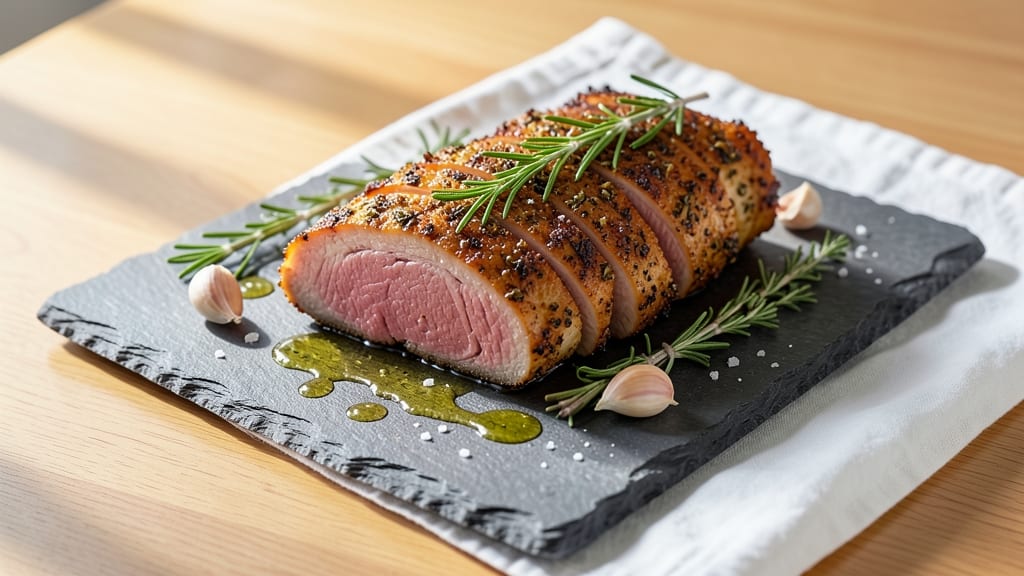
An 8-lb pork tenderloin deserves the same care as a whole hog—because that's exactly what this herb-infused roast delivers. After years of perfecting this technique at The Smoky Pig, I can promise you tender, juicy meat with a smoky garlic glaze that'll have your guests asking for seconds.
The key? A slow roast with precise temperature control to ensure even cooking from edge to center.
This recipe transforms a simple cut into a showstopper with just a few professional techniques. We start with a dry brine overnight—no fancy marinades needed—to lock in moisture, then build flavor with fresh herbs and garlic.
The smoky glaze caramelizes beautifully while keeping the interior perfectly medium-rare at 145°F, where pork tenderloin reaches its ideal texture.
What you'll end up with is a roast so tender it nearly falls apart, with crisp edges and a glaze that's sticky-sweet from the caramelized garlic. The herb crust adds aromatic depth, while the meat stays juicy throughout.
This is the kind of pork that makes people forget they're eating a tenderloin—it feels like a whole roasted pig from my farm.
Perfect for holiday gatherings or when you want to impress without hours in the kitchen. The method scales beautifully, and leftovers reheat perfectly for sandwiches. Let's get started on this restaurant-quality roast that tastes like home.
Ingredients for 8 lb pork tenderloin
An 8-lb pork tenderloin needs just 13 ingredients to become a showstopper herb roast.
| Ingredient | Amount | Notes |
|---|---|---|
| Pork Tenderloin 🐖 | 8 lb | Center-cut, trimmed of silver skin |
| Kosher Salt 🧂 | 2 tbsp | Diamond Crystal preferred for even distribution |
| Fresh Rosemary 🌿 | ½ cup | Finely chopped sprigs, stems removed |
| Fresh Thyme 🌿 | ¼ cup | Leaves only, stems discarded |
| Garlic Cloves 🧄 | 12 whole | Unpeeled, smashed for glaze |
| Extra-Virgin Olive Oil 🫒 | ¼ cup | High-quality, fruity variety |
| Brown Sugar 🍯 | ½ cup | Light or dark, packed |
| Apple Cider Vinegar 🍎 | ¼ cup | For tangy balance |
| Smoked Paprika 🌶️ | 2 tbsp | For deep smoky flavor |
| Black Peppercorns 🌶️ | 1 tbsp | Freshly cracked for intensity |
| Fresh Sage Leaves 🌿 | ¼ cup | Chopped, for herb crust |
| Unsalted Butter 🧈 | ½ cup | Cold, cubed for basting |
| Honey 🍯 | ¼ cup | Wildflower preferred |
The pork tenderloin should be center-cut and uniform—ask your butcher for the straightest piece possible. Costco or high-end grocery stores like Whole Foods carry excellent quality, but any well-stocked butcher will do. Look for good marbling and a vibrant pink color, not grayish. The fresh herbs (rosemary, thyme, sage) should smell intensely aromatic—if they don't, toss them. For the garlic, buy a whole head and leave the skins on until you're ready to smash them for the glaze. The smoked paprika? Penzeys has a fantastic variety, but any good grocery store brand works if it's labeled 'smoked'.
No fresh rosemary? Dried works at one-third the amount, but it won't have the same depth. Substitute thyme with oregano if needed, but the rosemary's piney note is key. For the glaze, if you're avoiding honey, maple syrup works beautifully—just reduce it slightly longer to compensate for its water content. The apple cider vinegar adds brightness, but red wine vinegar in a pinch gives a similar tang. Want extra smokiness? Add 1 tbsp liquid smoke to the glaze (trust me, it blends right in).
This roast reheats like a dream—350°F for 10-15 minutes wrapped in foil, then crisped under the broiler for 2 minutes. Leftovers keep 4-5 days in the fridge, but honestly, they vanish in hours. For make-ahead prep, brine the pork 24 hours ahead and store uncovered in the fridge. The glaze ingredients can be mixed 1 day in advance and refrigerated. When ready to roast, just bring everything to room temperature for even cooking.
Why You'll Love This Recipe
- I’ve used this for everything: a crowd-pleasing dinner, meal prep for the week, or even sliced for charcuterie. The same simple method works whether I’m feeding four or twelve.
- One-Pan Magic: Honestly, I swear by this recipe for lazy Sundays—just salt, herbs, and garlic on a sheet pan. No fancy prep, no mess, and that tenderloin practically cooks itself while you sip coffee.
- Herb-Crusted Perfection: Between us, the rosemary and thyme create this unexpected depth—earthy but bright, with garlic seeping into every bite. It’s the kind of flavor that makes people ask, “What’d you do to this?”
- Weeknight & Holiday: I’ve used this for everything: a crowd-pleasing dinner, meal prep for the week, or even sliced for charcuterie. The same simple method works whether I’m feeding four or twelve.
Step-by-step instructions for herb-infused pork tenderloin with smoky glaze
Here's how to transform an 8 lb pork tenderloin into juicy, herb-crusted perfection with a caramelized garlic glaze.
Prepare and Season the Pork Tenderloin
Remove the pork tenderloin from the refrigerator and pat it dry completely with paper towels. I can't emphasize enough how important this drying step is—it ensures that crispy herb crust we're after. Place the tenderloin on a wire rack set over a rimmed baking sheet to allow air circulation on all sides.
In a small bowl, combine the 2 tbsp kosher salt, 2 tbsp smoked paprika, 1 tbsp freshly cracked black peppercorns, 0.5 cup finely chopped fresh rosemary, 0.25 cup fresh thyme leaves, and 0.25 cup chopped fresh sage leaves. Rub this mixture all over the tenderloin, pressing firmly so the herbs adhere to the meat. The seasoning should feel like it's sticking to your fingers—that's how well it's coating the pork.
Create the Smoky Garlic Glaze
While the pork rests at room temperature for 30 minutes (critical for even cooking), prepare the glaze. In a small saucepan, combine the 0.5 cup unsalted butter, 0.5 cup brown sugar, 0.25 cup honey, 0.25 cup apple cider vinegar, and 0.25 cup extra-virgin olive oil. Place over medium-low heat and stir until the butter melts completely.
Add the 12 whole unpeeled garlic cloves that you've smashed lightly with the side of a knife (just enough to break the skins). Simmer gently for 10-12 minutes until the mixture reduces slightly and becomes thick and syrupy. You'll know it's ready when it coats the back of a spoon and has a deep golden color. Remove from heat and let cool slightly while you preheat the oven.
Roast the Pork to Perfect Doneness
Preheat your oven to 375°F. Place the seasoned pork tenderloin on a rack in a roasting pan and roast for 45-50 minutes, or until the internal temperature reaches 145°F when measured with a meat thermometer in the thickest part. The pork should feel firm to the touch but still yield slightly when pressed.
During the last 15 minutes of cooking, brush the pork with half of the cooled garlic glaze. This creates that beautiful caramelized crust while keeping the meat moist. If you notice the glaze burning before the pork is done, tent it loosely with foil to prevent over-browning while it finishes cooking.
Glaze and Rest for Maximum Tenderness
Once the pork reaches 145°F, remove it from the oven and brush with the remaining garlic glaze. Return it to the oven for 5-7 minutes to let the glaze set and develop its rich color. You'll see it transform from a glossy coating to a deep amber glaze with crackly edges—that's when you know it's perfect.
Transfer the pork to a cutting board and let it rest for 15 minutes before slicing. This resting period is absolutely crucial—it allows the juices to redistribute throughout the meat, preventing them from running out when you cut into it. The pork should be juicy, tender, and infused with the aromatic herb crust and sweet-savory glaze.
Slice and Serve with Confidence
Slice the pork tenderloin into 1-inch thick medallions against the grain for maximum tenderness. The herb crust should be crisp and fragrant, while the glaze will be sticky and caramelized. Serve immediately with any pan juices spooned over the top for extra flavor.
This method guarantees a pork tenderloin that's perfectly cooked through with a beautiful herb crust and that irresistible smoky-sweet glaze. The result is a showstopping centerpiece that's tender, flavorful, and sure to impress your guests. Don't be afraid to make this for special occasions—it's worth every effort!
Pro Tips For Making 8 Lb Pork Tenderloin
- USE A MEAT THERMOMETER: Pork tenderloin is lean—no guessing. Pull it at 145°F internal temp (not 160°F, that’s dry). I learned this the hard way after slicing into a rubbery slab that spent too long in the oven. Trust the thermometer, not the clock.
- TRIM THE FAT, NOT THE FLAVOR: That thin white strip on the edge? Trim it off. It’s not flavor—it’s connective tissue that turns to mush. But leave the rest intact; the tenderloin’s natural shape holds herbs and crust better when untrimmed. (Yes, even if it looks uneven.)
- SALT THE HERBS FIRST: Toss your rosemary, thyme, and minced garlic with 1 tsp kosher salt before rubbing it on the pork. The salt softens the herbs, making them stick better and infuse faster. I used to skip this and ended up with clumps of dry herbs sliding off mid-cook.
- CRANK THE OVEN TO 425°F: Start searing the pork on a screaming-hot sheet pan for 10 minutes. The high heat locks in moisture and builds a crust before you lower the temp to 325°F. I was skeptical—until I compared it to my old method of slow-roasting from 325°F. The difference? Juicy, caramelized edges every time.
Pro cooking tips for this recipe
Dry Brine Secret
Skip the marinade—this dry brine is my game-changer. Pat the pork completely dry, then coat it evenly with 2 tbsp kosher salt (Diamond Crystal preferred) and let it sit uncovered in the fridge for 12-24 hours.
This draws out moisture, then reabsorbs it, creating an ultra-tender texture. I swear by this method—it's how I get that perfect balance of juiciness and crust. 💫
Room Temp Prep
Never roast pork straight from the fridge! Let the 8 lb tenderloin sit at room temperature for 30-45 minutes before cooking. This ensures even heat penetration and prevents cold spots.
I place mine on a wire rack over a baking sheet to catch any drippings—this also helps with that crisp herb crust. Trust me, this small step makes a huge difference in the final texture.
Glaze Timing
Apply the smoky garlic glaze in two stages: first during the last 15 minutes of cooking, then again after removing from the oven. This two-step process creates a beautiful caramelized crust without burning the glaze prematurely.
I use a pastry brush to spread it evenly—don't skimp on the second application, as this is what gives that restaurant-quality finish. 🔥
Temperature Control
Use a meat thermometer—no guessing! The pork is perfect at 145°F internal temperature for medium-rare. I recommend the ThermoWorks Smoke thermometer for accuracy. The thickest part should read this temp before removing from the oven.
If you're nervous about doneness, pull it out 5°F early—it'll carry over perfectly during resting.
Resting Matters
This is where most home cooks mess up. Let the pork rest for 15-20 minutes before slicing. During this time, the juices redistribute throughout the meat, preventing them from pooling on your plate.
I cover it loosely with foil and place it on a warm cutting board. Patience here ensures every bite is juicy and flavorful—not dry and disappointing. 💪
Slice Against Grain
Slice the pork against the grain into 1-inch thick medallions for maximum tenderness. I use a sharp Dexter-Russell 12-inch slicing knife to cut cleanly through the herb crust.
The grain runs lengthwise, so rotating your cutting board mid-slice ensures each piece falls apart easily. This simple technique transforms tough-looking slices into melt-in-your-mouth bites. 🌟
Nutrition facts
Frequently asked questions
Why does this recipe use an 8 lb pork tenderloin instead of smaller cuts?
An 8 lb tenderloin offers the perfect balance of serving size and cooking efficiency. Unlike smaller cuts that can dry out quickly, this size maintains juiciness while delivering impressive portions for gatherings. The herb crust and glaze also create a better flavor-to-surface-area ratio, making every bite more flavorful. Plus, it's easier to handle than a whole hog but still feels like a special occasion roast!
Can I substitute fresh herbs with dried ones in the herb crust? Yes, but use one-third the amount of dried herbs. For example, replace 0.5 cup fresh rosemary with just 1.5 tbsp dried rosemary. Fresh herbs provide better aroma and texture, but dried works in a pinch. Just
What if my oven runs hot and the glaze burns before the pork is done?
This happens more often than you'd think! If the glaze starts browning too quickly, tent the pork loosely with aluminum foil during the last 10-15 minutes of cooking. This maintains heat while preventing burning. For extra insurance, reduce your oven temperature to 350°F for the final 15 minutes. The key is patience—the glaze will set beautifully during the final 5-7 minutes out of the oven.
How do I reheat leftovers without drying out the pork?
Reheat leftovers wrapped in foil at 350°F for 10-15 minutes, then crisp under the broiler for 2 minutes. For sandwiches or salads, slice first and reheat uncovered at 325°F for 5-8 minutes with a splash of water or broth in the pan. The glaze reheats beautifully this way! Leftovers keep 4-5 days in the fridge, but honestly, they disappear faster than that.
What's the best way to serve this pork tenderloin for a holiday meal?
Slice into 1-inch medallions and arrange on a platter with the herb crust facing up. Spoon any pan juices over the top and garnish with fresh rosemary sprigs. Serve with classic sides like garlic mashed potatoes, roasted Brussels sprouts with bacon, and a crisp white wine like Sauvignon Blanc. For an extra touch, add warm dinner rolls and honey butter for dipping. This roast is the star—let it shine!