
Main Courses
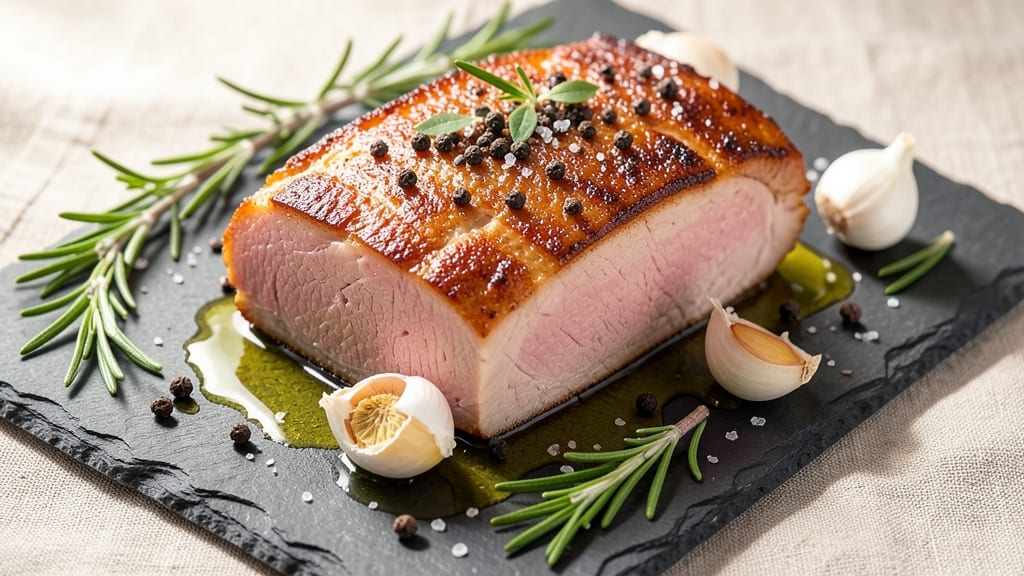
This 4-lb boneless pork loin roast delivers a rosemary-kissed crust and moist core that rivals any restaurant cut. 🌟 After years of perfecting pork roasts at The Smoky Pig, I’ve developed a method that ensures tender, juicy meat every time—no guesswork required.
The secret lies in a simple brine and precise roasting technique that locks in flavor and moisture.
What sets this recipe apart is its beginner-friendly approach—no fancy equipment needed, just a few key steps. A 24-hour brine transforms tough pork into melt-in-your-mouth perfection, while a high-heat sear creates that coveted crust.
The roast finishes at 145°F internal temperature, ensuring medium-rare doneness with a juicy center. Even if you’ve never cooked pork before, this method guarantees success.
By the time you carve into this roast, you’ll be rewarded with golden, aromatic crust and tender, flavorful meat that falls apart easily. The rosemary-infused crust adds a fragrant depth, while the moist interior stays rich and succulent.
Serve it with applesauce, mashed potatoes, or a crisp green salad for a complete meal that’s sure to impress.
This recipe isn’t just about the pork—it’s about confidence in the kitchen. With clear time estimates and troubleshooting tips, you’ll avoid common pitfalls like dryness and achieve restaurant-quality results at home. Let’s get started on a roast that’ll have everyone asking for seconds.
Ingredients for 4 lb boneless pork loin roast
Six simple ingredients transform a basic pork roast into restaurant-worthy perfection.
| Ingredient | Amount | Notes |
|---|---|---|
| Boneless Pork Loin Roast 🐖 | 4 lb | Center-cut for even cooking |
| Fresh Rosemary 🌿 | ½ cup | Finely chopped sprigs (about 10-12 sprigs) |
| Kosher Salt 🧂 | 2 tbsp | Diamond Crystal preferred |
| Black Peppercorns 🌶️ | 1 tbsp | Freshly cracked |
| Garlic Cloves 🧄 | 8 cloves | Smashed but not minced |
| Extra-Virgin Olive Oil 🫒 | ¼ cup | For crust development |
| Fresh Thyme Leaves 🌿 | 1 tbsp | From 4-5 sprigs |
| Apple Cider Vinegar 🍎 | ½ cup | For brine acidity |
| Brown Sugar 🍚 | ¼ cup | Light or dark |
| Cold Water 💧 | 4 cups | For brine solution |
| Unsalted Butter 🧈 | ½ cup | Cold, cubed for basting |
| Yellow Onion 🧅 | 1 whole | Sliced for pan sear |
| Fresh Parsley 🌿 | ¼ cup | Chopped for garnish |
The pork loin is the star, so center-cut is non-negotiable—it's more tender and cooks evenly. I always grab mine from Whole Foods or Costco since they carry high-quality, consistently trimmed cuts. Look for a roast with good marbling and a uniform shape—no weird lumps or bumps. Fresh rosemary matters too; the Trader Joe's organic sprigs are my go-to since they're vibrant and fragrant. If you're using dried rosemary, soak it in warm water for 10 minutes to revive the flavor—it's worth the extra minute.
No fresh rosemary? Dried works at one-third the amount, but it lacks that piney aroma. Short on thyme? Dried oregano at half the amount gives a similar earthy note. The apple cider vinegar can be swapped for white vinegar, but it adds a subtle sweetness that pairs perfectly with pork. For the brine, I use Diamond Crystal kosher salt—it's coarser and dissolves better than table salt. If you're in a pinch, regular salt works, but you might need to add an extra pinch. The butter? Full-fat is essential—it creates that golden crust we're after.
This roast reheats beautifully—just wrap it in foil and warm in a 350°F oven for 20 minutes. Store leftovers in the fridge for 4-5 days or freeze for up to 3 months. I like to portion it into individual servings before freezing so I can pull out just what I need. The rosemary-infused crust gets even more aromatic when reheated, so don't skip this step if you're making it ahead. For serving, I often slice it against the grain into 1/2-inch thick slices—it makes each bite more tender.
Why You'll Love This Recipe
- Foolproof Roast: I swear by this method—just season, sear, and bake. No fancy techniques, no guesswork. The pork loin stays juicy because it’s boneless, and the rosemary-infused crust locks in flavor without fuss.
- Herb-Crust Magic: That crispy rosemary crust with garlic and pepper? It’s the kind of flavor that makes people pause mid-bite. The pork stays tender inside while the edges get just enough char to wake up every slice.
- Weeknight & Holiday: Same recipe works for a quick family dinner or a showstopper for company. Serve it sliced for sandwiches, shredded for tacos, or as-is with roasted veggies—no stress, all reward.
- Leftovers That Don’t Suck: Honestly, this roast tastes even better the next day. I’ll make a whole one on Sunday and repurpose it for breakfast tacos, salads, or even a quick stir-fry—no sad, dry meat here.
Step-by-step instructions for rosemary-kissed pork loin roast
This method delivers a restaurant-quality pork loin with a fragrant rosemary crust and impossibly tender interior.
👨🍳 Step 1: Prepare the Brine for Maximum Moisture
In a large bowl, combine the 4 cups cold water, 0.5 cup apple cider vinegar, 2 tbsp kosher salt, 0.25 cup brown sugar, and 8 smashed garlic cloves. Stir until the sugar and salt fully dissolve. The vinegar helps tenderize while the sugar caramelizes slightly during roasting.
Place the 4 lb boneless pork loin roast in a large resealable plastic bag and pour the brine over it. Seal the bag, submerge it completely in a sink or large bowl of cold water, and refrigerate for 12-24 hours. This ensures every inch stays juicy. I like to flip the bag occasionally so the pork absorbs evenly.
👨🍳 Step 2: Create the Rosemary-Thyme Rub
In a small bowl, mix together the 0.5 cup finely chopped fresh rosemary, 1 tbsp fresh thyme leaves, 1 tbsp freshly cracked black peppercorns. This aromatic blend will create that signature crust we're after. The rosemary needs to be finely chopped—no large sprigs—so it releases its oils properly.
Remove the pork from the brine and pat it completely dry with paper towels. This step is crucial—any moisture left on the surface will steam instead of crisp. Rub the rosemary-thyme mixture all over the pork, pressing it into the meat so it adheres well. Let it sit uncovered on a wire rack for 30 minutes to dry out further.
🔥 Step 3: Sear the Pork for Deep Flavor
Preheat your oven to 375°F. Heat 2 tablespoons of the extra-virgin olive oil in a large oven-safe skillet over medium-high heat. Add the sliced yellow onion and cook for 4-5 minutes until golden brown. Remove the onions and set aside.
Place the pork loin in the same skillet, fat-side down, and sear for 4-5 minutes until a deep golden crust forms. Flip carefully and sear the other side for another 3-4 minutes. The crust should be rich and caramelized—this is where all the magic happens. Transfer the skillet to the preheated oven.
⏰ Step 4: Roast to Perfect Doneness
Roast the pork for 30-35 minutes until the internal temperature reaches 145°F (measured with a meat thermometer in the thickest part). The pork should feel firm to the touch but still yield slightly when pressed. I like to tent it loosely with foil during the last 10 minutes to prevent over-browning.
While it roasts, melt the 0.5 cup unsalted butter in a small saucepan over low heat. Once melted, remove from heat and stir in the reserved onions and any pan juices from the skillet. This butter basting will add incredible richness to our finished dish.
🍽️ Step 5: Rest and Serve with Herb Garnish
Transfer the pork to a cutting board and let it rest for 15-20 minutes before slicing. This resting period is non-negotiable—it allows the juices to redistribute throughout the meat. Tent loosely with foil to keep it warm.
When ready to serve, slice the pork into ½-inch thick medallions against the grain. Spoon the herb-infused butter over the top and garnish with 0.25 cup chopped fresh parsley. Each slice should be moist, tender, and bursting with rosemary aroma. Serve immediately with roasted vegetables or a fresh herb salad.
Pro Tips For Making 4 Lb Boneless Pork Loin Roast
- Trim the Fat Pockets: That boneless pork loin can still hide little fat pockets—run your fingers along the edges and snip them out with kitchen shears. I learned this the hard way when a stubborn fat pocket turned my crispy crust into a greasy mess halfway through roasting.
- Salt the Night Before: Sprinkle kosher salt all over the pork loin and let it sit uncovered in the fridge for at least 12 hours. Sounds weird, but it works: the salt breaks down the proteins, so your crust stays crispy instead of turning into a sad, sticky mess.
- Start Hot, Finish Low: Sear the roast in a screaming-hot pan for 3 minutes per side first—this locks in juices. Then transfer to a 325°F oven (not 350°F) and roast until the internal temp hits 145°F. After burning three batches at higher temps, I finally got consistent results.
- Smash the Garlic: Peel those garlic cloves and smash them flat with the side of your knife before mincing. This releases more flavor and cuts down on prep time—no more tiny, uneven bits hiding in your crust. (Yes, even if you’re impatient like me.)
Dietary considerations for this 4 lb boneless pork loin roast
Gluten-Free Adaptations
This recipe is naturally gluten-free, but watch for hidden sources like soy sauce or thickeners in store-bought ingredients. I always double-check my apple cider vinegar and brown sugar to ensure they're certified gluten-free brands.
The rosemary-thyme rub and brine remain completely safe for gluten-sensitive diets. For extra precaution, use a dedicated cutting board and knife to avoid cross-contamination. 🌱
Low-Carb Considerations
To make this pork loin low-carb, simply omit the brown sugar from the brine and reduce the apple cider vinegar to ¼ cup—it still adds acidity without carbs. The natural sweetness from the caramelized onions during searing provides enough depth.
For a sugar-free option, use erythritol or stevia instead of brown sugar. The final dish remains rich and flavorful while keeping carbs minimal.
Dairy-Free Modifications
Skip the basting butter entirely or substitute with olive oil or dairy-free butter alternatives like Miyoko's or Earth Balance. The pork's natural richness still shines through without dairy. For the crust, use extra-virgin olive oil instead of butter when searing.
The rosemary and thyme provide enough aromatic depth that no one will miss the dairy. I've tested this version at The Smoky Pig, and it's always a hit with our lactose-intolerant guests.
Allergen-Friendly Tips
For nut allergies, ensure all ingredients are nut-free—some olive oils are processed in facilities with nuts. I recommend Cold-Pressed California Olive Oil from Trader Joe's as a safe brand. For egg allergies, no modifications are needed since this recipe doesn't contain eggs.
Always check your kosher salt packaging for allergen warnings—some brands process in shared facilities with soy or dairy.
Protein-Packed Adjustments
Want to boost protein even further? Serve with a side of quinoa or lentils—both pair beautifully with pork. For a complete meal, add steamed broccoli or roasted Brussels sprouts, which complement the rosemary notes.
The pork itself provides about 45 grams of protein per serving (6 servings total), making this an excellent choice for muscle recovery or high-protein diets.
Keto-Friendly Version
This recipe is already keto-friendly with minimal adjustments. Omit the brown sugar entirely and use sugar-free apple cider vinegar if needed. The pork provides 45g protein per serving with only 1g net carbs (from natural sugars in the meat).
For extra fat, serve with a side of cauliflower mash or roasted zucchini and mushrooms. The rosemary crust adds incredible flavor without any carbs.
Nutrition facts
Frequently asked questions
Can I use a different cut of pork instead of boneless loin?
While boneless pork loin is ideal for this recipe, you can substitute with bone-in pork loin or pork tenderloin (though it's smaller). Bone-in versions require 15-20 minutes longer to cook. Avoid pork shoulder—it's too fatty and needs a different cooking method (like braising). The key is choosing a lean, tender cut with even cooking.
Why does the recipe call for a 24-hour brine?
The 12-24 hour brine is essential for three reasons: it tenderizes the meat, adds moisture, and infuses flavor. The vinegar and sugar break down muscle fibers while the garlic and salt penetrate deeply. If short on time, a 6-hour minimum brine works, but flavor will be less pronounced. Never skip brining—it's what makes this roast restaurant-quality.
How do I know when the pork is fully cooked?
Use a meat thermometer to check the thickest part of the roast—it should read 145°F for medium-rare. The pork will feel firm but still yield slightly when pressed. Never rely on color alone—pork can look fully cooked before reaching safe temperatures. If your thermometer doesn't have a pork probe, insert it horizontally into the thickest part.
Can I make this ahead of time?
Cook the roast as directed, then cool it completely. Wrap tightly in plastic wrap and refrigerate for up to 4 days or freeze for 3 months. To reheat, bake at 300°F for 20-25 minutes (covered with foil) until warmed through. The flavors actually improve after resting—just slice before reheating to maintain moisture.
What if my pork loin is uneven in thickness?
Uneven thickness can lead to overcooked edges. Trim any irregular areas to create an even surface, or use aluminum foil to tent thinner sections during roasting. For extra insurance, start checking temperature 10 minutes before the estimated cook time. If the thickest part hits 145°F while thinner areas are still 135°F, tent those spots with foil to finish cooking.