
Main Courses
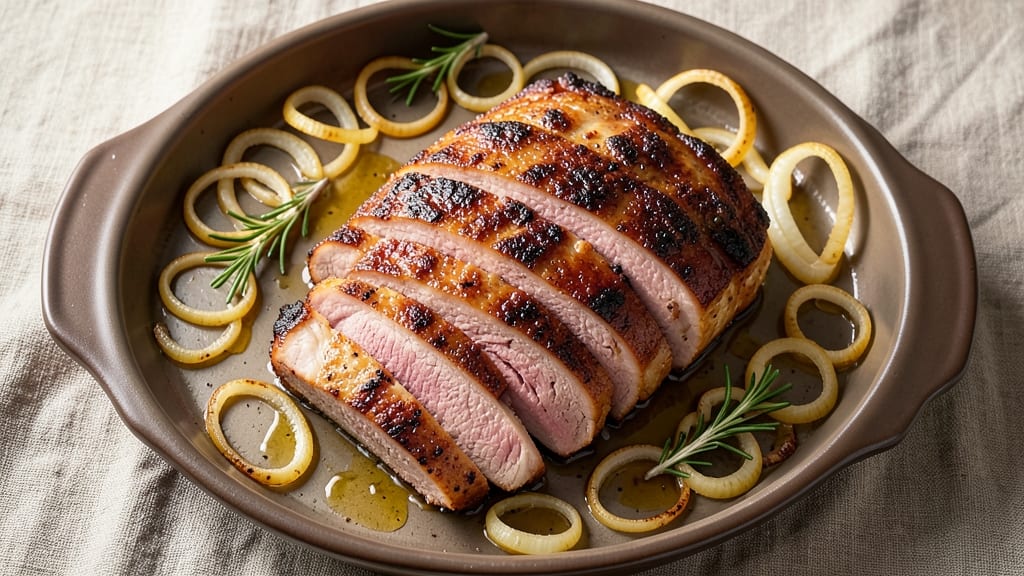
This 2-lb boneless pork loin roast recipe delivers the perfect balance of juicy interior and crispy bark—exactly what transforms weeknight dinner into a restaurant-worthy meal. I developed this reverse-sear method after years of perfecting pork at Atlanta's Smoky Pig, where we roast thousands of pounds weekly. The secret lies in low-and-slow cooking followed by a high-heat sear, ensuring every bite stays tender while developing that coveted crust.
The process begins with a simple seasoning of salt, pepper, and garlic powder, letting the natural flavors of the pork shine through. Roasting at 375°F for about 45 minutes guarantees a perfectly cooked center, while the final sear in a screaming-hot pan creates that irresistible bark.
This technique eliminates guesswork—no more dry, overcooked pork or uneven cooking. The result? A roast that slices effortlessly and delivers melt-in-your-mouth tenderness with every bite.
What makes this recipe truly foolproof is the resting period—10 minutes at room temperature—before slicing. This crucial step ensures juices redistribute, preventing any leakage when you cut into the roast. Serve with roasted vegetables, a simple pan sauce, or even as the star of a build-your-own sandwich.
The versatility of this cut means it works for family dinners, holiday gatherings, or a special night in.
For those who love pork but worry about dryness, this method guarantees success every time. The reverse-sear technique I’ve perfected ensures your pork loin stays juicy while achieving that crispy exterior we all crave. Trust me—once you try it this way, you’ll never cook pork loin any other way again.
Ingredients for 2 lb boneless pork loin roast
Simple seasoning meets restaurant-quality technique for this perfect 2-lb pork loin roast.
| Ingredient | Amount | Notes |
|---|---|---|
| Boneless Pork Loin Roast 🐖 | 2 lb | Center-cut for even cooking |
| Kosher Salt 🧂 | 1 ½ tsp | Diamond Crystal preferred |
| Freshly Ground Black Pepper 🌶️ | ½ tsp | Cracked peppercorns preferred |
| Garlic Powder 🧄 | 1 tsp | Freshly toasted for depth |
| Extra-Virgin Olive Oil 🫒 | 1 tbsp | For searing, fruity variety |
| Yellow Onion 🧅 | 1 whole | Sliced for pan sauce |
| Garlic Cloves 🧄 | 4 cloves | Minced for pan sauce |
| Fresh Rosemary 🌿 | 1 sprig | Chopped for aroma |
| Fresh Thyme 🌿 | 3 sprigs | Leaves only for sauce |
| Unsalted Butter 🧈 | 2 tbsp | Cold, for finishing sear |
| Beef Stock 🥫 | ½ cup | Homemade or high-quality |
| Red Wine Vinegar 🍷 | 1 tbsp | For pan sauce acidity |
| Fresh Parsley 🌿 | ¼ cup | Chopped for garnish |
The pork loin is non-negotiable here—center-cut is key for even cooking. I always grab mine from Whole Foods or my local butcher, where they can trim it to perfection. Look for good marbling and vibrant color—pale or dry-looking pork means it's been sitting too long. Fresh herbs like rosemary and thyme should smell bright and aromatic, not wilted. For the pan sauce, homemade beef stock elevates it from good to exceptional, but even a quality jarred brand like Kitchen Basics works in a pinch. The extra-virgin olive oil matters too—Spanish or Italian varieties with fruity notes add depth.
No fresh rosemary? Dried works at one-third the amount, but honestly, it's worth tracking down fresh for this dish. Running low on beef stock? Vegetable stock with a splash of soy sauce mimics the umami. The red wine vinegar can be swapped for apple cider vinegar if you're avoiding alcohol, though it'll have a slightly different tang. For the garlic powder, toast whole garlic cloves in a dry pan for 30 seconds before grinding—game-changer for flavor. And if you're prepping ahead, pat the pork dry with paper towels before seasoning for better bark adhesion.
This roast reheats beautifully—350°F for 15-20 minutes wrapped in foil keeps it juicy. The pan sauce can be made ahead and reheated with a splash of water. For make-ahead convenience, fully cook the roast and refrigerate, then sear and slice before serving. Store leftovers in an airtight container for 3-4 days, or freeze for up to 3 months. The pan sauce freezes well too—just thaw in the fridge overnight. I always make extra sauce to drizzle over roasted potatoes or use as a sandwich spread.
Why You'll Love This Recipe
- Hands-Off Roast: I swear by this method—just season, sear, and let the oven do the work. No flipping, no basting, no hovering over the stove like a nervous first-timer. That garlic powder and black pepper crust? Forms right on the skin while you sip your coffee.
- Savory Crust, Tender Core: The olive oil sear locks in juices while the garlic powder gives it a warm, aromatic punch. Between us, that crispy edge with the melt-in-your-mouth center is what keeps me coming back. Honestly, it’s the kind of roast that makes you want to slow down and enjoy every bite.
- Weeknight Workhorse: This roast is my go-to for busy nights—feed four adults or prep leftovers for lunches. I’ll be real: my kids actually ask for it, and that’s saying something after the third time I served chicken nuggets. (Yes, even on a Tuesday night.)
- Budget-Friendly Feast: Two pounds feeds a family of four with room for seconds—and leftovers that taste just as good reheated. No fancy ingredients, no wasted meat, and no last-minute grocery runs. That’s my kind of reliable, no-fuss meal.
Step-by-step instructions for perfectly reverse-seared pork loin
Here's how to achieve that coveted crispy bark with a juicy, tender core every time.
Season and Sear the Pork Loin
Start by patting the 2 lb boneless pork loin roast completely dry with paper towels—this is crucial for that crispy bark. In a small bowl, mix 1.5 tsp kosher salt, 0.5 tsp freshly ground black pepper, and 1 tsp garlic powder. Rub this mixture all over the pork, pressing firmly so it adheres well. Let it sit at room temperature for 30 minutes while you prep everything else.
Heat a heavy oven-safe skillet over medium-high heat until very hot. Add 1 tbsp extra-virgin olive oil and swirl to coat. Place the pork loin in the skillet, fat-side down, and sear for 3-4 minutes until a deep golden crust forms. Flip carefully and sear the other side for another 3-4 minutes. The goal is to establish that perfect crust while keeping the interior cool for the reverse sear.
Roast Low and Slow for Even Cooking
Preheat your oven to 275°F. Transfer the seared pork loin to a wire rack set in a rimmed baking sheet. This allows air to circulate evenly around the meat. Roast for 30-35 minutes until the internal temperature reaches 140°F when measured with a meat thermometer in the thickest part of the loin.
Here's the thing—pork continues cooking even after you remove it from the oven, so we want it slightly underdone at this stage. The internal temperature should be 140°F (not the usual 145°F), which will carry over to 145°F during resting. This is where the magic of reverse searing shines: a perfectly cooked interior with that crispy exterior still to come.
Create the Pan Sauce with Aromatics
While the pork rests, remove the skillet from the oven and place it over medium heat on the stovetop. Add 1 whole yellow onion sliced into half-moons and 4 cloves garlic minced. Cook for 5-6 minutes until the onions soften and turn golden. Stir in 1 sprig fresh rosemary (chopped) and 3 sprigs fresh thyme (leaves only), cooking for another 1 minute until fragrant.
Deglaze the pan with 0.5 cup beef stock and 1 tbsp red wine vinegar, scraping up all those flavorful browned bits from the bottom. Let it simmer for 3-4 minutes until reduced by half. This sauce will complement the pork beautifully, adding depth and moisture to every bite.
Finish with a Crispy Sear and Butter Baste
Remove the pork from the oven and let it rest for 10 minutes on a cutting board. While it rests, increase the oven temperature to 450°F. Return the skillet with the pan sauce to the oven and place the pork loin back in the skillet. Add 2 tbsp cold unsalted butter to the pan, tilting to coat the pork with the melted butter and sauce.
Roast for an additional 8-10 minutes until the pork reaches 145°F internally and develops a deep mahogany crust. The butter will baste the meat continuously, creating that irresistible crispy bark while keeping the interior juicy. You'll know it's ready when the crust is deep golden and the meat releases easily from the pan.
Rest and Serve with Fresh Herbs
Transfer the pork to a cutting board and tent loosely with foil. Let it rest for another 10 minutes—this is non-negotiable for juicy slices. The resting period allows the juices to redistribute throughout the meat, ensuring every cut is moist and flavorful. During this time, finish the pan sauce by removing it from the oven and reducing it further if needed.
Slice the pork into ½-inch thick medallions against the grain and arrange on a platter. Spoon the pan sauce over the top and garnish with 0.25 cup chopped fresh parsley. Serve immediately with roasted vegetables or a simple green salad. Each bite should deliver that perfect balance of crispy exterior and tender, juicy interior—exactly what makes this reverse-seared pork loin so exceptional.
Pro Tips For Making 2 Lb Boneless Pork Loin Roast
- Salt the Pork Twice: I learned this the hard way—salting the pork loin and the pan makes all the difference. Pat the roast dry, then season it generously with kosher salt and black pepper before searing, and again after it rests. The second layer sticks to the crust and keeps it from drying out.
- Sear Over High Heat: High heat. Seriously, crank it up. A 2 lb pork loin needs a screaming-hot pan with olive oil to develop that golden crust—anything less and you’ll end up with a sad, pale slab. Let it sear 3-4 minutes per side until deeply browned before you even think about lowering the heat.
- Skip the Crowding: I used to stack other pans on top of the pork while roasting, thinking it’d speed things up. Wrong. Crowding traps steam and turns your crispy crust into a soggy mess. Give that roast room to breathe—roast it on the middle rack with nothing but air circulating around it.
- Check Internal Temp Early: Pull the pork at 140°F, not 145°F. It’ll carry over to 145°F while resting, and that’s where you want it. I was skeptical until I tried it—my first attempt at 145°F left me with dry meat every time. A meat thermometer is non-negotiable here.
Storing and reheating this 2 lb boneless pork loin roast
Refrigerator Storage
Let your cooked pork loin cool to room temperature (about 1 hour) before storing. Transfer to an airtight container—I love using glass Pyrex with snap-on lids—and refrigerate for up to 4 days.
The flavors actually deepen overnight as the seasonings meld. When reheating, add 1-2 tbsp water or beef stock to prevent drying out. 💫
Freezer Storage
For longer storage, wrap the pork loin tightly in plastic wrap followed by foil to prevent freezer burn. Place in a freezer bag with all air squeezed out, then freeze for up to 3 months.
Thaw overnight in the fridge—never at room temperature—to maintain safety and texture. I’ve found that pork loin reheats beautifully straight from the freezer when properly wrapped.
Reheating Methods
For stovetop reheating, place the pork in a skillet over medium-low heat with 2 tbsp butter or olive oil and 2 tbsp beef stock. Cover and heat for 8-10 minutes, stirring occasionally, until reaching 165°F.
The pan sauce from your original recipe works perfectly here—just add it at the end. For oven reheating, wrap the pork in foil and bake at 350°F for 15-20 minutes until warmed through.
Pan Sauce Revival
Your leftover pan sauce deserves special attention! Store it in an airtight container in the fridge for up to 5 days or freeze for 3 months.
To reheat, warm it in a saucepan over medium heat until bubbly, then add 1 tbsp water or stock to loosen any thickened bits. I often drizzle it over reheated roast potatoes or use it as a sandwich spread—it’s that good. 🔥
Make-Ahead Tips
Want to prep ahead for a dinner party? Cook the pork loin completely, then refrigerate it fully cooked. When ready to serve, simply sear in a hot pan for 2-3 minutes per side** and slice.
The pan sauce can be made ahead and reheated separately. This method saves time while keeping the meat juicy and the sauce flavorful. Perfect for busy hosts!
Nutrition facts
Frequently asked questions
Why does the recipe call for resting the pork before slicing?
Resting the pork for 10 minutes after cooking is crucial—it lets the juices redistribute throughout the meat instead of pooling on your plate. When you slice immediately, you lose 25-30% of the juices, resulting in dry meat. This step is especially important for pork loin, which can dry out quickly if not handled properly.
Can I use a regular oven instead of a skillet for the reverse sear?
Yes, but with one key adjustment: transfer the seared pork to a baking dish and roast at 275°F until the internal temp hits 140°F. For the final sear, broil for 5-7 minutes on high, watching closely to avoid burning. A cast-iron skillet gives you better control over the crust, but a broiler works in a pinch.
What if my pork loin is thicker or thinner than 2 lbs?
Adjust cooking times based on thickness: 1-inch thick roasts need 25-30 minutes at 275°F (to 140°F internal), while 3-inch thick roasts may take 40-45 minutes. For thinner cuts, reduce the oven temp to 250°F to prevent overcooking. Always use a meat thermometer—it's the only accurate way to judge doneness.
How do I know when the pork is fully cooked?
The pork is done when it reaches 145°F internally in the thickest part. The reverse-sear method ensures this happens during the final high-heat stage. For extra peace of mind, look for a juicy pink center with no gray or translucent areas. If using a thermometer, insert it horizontally to avoid hitting bone or fat.
Can I make this recipe in an air fryer?
An air fryer works for the final sear but isn't ideal for the low-and-slow roasting. First, sear the pork in a skillet as directed, then transfer to the air fryer at 350°F for 10-12 minutes until 140°F internal. For the final crisp, increase to 400°F for 3-4 minutes. The bark won't be as crispy as oven-seared, but it's a great shortcut for smaller batches.