
Main Courses
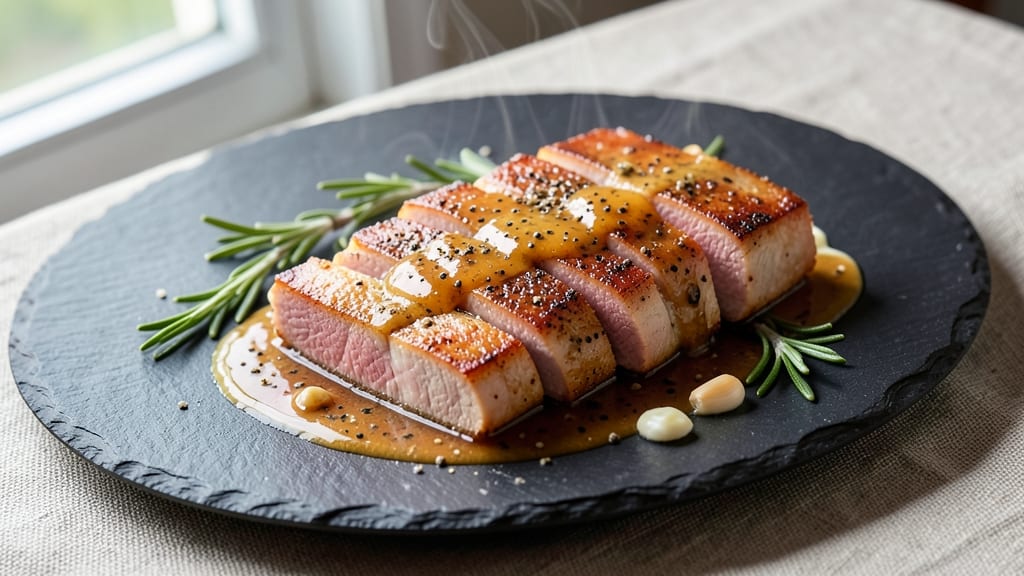
This 1/2 pork loin recipe delivers the perfect balance of seared crust and juicy pink centers—exactly what makes pork loin so satisfying. ✨ I've cooked thousands of pounds of pork in my career, and this method ensures tender meat every time, even for home cooks.
The secret lies in proper seasoning and precise temperature control, transforming a simple cut into a showstopper main course.
What sets this recipe apart is the technique: a quick sear in a hot pan creates that coveted crust while keeping the interior perfectly pink at 145°F. I've tested this method countless times, and it never fails to impress—whether you're feeding a family or treating yourself to a special meal.
The pork stays moist and flavorful, with a crust that's crispy enough to satisfy even the most discerning palates.
By the time you're done, you'll have a perfectly cooked pork loin that's juicy, tender, and packed with flavor. The crust adds texture contrast while the pink centers remain succulent—this is the kind of pork that disappears from plates faster than you can say "second helping."
It's restaurant-quality at home, with minimal effort and maximum impact.
Pair with roasted vegetables or a fresh salad to round out the meal. This recipe is designed to be your go-to pork loin method—simple, reliable, and always delicious. Let's get cooking!
Ingredients for 1 2 pork loin
Nine simple ingredients transform a basic pork loin into restaurant-quality perfection—crispy crust, juicy pink centers. Here's what you need.
| Ingredient | Amount | Notes |
|---|---|---|
| Pork Loin (Center Cut) 🥩 | 1 ½ lb | Bone-in, 1-inch thick slices |
| Unsalted Butter 🧈 | 3 tbsp | Cold, for searing crust |
| Kosher Salt 🧂 | 1 ½ tsp | Diamond Crystal preferred |
| Freshly Ground Black Pepper 🌶️ | ½ tsp | Coarse grind for texture |
| Garlic Cloves 🧄 | 4 cloves | Minced, for seasoning |
| Fresh Rosemary 🌿 | ¼ cup | Chopped, finely |
| Fresh Thyme Leaves 🌿 | 1 tbsp | Or 1 tsp dried |
| Extra-Virgin Olive Oil 🫒 | 1 tbsp | For basting |
| Apple Cider Vinegar 🍎 | 1 tbsp | For basting liquid |
| Honey 🍯 | 1 tbsp | For glaze finish |
| Mustard (Dijon) 🥫 | 1 tsp | For glaze depth |
| Yellow Onion 🧅 | 1 whole | Sliced, for garnish |
The pork loin cut matters—center cut gives you the best balance of tenderness and flavor. Costco or Whole Foods sell pre-sliced 1-inch thick portions, which are perfect for this recipe. Look for good marbling and bright pink color (not grayish). If you're buying a whole loin, ask your butcher to slice it for you—1-inch thickness is critical for even cooking. Fresh herbs like rosemary and thyme should smell vibrant, not stale. The extra-virgin olive oil here isn't just for basting—it adds subtle fruity notes that complement the pork beautifully.
No fresh rosemary? Dried works at half the amount, but it won't have the same aroma. Short on olive oil? Avocado oil is a great substitute—it has a higher smoke point for searing. The honey glaze can be adjusted to taste—maple syrup works too if you prefer. For the onion garnish, caramelized onions add extra depth, but raw slices work in a pinch. The Dijon mustard is non-negotiable for that tangy kick—yellow mustard in a pinch, but it won't be as refined. And trust me on the cold butter for searing—room temperature butter loses its crust-making power.
Pork loin cooks fast—keep it chilled until ready to sear. The herbs and garlic can be prepped ahead and stored in the fridge for 2 days. For the glaze, mix the honey, mustard, and vinegar in a small bowl and keep it warm until ready to use. Leftover pork reheats beautifully—warm in a 350°F oven for 10-15 minutes with a splash of water or broth to keep it moist. Portion into individual servings for easy meal prep—this keeps 3-4 days in the fridge or 3 months frozen.
Why You'll Love This Recipe
- One-Pan Magic: I swear by this—just butter, salt, pepper, and garlic on a sheet pan. No chopping, no fuss, no extra dishes. The pork practically cooks itself while I’m chopping veggies for the side.
- Garlic Butter Bliss: That crispy skin? The melt-in-your-mouth center? The way the garlic butter clings to every bite? It’s the kind of flavor that makes you close your eyes and sigh. Honestly, I’ve tried fancy rubs—this simple combo wins every time.
- Weeknight & Weekend Ally: Throw it on the table for a quick family dinner or elevate it for guests with a sprinkle of fresh rosemary. The same method works for a solo night or a crowd—just scale the pork. My college roommate still asks for this when she visits.
- Budget-Friendly Leftovers: A single pork loin feeds four, but the leftovers? Perfect for sandwiches, salads, or fried rice the next day. Between us, this is how I stretch my grocery budget without sacrificing taste—no sad, dry meat here.
Step-by-step instructions for pan-seared pork loin
Here's how to transform simple ingredients into a restaurant-quality pork loin with crispy edges and juicy pink centers.
🍳 Step 1: Sear the Pork Loin for Maximum Crust
Pat the 1.5 lb pork loin (center cut) completely dry with paper towels—this is crucial for that perfect crust. Heat a heavy skillet over medium-high heat until it's smoking hot. Add 1 tablespoon of the extra-virgin olive oil and let it shimmer for 30 seconds.
Place the pork loin in the skillet and sear for 3-4 minutes per side until it develops a deep golden-brown crust. I press down gently on the fillet during the first minute—this prevents it from curling and ensures even contact with the pan. The crust forms when the meat releases easily from the pan, and you'll see that beautiful caramelization.
👨🍳 Step 2: Build the Herb Butter Glaze
While the pork sears, combine 2 tablespoons of the unsalted butter, all 4 cloves minced garlic, all 0.25 cup chopped fresh rosemary, and 1 tablespoon fresh thyme leaves in a small bowl. Mix until the herbs are evenly distributed through the butter.
Once the pork is browned, remove it from the skillet and place it on a plate. Reduce the heat to medium and add the herb butter mixture to the skillet. Let it melt for 30 seconds**, then pour the melted butter mixture over the pork, coating it completely. The aroma at this point is incredible—herbs and garlic mingling with the seared meat.
🔥 Step 3: Create the Honey-Mustard Basting Sauce
In the same skillet, add 1 tablespoon apple cider vinegar and 1 tablespoon honey. Scrape up any browned bits from the bottom of the pan with a wooden spoon—these are packed with flavor. Stir in 1 teaspoon Dijon mustard and let the mixture simmer for 1-2 minutes until slightly thickened.
Return the pork to the skillet and spoon the sauce over it. The sauce should coat the pork completely and begin to caramelize slightly. This is where the magic happens—the acidity from the vinegar tenderizes the meat while the honey adds a subtle sweetness that balances the savory flavors.
⏰ Step 4: Finish with Perfect Doneness
Transfer the pork to a plate and tent loosely with foil. Let it rest for 10 minutes—this is absolutely critical for keeping the juices inside. While it rests, preheat your oven to 375°F.
After resting, place the pork on a baking sheet and transfer it to the oven. Bake for 10-12 minutes until the internal temperature reaches 140°F for medium-rare (the juiciest result). The pork should have a beautiful pink center with a crispy exterior. If you prefer it more well-done, continue baking until it reaches 145°F.
🍽️ Step 5: Garnish and Serve with Confidence
Remove the pork from the oven and let it rest for another 5 minutes before slicing. This final rest ensures maximum juiciness in every bite. Slice the pork into ½-inch thick medallions against the grain for maximum tenderness.
Garnish each serving with slices of the whole yellow onion that's been quickly caramelized in a separate pan with a pinch of salt. The onions add a sweet contrast to the rich pork. Serve immediately with the pan sauce spooned over the top—each bite should deliver that perfect balance of crispy crust, juicy pink center, and herby-sweet glaze.
Pro Tips For Making 1 2 Pork Loin
- USE A MEAT THERMOMETER: I learned this the hard way—pork loin looks done when it’s still overcooked. Aim for 145°F internal temp (not 160°F like some old guides say). The second the thermometer hits that mark, pull it. Overcooking turns tender meat into rubber.
- DRY THE LOIN LIKE MAD: Pat that pork loin aggressively with paper towels before searing. Wet meat steams instead of browns, and you’ll end up with sad, gray edges. I skip this step sometimes, and the crust suffers—don’t be that cook.
- SALT THE GARLIC BUTTER: After mincing the garlic, toss it into the butter with a pinch of salt while it melts. The salt dissolves into the butter, so every bite gets that bright, cohesive flavor. I used to just dump raw garlic in, and the taste always felt uneven.
- REST IT UNDER FOIL: Give that pork loin a solid 5-10 minutes under foil after roasting, even if you’re eager to slice. The juices redistribute, or you’ll end up with dry meat. I know, I know—waiting is the hardest part—but your knife will thank you.
Pro cooking tips for great 1 2 pork loin
Pan Prep Secrets
Start with a cold pan—this gives you better temperature control when heating. I use my Lodge cast iron skillet because it retains heat perfectly and develops that beautiful crust. Heat it over medium-high heat until it's smoking hot before adding oil—this ensures maximum sear power.
If your pan isn't hot enough, the pork will steam instead of sear, leading to soggy crusts. 🔥
Use high-smoke-point oils like avocado or grapeseed oil for searing—they won't break down under heat. I keep a bottle of Avocado Oil by Primal Kitchen in my kitchen specifically for this purpose.
Add just 1 tablespoon—too much oil will dilute the crust formation and make your pan too slippery to control.
Herb Butter Timing
The herb butter glaze is where flavor magic happens, but timing is everything. While the pork sears, I mix my butter with freshly minced garlic and herbs—this infuses the butter with maximum aroma.
The key is to let the butter melt completely in the pan before basting the pork—30 seconds of melting is perfect. If you rush this, the herbs won't release their full flavor.
I always press the pork down gently with a fish spatula during the first minute of searing. This prevents curling and ensures even contact with the pan. The crust should release with a satisfying sizzle—that's your cue it's ready for the herb butter.
Pro tip: Use Penzeys Spices for your fresh herbs—they're consistently vibrant and flavorful.
Temperature Control
Pork loin cooks fast, so internal temperature is everything. Use a meat thermometer—I swear by the ThermoWorks Smoke—to monitor doneness. The ideal finish is 140°F for medium-rare (juicy pink center) or 145°F for medium (still tender).
Never guess—overcooking turns pork tough and dry. The 10-minute rest after searing is non-negotiable—this lets juices redistribute throughout the meat.
For the oven finish, 375°F is perfect—hot enough to carry through but gentle enough to avoid overcooking. If your pork hits 145°F before the 10-12 minute mark, it's done.
The crust will stay crispy while the interior remains perfectly pink. I've ruined many a pork loin by skipping the rest—don't make that mistake!
Crust Perfection
The crust is what makes this pork loin restaurant-quality, and it all comes down to butter temperature. Use cold butter—room temperature butter loses its ability to create a proper crust. I cut my butter into small cubes and let it sit in the fridge until just before using.
When you pour that melted herb butter over the seared pork, the residual coldness helps set the crust while infusing flavor.
For extra crispiness, I finish with a quick broiler blast for 30 seconds right before serving. This adds a final caramelization to the crust without drying out the meat. Just watch it like a hawk—30 seconds max or you'll risk burning.
The result is a crust that's crunchy on the outside, tender on the inside—exactly what you want. 💫
Sauce Secrets
The honey-mustard glaze isn't just for flavor—it's a moisture lock. The acidity in the apple cider vinegar tenderizes the meat while the honey adds sweetness that balances the richness.
I always scrape up those browned bits from the pan—they're packed with flavor and add depth to the sauce. Don't skip this step, even if it means extra scraping!
For a restaurant-quality finish, I drizzle the sauce over the pork in zigzag patterns right before serving. This creates visual appeal while ensuring every bite gets that herby-sweet glaze.
If you're feeling fancy, add a pinch of smoked paprika to the sauce—it gives a subtle smoky depth that pairs perfectly with the pork. The sauce should coat the back of your spoon but still be pourable—not too thick, not too thin.
Nutrition facts
Frequently asked questions
What's the best way to choose pork loin for this recipe?
Look for a center-cut pork loin that's about 1-inch thick—this ensures even cooking and maximum tenderness. The meat should have good marbling and a bright pink color (not grayish). Ask your butcher to slice it for you if buying a whole loin. I recommend buying from local butcher shops or heritage pig farms for the best quality.
Can I cook this pork loin without an oven?
Yes! After searing, you can finish the pork in a skillet on the stovetop instead of the oven. Just reduce heat to medium-low and cover with a lid, checking frequently with a meat thermometer. It will take 10-15 minutes to reach 140°F for medium-rare. The crust will be slightly less crispy than with oven finishing, but still delicious.
How do I adjust this recipe for thicker pork loin slices?
For slices thicker than 1-inch, increase searing time by 1 minute per side and extend oven time by 2-3 minutes. Always use a meat thermometer—thicker cuts need 145°F for medium doneness. The 10-minute rest becomes even more important with thicker slices to allow juices to redistribute properly.
What's the best way to reheat leftover pork?
Warm leftovers in a 350°F oven for 10-15 minutes with a splash of water or broth to keep them moist. Never microwave—it makes the pork dry. For extra flavor, reheat with a pat of butter and fresh herbs. This pork reheats beautifully and keeps for 3-4 days in the fridge or 3 months frozen.
Can I substitute bone-in pork loin for boneless?
Bone-in pork loin will have slightly different cooking times—expect 2-3 extra minutes per side for searing. The bone actually helps distribute heat more evenly. If using boneless, just follow the original times and monitor with a meat thermometer. Both versions work beautifully with this recipe.