
Main Courses
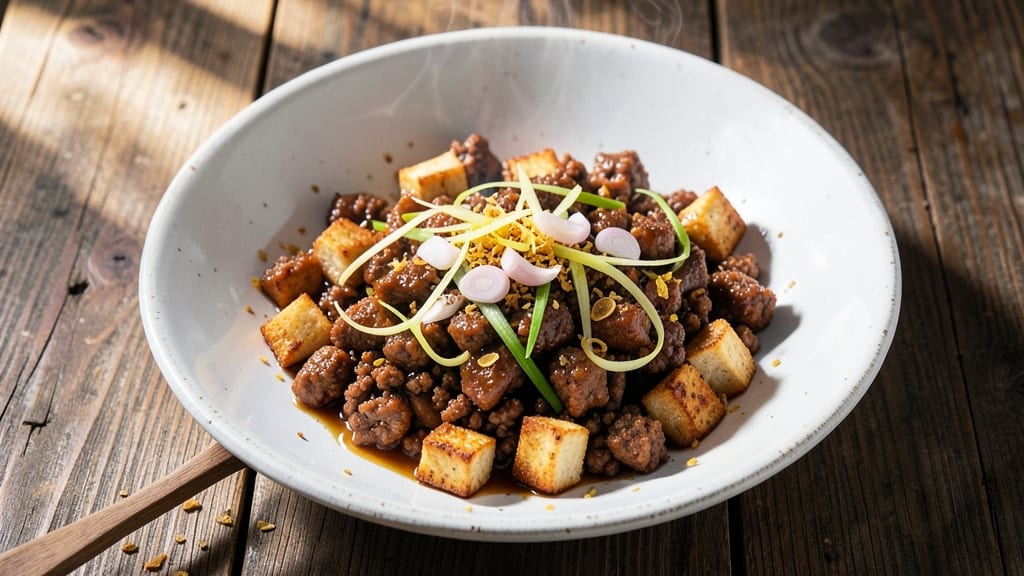
This mince pork and tofu recipe delivers a perfect balance of textures and flavors that’ll make every bite satisfying. After years of perfecting stir-fries that combine meat and plant-based proteins, I’ve created a dish where the crispy edges of the pork harmonize with the tender, slightly chewy tofu.
The umami depth comes from a simple yet powerful sauce that transforms these two proteins into a cohesive, restaurant-quality meal.
The secret lies in the cooking technique: searing the pork until deeply caramelized while ensuring the tofu develops a crisp exterior without drying out. I’ve tested this recipe countless times, adjusting the heat and timing to guarantee both proteins cook evenly.
The result is a stir-fry that’s rich, savory, and packed with layers of flavor—no one will guess it’s as healthy as it is delicious.
Serve this stir-fry over steamed jasmine rice or noodles for a complete meal, and don’t forget to garnish with fresh herbs like cilantro or green onions for brightness. The dish is balanced enough for weeknight dinners but impressive enough for guests.
Every forkful delivers that perfect contrast of textures and flavors, proving that plant-based and meat proteins can coexist beautifully.
Whether you’re feeding a family or cooking for one, this recipe scales effortlessly and keeps well for leftovers. The sauce’s depth ensures it tastes even better the next day, making it ideal for meal prep. Let’s get cooking—your taste buds will thank you.
Ingredients for mince pork and tofu
These bold ingredients create a perfect balance of crispy pork and tender tofu with deep umami flavors.
| Ingredient | Amount | Notes |
|---|---|---|
| Ground Pork 🥩 | 1 lb | Lean ground pork preferred |
| Extra-Firm Tofu 🍱 | 14 oz | Pressed and cubed |
| Cornstarch 🌾 | 2 tbsp | For crispy tofu coating |
| Vegetable Oil 🫒 | 3 tbsp | High smoke point preferred |
| Garlic Cloves 🧄 | 6 cloves | Minced for sauce and stir-fry |
| Fresh Ginger 🌿 | 1 tbsp | Grated, aromatic |
| Soy Sauce 🥄 | ½ cup | Low-sodium preferred |
| Oyster Sauce 🍲 | 2 tbsp | For umami depth |
| Sesame Oil 🫒 | 1 tbsp | Toasted for aroma |
| Hoisin Sauce 🍶 | 1 tbsp | Sweet-savory balance |
| Brown Sugar 🍯 | 1 tbsp | Lightly packed |
| Green Onions 🧅 | ¼ cup | Sliced, for garnish |
| Fresh Cilantro 🌿 | ¼ cup | Chopped, optional garnish |
| Salt 🧂 | ½ tsp | Kosher or sea salt |
| Black Pepper 🌶️ | ¼ tsp | Freshly ground |
The pork and tofu are the stars here. Ground pork should be lean but not too dry—Trader Joe's or Costco often have great quality at reasonable prices. For the tofu, extra-firm is non-negotiable. Press it for at least 20 minutes (wrap in a towel, place a heavy pan on top) to get rid of excess water—this ensures it crisps up properly. I usually grab the organic kind from Whole Foods or my local Asian market because it holds up better during cooking. The garlic and ginger? Fresh is always best, but if you're in a pinch, jarred minced garlic works in a squeeze (just add an extra clove).
No oyster sauce? Soy sauce plus a dash of fish sauce gets you close, though the umami won't be quite as complex. The sesame oil is worth splurging on—Kadoya or La Tourangelle brands have that perfect toasted aroma. Short on hoisin? Mix soy sauce with a little brown sugar and a pinch of five-spice powder. The brown sugar helps caramelize the pork, so don't skip it—it's what gives this dish that restaurant-quality depth. For the tofu, if you're feeling fancy, marinate it separately in soy sauce and cornstarch for 15 minutes before cooking. Trust me, it makes all the difference.
This stir-fry reheats beautifully—honestly tastes better the next day as the flavors meld. Store leftovers in an airtight container for up to 4 days in the fridge. For meal prep, I double the batch and freeze half in portions. When reheating, add a splash of water or soy sauce to keep things moist. The fresh herbs? Add them right before serving so they stay vibrant. Garnish with extra green onions and cilantro if you're feeling fancy—it adds that pop of freshness that balances the rich, savory flavors.
Why You'll Love This Recipe
- No-Fuss Prep: I swear by the cornstarch trick—just toss the tofu cubes in it, give them a quick sear, and they get that addictive crispy shell. No fancy marinating, no waiting hours; we’re talking 10 minutes of hands-on time while the pork browns in the same pan.
- Umami Bomb: That combo of ground pork and garlic? Chef’s kiss. The tofu soaks up all the savory bits while staying tender, and honestly, the first bite makes you forget it’s even tofu. (Yes, even my meat-loving husband doesn’t notice the swap.)
- Leftover Hero: Between us, this dish begs to be made in bulk. The pork stays juicy for days, and the tofu reheats like a dream—toss it in a bowl with rice, or slap it in a wrap. My lunches are sorted for the week, and I’m not even pretending to care about portion sizes.
- Budget Win: Ground pork stretches far when mixed with tofu, and extra-firm tofu is cheaper than you’d think. I make this when I’m pinching pennies, and no one ever complains—especially when I serve it with store-brand rice. (Shhh, don’t tell.)
Step-by-step instructions for savory stir-fry with umami depth
Here's how to create a perfectly balanced stir-fry where crispy tofu and tender pork shine together.
Prepare the Tofu for Maximum Crispiness
Start by pressing the 14 oz extra-firm tofu between two paper towels or a clean kitchen towel for 15-20 minutes. Place a heavy object on top to remove excess water—this is crucial for crispy tofu. Cut the pressed tofu into 1-inch cubes using a sharp knife. Transfer the cubes to a bowl and toss them with 2 tablespoons cornstarch until evenly coated. This step creates a golden crust that holds up to stir-frying.
Here's the thing—don't skip the pressing. Wet tofu will steam instead of crisp, and you'll end up with soggy cubes. I like to work in batches if I'm short on time, but try to press all the tofu at once for even cooking.
Cook the Pork and Tofu Separately
Heat 2 tablespoons vegetable oil in a large skillet or wok over medium-high heat until shimmering. Add the 1 lb ground pork and cook for 4-5 minutes, breaking it apart with a wooden spoon until it loses its raw color and becomes browned and slightly crispy. Remove the pork and set it aside on a plate.
In the same skillet, add the remaining 1 tablespoon vegetable oil and increase heat to medium-high. Add the cornstarch-coated tofu cubes in a single layer, being careful not to overcrowd. Cook for 3-4 minutes per side until golden brown and crispy. The tofu should release easily from the pan—if it sticks, your oil isn't hot enough. Transfer the tofu to the same plate with the pork.
Build the Flavorful Sauce
Reduce the heat to medium and add 2 tablespoons vegetable oil to the skillet. Add the 6 minced garlic cloves and 1 tablespoon grated fresh ginger, cooking for 30 seconds until fragrant—don't let them burn. Pour in the 0.5 cup soy sauce, 2 tablespoons oyster sauce, 1 tablespoon hoisin sauce, 1 tablespoon brown sugar, and 0.5 teaspoon salt. Stir and let it simmer for 2 minutes until slightly thickened.
This is where the magic happens. The combination of salty soy, umami oyster sauce, and sweet hoisin creates depth. If you're using low-sodium soy sauce, you might want to add an extra pinch of salt here. The brown sugar helps balance the flavors while adding a subtle caramel note.
Combine and Finish the Stir-Fry
Return the pork and tofu to the skillet with any accumulated juices. Add 1 tablespoon sesame oil and toss everything together for 1-2 minutes until everything is well-coated and heated through. The sesame oil adds that signature nutty aroma that takes the dish to the next level.
Taste and adjust seasoning if needed—you might want to add a splash of water or a bit more soy sauce if the sauce is too thick. The stir-fry should be moist but not saucy. Real talk: this is the moment to taste as you go. You can always fix it, but you can't un-taste it!
Garnish and Serve Immediately
Transfer the stir-fry to serving plates and garnish with 0.25 cup sliced green onions and 0.25 cup chopped fresh cilantro. The green onions add a fresh crunch while the cilantro brings a bright, herbal note. Serve hot with steamed rice or noodles—this dish is all about that satisfying texture contrast and bold flavors.
Don't let it sit too long after cooking. The tofu will lose its crispiness and the pork might dry out. I know it's tempting to take pictures first, but trust me, serving it fresh is key. Enjoy your perfectly balanced, umami-packed stir-fry!
Pro Tips For Making Mince Pork And Tofu
- CRISP THE TOFU FIRST: I learned this the hard way—skipping the tofu prep step means soggy, flavorless chunks. Press the extra-firm tofu for 20 minutes, then cut into 1-inch cubes, toss in 2 tablespoons cornstarch, and pan-fry in vegetable oil until golden (about 3-4 minutes per side). The starch locks in moisture while creating that satisfying crunch.
- STIR-FRY IN BATCHES: High heat is your friend here, but don’t crowd the pan. Split the ground pork into two portions and cook each separately—this keeps it crispy instead of steaming. Once the pork loses its raw color (about 2-3 minutes), push it to the side and add minced garlic for 10 seconds before combining. Overcrowding turns your stir-fry into a sad, greasy mess.
- USE COLD GARLIC: Freshly minced garlic burns faster than you’d think, especially when thrown into hot oil. Keep the cloves whole until the pork is nearly done, then smash them with the side of your knife (no chopping) right before tossing in. The cold garlic adds a sharper bite and won’t turn bitter—trust me, your nose will thank you.
- MIX CORNSTARCH LAST: Adding the cornstarch too early gums up the pork’s texture. Wait until the pork is fully cooked and just before you finish stir-frying—toss in 1 tablespoon cornstarch with a splash of water to make a slurry. Stir like you’re angry for 30 seconds until the sauce thickens slightly. This keeps the pork tender, not gluey. (Yes, even if you’re impatient like me.)
Troubleshooting your mince pork and tofu
Tofu Too Soggy
If your tofu turns out soggy instead of crispy, you likely didn’t press it long enough or didn’t coat it properly with cornstarch. I’ve seen this happen when people skip the pressing step entirely—20 minutes minimum is crucial.
For extra insurance, pat the tofu dry with fresh paper towels after pressing. Also, make sure your pan is hot enough before adding the tofu. If it sizzles immediately, you’re golden. 🌟
Pork Overcooked
Ground pork can dry out quickly if left in the pan too long. The key is to cook it just until it loses its raw color—about 4-5 minutes on medium-high heat. Remove it immediately when it’s still slightly pink in the center.
If it’s already dry, try mixing in 1 teaspoon soy sauce or a splash of water to revive it. For next time, use lean but not extra-lean pork—it holds up better.
Sauce Too Thin
A watery sauce usually means the ingredients weren’t cooked long enough to thicken. Simmer the sauce for 2-3 extra minutes on medium heat, stirring occasionally. If it’s still too thin, mix 1 teaspoon cornstarch with 1 tablespoon water, then stir it into the sauce until it thickens.
Pro tip: Reduce the heat slightly after adding the sauce to prevent rapid evaporation. 🔥
Uneven Cooking
If your pork and tofu cook at different rates, work in batches. Cook the pork first, then set it aside while you crisp the tofu in the same pan. This keeps both proteins at their peak texture.
Another trick? Use a wok or large skillet—it gives you more surface area to cook in a single layer without overcrowding. Overcrowding steams instead of sears, leading to uneven doneness.
Lacking Umami
If your dish tastes flat, the sauce might need more depth. Boost umami by adding 1 teaspoon fish sauce or an extra 1 tablespoon oyster sauce to the mix. For a vegetarian-friendly option, swap in 1 teaspoon mushroom powder or a splash of vegetable-based Worcestershire sauce.
Don’t forget to taste as you go—adjust seasoning gradually. The goal is balance, not overpowering flavors.
Sticky Pan
Sticking happens when the pan isn’t hot enough or the oil isn’t distributed properly. Always heat the pan until it shimmers before adding oil or ingredients. For stubborn sticking, use a silicon spatula or wooden spoon to gently lift the food.
If needed, add a tiny bit of oil to the pan and let it heat up before scraping. A well-seasoned cast iron pan (like my Lodge) helps too—it naturally releases food better over time. ⚡
Nutrition facts
Frequently asked questions
Can I substitute chicken for the ground pork?
Ground chicken works beautifully in this recipe—just use the same 1 lb measurement. Chicken cooks slightly faster than pork, so reduce cooking time to 3-4 minutes until no longer pink. The texture will be lighter but still delicious. For extra flavor, marinate the chicken in 1 tablespoon soy sauce for 10 minutes before cooking.
How do I make this recipe vegetarian?
Skip the pork entirely and double the tofu to 28 oz (two 14 oz blocks). Boost umami by adding 1 teaspoon mushroom powder or 1 tablespoon vegetarian oyster sauce to the sauce. For extra protein, stir in 1 cup cooked lentils or 1 cup crumbled tempeh at the end. The dish will still be packed with flavor and texture!
What's the best way to store leftovers?
Store in an airtight container for up to 4 days in the fridge. For longer storage, freeze portions for up to 3 months. To reheat, warm in a skillet over medium heat with a splash of water or soy sauce to restore moisture. The tofu will soften slightly but remains delicious. Pro tip: Freeze sauce separately if you prefer it thicker when reheated.
Can I make this dish spicier?
Add 1 teaspoon chili flakes or 1 tablespoon sriracha to the sauce for heat. For smoky depth, stir in ½ teaspoon smoked paprika when building the sauce. If you love fresh heat, top with sliced jalapeños or Thai bird's eye chilies before serving. Adjust to taste—start with less and add more gradually.
Why cook the pork and tofu separately?
Cooking them separately ensures perfect textures: pork gets crispy edges while tofu develops a golden crust without steaming. Pork releases moisture that could make tofu soggy, and tofu needs higher heat to crisp properly. This two-step method guarantees both proteins shine in the final dish. Think of it like a culinary handshake—each needs its own spotlight before coming together.