
Main Courses
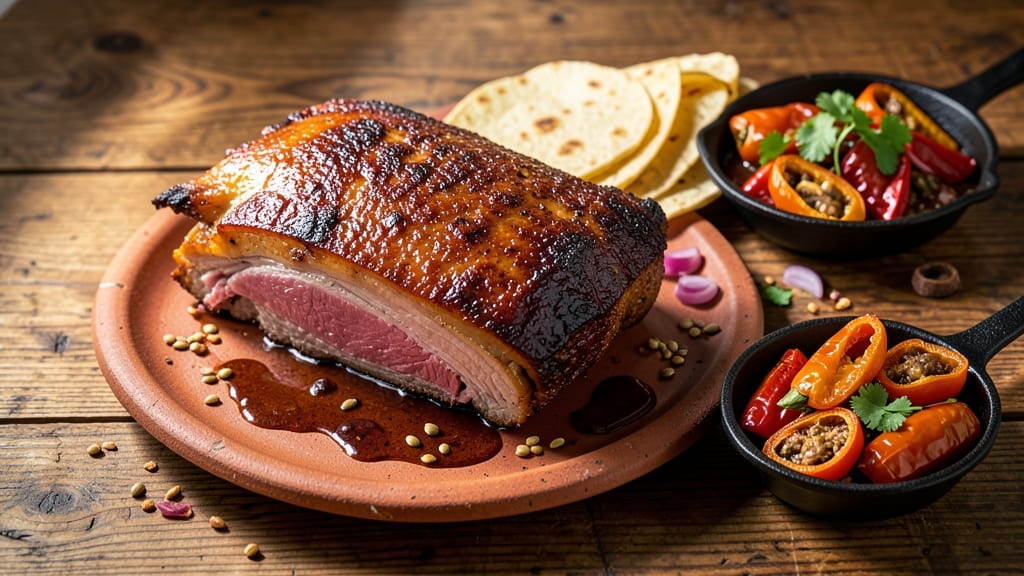
This Mexican smoked pork shoulder recipe transforms tough cuts into melt-in-your-mouth tenderness using a chipotle-achiote rub that delivers smoky, spicy depth. 🔥 I developed this method after years of perfecting regional techniques—from al pastor to barbacoa—while working with heritage pigs.
The key lies in the rub's balance of heat and earthiness, which develops a flavorful bark while keeping the meat juicy. What sets this recipe apart is the slow smoking process at 225°F, where the pork shoulder breaks down over 10 hours, creating a texture that's impossible to resist.
The achiote provides that signature Mexican color and subtle peppery notes, while chipotle adds the signature smoky heat. This isn't just another pulled pork—it's a celebration of traditional techniques adapted for modern smokers.
By the time you're done, you'll have perfectly tender, slightly crispy pork that practically falls apart at the touch. The rub creates a beautiful mahogany crust while infusing the meat with complex flavors that'll have everyone asking for seconds.
This is the kind of dish that elevates a simple meal into a memorable experience. Serve it shredded over warm tortillas for tacos al pastor, piled high on corn bread, or alongside black beans and cilantro-lime rice.
The possibilities are endless, but the foundation is always the same—authentic, smoky, and deeply flavorful pork that tastes like it came straight from a Mexican street cart.
Ingredients for mexican smoked pork shoulder
Six pounds of pork shoulder plus a smoky-spicy rub. That's all you need for street-cart-worthy flavor.
| Ingredient | Amount | Notes |
|---|---|---|
| Pork Shoulder (Bone-In) 🐖 | 6 lb | Heritage pork preferred, trimmed of excess fat |
| Ground Chipotle Peppers in Adobo Sauce 🌶️ | 4 tbsp | From 2-3 chipotles, finely ground |
| Achiote Powder 🧂 | 2 tbsp | Authentic Mexican achiote, not annatto |
| Ground Cumin 🌿 | 1 ½ tbsp | Toasted for deeper flavor |
| Smoked Paprika 🌶️ | 1 ½ tbsp | For that signature smoky bark |
| Garlic Powder 🧄 | 1 tbsp | Freshly ground preferred |
| Ground Coriander 🍋 | 1 tbsp | For citrusy brightness |
| Oregano (Mexican if available) 🌿 | 1 tbsp | Dried, not Italian blend |
| Brown Sugar 🍚 | 1 tbsp | Lightly packed |
| Kosher Salt 🧂 | 1 ½ tbsp | Diamond Crystal preferred |
| Black Peppercorns 🌶️ | 1 tsp | Freshly cracked |
| Apple Cider Vinegar 🍎 | 2 tbsp | For tenderizing the meat |
| Yellow Onion 🧅 | 1 whole | Quartered, for rub moisture |
| Lime Juice 🍋 | 2 tbsp | Freshly squeezed |
| Wood Chips (Hickory or Oak) 🌳 | 2 cups | Soaked for 1 hour minimum |
The pork shoulder is the star here—heritage cuts like Red Wattle or Tamworth have the best marbling, but your butcher can point you to a good local option. If you're buying pre-trimmed, look for thick slabs with good fat cap—that's what keeps it juicy during the long smoke. I always ask for bone-in because the bone helps retain moisture. For the rub ingredients, Penzeys or La Tienda carry authentic achiote powder, but if you can't find it, a mix of annatto and smoked paprika works in a pinch. The chipotles? Brandy Station sells them canned in adobo—just grind them fresh for maximum heat.
No achiote powder? Mix 1 tbsp annatto powder with 1 tbsp smoked paprika—it won't be identical, but you'll still get that gorgeous color. Running low on Mexican oregano? Italian oregano at the same amount works fine, though it's slightly less earthy. The apple cider vinegar is non-negotiable for tenderizing, but if you're out, lemon juice at double the amount does the trick. For the wood chips, hickory gives classic smokiness, while oak adds a touch of sweetness. Soak them for at least an hour before using—dry chips burn and create bitter smoke. And if you're short on time, pre-soaked wood chips from Traeger or Weber work perfectly.
This rub keeps beautifully in an airtight container for up to 3 months—make extra, you'll want it again. The pork shoulder? Use within 2 days of purchase for best texture, but it'll keep 5 days wrapped in the fridge. For leftovers, shred and freeze in 1-cup portions—perfect for quick tacos later. The wood chips can be reused once, just soak them again before your next smoke. And trust me, you'll want to smoke again after this—it's that good.
Why You'll Love This Recipe
- One-Pot Magic: I swear by this—just rub the pork with chipotle, cumin, and achiote, then let the oven do the work. No flipping, no fussing, just hands-off perfection.
- Smoky Depth Bomb: That combo of ground chipotle and smoked paprika? It’s like a slow-cooked hug for your taste buds—rich, smoky, and just spicy enough to linger.
- Leftovers That Don’t Suck: This pork shreds like a dream and stays ridiculously good for days. Tacos, quesadillas, or just reheated with lime? Yes, please.
- Budget-Friendly Hero: Bone-in pork shoulder stretches every dollar, and the spices cost pennies. Feed a crowd or meal prep for the week—without breaking the bank.
Step-by-step instructions for Mexican smoked pork shoulder
Get ready for melt-in-your-mouth pork with bold, smoky chipotle-achiote flavor—this method guarantees tender perfection.
👨🍳 Step 1: Make the Chipotle-Achiote Rub
In a large bowl, combine the 4 tbsp ground chipotle peppers in adobo sauce, 2 tbsp achiote powder, 1.5 tbsp ground cumin, 1.5 tbsp smoked paprika, 1 tbsp garlic powder, 1 tbsp ground coriander, 1 tbsp Mexican oregano, 1 tbsp brown sugar, 1.5 tbsp kosher salt, and 1 tsp freshly cracked black peppercorns. Mix thoroughly with your hands—you want the spices to coat each other evenly.
Here's the thing—achiote gives that signature Mexican red color, while chipotle brings the smoky heat. The brown sugar and vinegar we'll add next help tenderize the meat and create that perfect bark. Once mixed, transfer the rub to a small bowl and set aside.
👨🍳 Step 2: Prep the Pork with Onion and Vinegar
Trim any excess fat from the 6 lb pork shoulder (bone-in) to about ¼-inch thickness—this helps the rub stick better and prevents greasy smoke. Pat the meat completely dry with paper towels, then place it fat-side up in a large bowl.
In a small bowl, whisk together the 2 tbsp apple cider vinegar and 2 tbsp lime juice. Pour this mixture over the pork and massage it into the meat, working it into all the crevices. Then, quarter the whole yellow onion and place the pieces in the bowl with the pork. The onion adds moisture and sweetness during the smoke.
Sprinkle the chipotle-achiote rub all over the pork, pressing it firmly into the meat so it adheres. Cover the bowl and refrigerate for at least 4 hours (overnight is even better)—this lets the rub penetrate and tenderize the meat. Real talk: don't skip this step, or you'll miss out on maximum flavor.
🔥 Step 3: Set Up the Smoker
Soak the 2 cups wood chips (hickory or oak) in water for at least 1 hour before smoking. This prevents them from burning too quickly and creating bitter smoke. When ready, fill your smoker's wood chip tray with the soaked chips and preheat to 225°F—this low-and-slow temperature is key for tender, juicy pork.
I use a two-zone fire method: place the coals on one side of the smoker and the wood chips on the other. This creates a steady, gentle smoke without fluctuating temperatures. Once the smoker reaches 225°F and you see clean, blue smoke (not thick white), you're ready to cook.
🔥 Step 4: Smoke the Pork Low and Slow
Place the pork shoulder fat-side up on the smoker grate. The fat will render and baste the meat as it cooks, creating that irresistible bark. Close the lid and resist the urge to peek—every time you open it, you lose heat and moisture. Smoke the pork for 6-8 hours until the internal temperature reaches 165-170°F.
Here's where the magic happens: around the 4-hour mark, the pork will hit "the stall"—the temperature stops rising as moisture evaporates. Don't panic; this is normal. If your smoker has a water pan, add ½ cup water to help maintain moisture. The bark should be deep reddish-brown and crispy, with a beautiful smoke ring just beneath the surface.
⏰ Step 5: Rest and Shred
When the pork reaches 195-203°F (probe-tender), remove it from the smoker and transfer it to a cutting board. Tent loosely with foil and let it rest for at least 1 hour (I prefer 2 hours) before shredding. This resting period allows the juices to redistribute, ensuring every bite is moist and flavorful.
After resting, shred the pork using two forks or a meat claw. The meat should pull apart easily with minimal resistance—if it's still tough, let it rest another 30 minutes. Serve immediately with warm tortillas, pickled onions, and fresh lime wedges for that authentic Mexican experience.
Pro Tips For Making Mexican Smoked Pork Shoulder
- CRANK THE HEAT FIRST: The pork shoulder needs a good sear to lock in flavors—get your smoker or grill to 450°F (232°C) for the first 30 minutes. I used to start too low, and the meat would steam instead of develop that deep, smoky crust we’re after. High heat breaks down collagen faster too, so you’ll shave off hours later.
- BLEND THE ADOBO PASTE: Don’t just dump ground chipotles straight into your rub—blend the adobo sauce with the peppers first. That liquid carries the smoky depth, and spreading it on the meat before the dry rub ensures every bite gets that heat. I learned this the hard way when my first batch tasted like dusted spices instead of a full flavor bomb.
- SKIP THE CROWDED SMOKER: If you’re using a smoker, resist the urge to load it with too much meat at once. Bone-in pork shoulder needs room to breathe, or you’ll end up with uneven cooking and sad, pale edges. I now smoke just one shoulder at a time—yes, it takes longer, but the bark is worth the wait.
- REST IT UNDER FOIL: The moment the internal temp hits 195°F (90°C), wrap that pork in foil and let it rest for 20 minutes. This isn’t just about temperature—it’s about letting the juices redistribute so your first slice isn’t a greasy mess. I used to cut into it too soon, and the meat would dry out by the end of the plate. Trust the process.
Storing and reheating your mexican smoked pork shoulder
Refrigerator Storage
Your freshly smoked pork shoulder will keep beautifully in the fridge for up to 5 days if stored properly. After shredding, transfer it to an airtight container—I use glass Pyrex with snap-on lids—and press a piece of plastic wrap directly on the surface to prevent drying.
The flavors actually deepen overnight as the spices meld together, making it perfect for tacos the next day. 🌟
Freezer Storage
For longer storage, freeze shredded pork in 1-cup portions using quart-sized freezer bags—this makes perfect single-serving tacos later. Squeeze out excess air and label with the date; it stays fresh for 3 months without quality loss.
For whole cooked pork shoulders, wrap tightly in butcher paper before freezing—this preserves moisture better than plastic. Thaw overnight in the fridge before reheating. ❄️
Stovetop Reheating
My preferred method for leftovers is stovetop reheating—it keeps the texture tender and the flavors vibrant. Place the pork in a heavy-bottomed pot with 2 tbsp apple cider vinegar (same as in the marinade) and ¼ cup water or chicken broth.
Heat over medium-low for 10-15 minutes, stirring occasionally, until reaching 165°F. The vinegar helps restore moisture and brightens the flavors. 🔥
Microwave Reheating
For quick meals, microwave individual portions covered with a damp paper towel on 70% power for 2-3 minutes, stirring halfway. Add 1 tbsp water or broth if the pork looks dry.
Avoid high power—it dries out the meat. This method works best for smaller portions (under 1 cup) and keeps the texture surprisingly good. ✨
Smoker Reheating
Want to give your pork a second smoke? Place it back on the smoker at 250°F for 1-2 hours with fresh oak or hickory chips. This method adds new smoky depth and is perfect for making a big batch for the week.
Just avoid overcooking—probe-tender is key. I do this when I have extra time on a weekend. 🌳
Serving Leftovers
Shredded pork transforms into endless meals: tacos al pastor (with pineapple), burritos, or quesadillas. For extra flavor, toss reheated pork with 1 tsp lime juice and ½ tsp smoked paprika.
Store-bought tortillas work, but homemade corn tortillas elevate the dish. The leftovers taste just as good as day one—if there are any! 🌮
Nutrition facts
Frequently asked questions
Can I use a different cut of pork like butt or shoulder blade?
A pork shoulder (also called pork butt) is ideal for this recipe because of its fat content and collagen, which create tender, juicy meat. A shoulder blade (also called pork picnic shoulder) works too, but it has less fat and may dry out faster. If you must use it, trim less fat and monitor internal temperature carefully—remove it at 190°F instead of 203°F to avoid toughness.
What's the best wood for authentic Mexican flavor?
For this recipe, hickory gives classic smokiness, while oak adds subtle sweetness. For a more traditional Mexican profile, try mesquite (if available)—it has a distinct earthy flavor. Avoid fruit woods like cherry or apple, as they can overpower the chipotle-achiote rub. Mixing 50% hickory and 50% oak is my go-to for balanced flavor.
How do I fix pork that's too dry after smoking?
If your pork turns out dry, it likely wasn't rested long enough or was cooked past 203°F. For immediate fixes, shred the pork and reheat it with 2 tbsp apple cider vinegar and ¼ cup broth on low heat. For future attempts, use a meat probe thermometer, remove at 195°F, and rest for 2 hours before shredding. Bone-in cuts stay juicier longer.
Can I make this in an oven instead of a smoker?
Yes! Preheat your oven to 275°F and place the pork on a rack in a roasting pan. Add ½ cup water to the bottom to create steam. Cook for 6-8 hours until tender, then finish with 15 minutes at 350°F to crisp the bark. For smoky flavor, wrap the pork in foil with a few soaked hickory wood chips during cooking. The result won't be identical, but it's still delicious.
What's the difference between this and traditional barbacoa?
While both are smoked pork, barbacoa traditionally uses head, feet, or whole pig slow-cooked in an underground pit with maguey leaves. This recipe focuses on pork shoulder with a chipotle-achiote rub for a faster, more accessible method. Barbacoa often includes spices like guajillo chiles and bay leaves, while this version highlights smoky heat and tender texture. Both are amazing—choose based on your time and ingredients!