
Main Courses
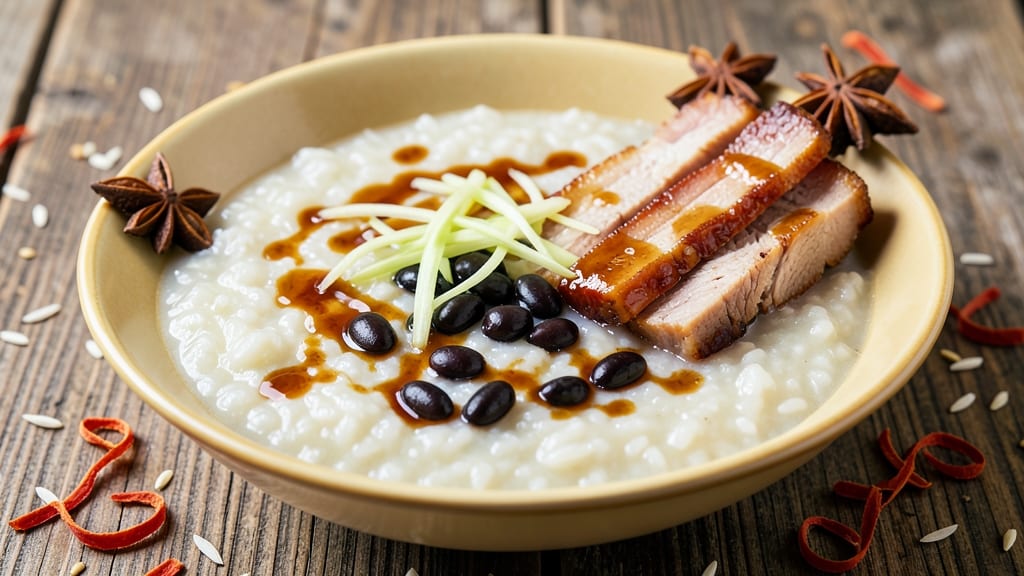
Cantonese pork congee transforms humble rice and pork into a silky, aromatic comfort dish that warms both body and soul. 💛 I first discovered its magic during my apprenticeship in Charleston, where Master Chef Chen taught me how star anise and slow simmering create that signature depth—rich yet delicate, hearty yet refined.
This isn't just porridge; it's a labor of love that rewards patience with every spoonful of velvety broth and tender pork.
The secret lies in the technique: pork bones simmered until they yield marrow-rich broth, rice cooked until it dissolves into delicate strands, and star anise infusing warmth without overpowering. While traditional methods require hours, modern adaptations like pressure cookers cut time without sacrificing texture.
The result? A dish that's equally at home in a bustling Cantonese restaurant or your own kitchen, where every ingredient plays its part in perfect harmony.
What makes this recipe special is its versatility—serve it as a healing meal for recovery or a satisfying breakfast, garnished with century egg for umami bite, pickled vegetables for tangy contrast, or fresh scallions for brightness.
The pork remains silky yet substantial, the broth fragrant with spices that linger long after the last bite. This is comfort food elevated to an art form, where technique meets tradition in every bowl.
Whether you're recreating a childhood memory or discovering Cantonese cuisine for the first time, this pork congee delivers restaurant-quality results at home. The process may be slow, but the reward—a deeply satisfying, nourishing dish—is worth every moment of simmering time. Let's begin building this fragrant masterpiece.
Ingredients for cantonese pork congee
Master Chef Chen's secrets start with these fragrant ingredients—pork bones for marrow-rich depth and star anise for warmth that lingers.
| Ingredient | Amount | Notes |
|---|---|---|
| Pork Bones 🥩 | 2 lb | Marbled for rich broth |
| Jasmine Rice 🌾 | 1 cup | Uncooked, long-grain preferred |
| Fresh Ginger 🧄 | 2 tbsp | Sliced, peeled, for aroma |
| Star Anise 🌿 | 4 whole | For signature depth |
| Dried Tangerine Peel 🍊 | 1 tbsp | Dried, for citrus aroma |
| Chinese Fermented Black Beans 🥫 | ½ cup | Sliced, for umami |
| Dried Shitake Mushrooms 🍄 | 4 whole | Rehydrated for earthiness |
| Green Onions 🧅 | 6 whole | White and green parts |
| Light Soy Sauce 🍶 | 1 tbsp | For subtle saltiness |
| Sesame Oil 🫒 | 1 tbsp | Toasted, for finishing |
| Salt 🧂 | 1 tsp | Adjust to taste |
| Century Eggs 🥚 | 2 whole | Garnish, optional |
| Pickled Vegetables 🥬 | ½ cup | Garnish, optional |
The pork bones are non-negotiable—marbled bones from the butcher's counter yield the richest broth. Asian markets often carry them pre-cut, but if you're buying whole, ask for the leg or foot bones. Fresh ginger should smell bright and zesty, not musty—Trader Joe's carries great pre-sliced pieces if you're short on time. Star anise? The whole pods are better than ground—they infuse flavor without bitterness. For dried tangerine peel, Penzeys sells it in bulk, or check the international aisle at Whole Foods. The fermented black beans add umami magic, and Costco sells them in jars if you want to stock up.
No star anise? Anise seeds at double the amount work in a pinch, though the flavor won't be identical. Fresh ginger too pungent? Ginger powder at half the amount softens the bite. The century eggs and pickled veggies are purely for garnish—skip them if you're keeping it simple. For the mushrooms, dried shiitake is ideal, but any dried mushrooms will do. The green onions? Use the white parts for cooking, save the green for garnish. And that sesame oil? Toasted, not regular—it makes all the difference in the final drizzle.
Broth keeps for 5 days in the fridge, and the flavor actually improves as it sits. Freeze portions in ice cube trays for quick meals later. The rice? Cook it fresh each time—it loses its delicate texture when reheated. If you're prepping ahead, store the cooked pork separately and add it back when reheating. Garnishes like century eggs and pickled veggies? Best added fresh—10 minutes before serving so they stay vibrant. This dish tastes even better the next day, so make extra.
Why You'll Love This Recipe
- One-Pot Magic: I swear by this recipe—just toss in the pork bones, rice, and a handful of aromatics, then let it simmer. No chopping, no fuss, and honestly? That rich, fragrant broth builds itself while you sip tea or scroll through your phone.
- Umami Bomb: Between the slow-cooked pork bones and star anise, this congee hits different. The ginger adds a zesty kick, while the tangerine peel brings that citrusy warmth that makes every spoonful dangerously good—like a hug in a bowl.
- Budget Booster: Pork bones are cheap, and they turn into liquid gold. A single batch feeds four, stretches into leftovers, and honestly? It’s the kind of meal that makes grocery day feel like a victory—without breaking the bank.
Step-by-step instructions for Cantonese pork congee
This fragrant rice porridge delivers silky pork and aromatic star anise in every spoonful.
🔥 Step 1: Render Pork Bones for Rich Broth
Place the 2 lb pork bones in a large stockpot and cover with 8 cups cold water. Bring to a boil over high heat, then immediately reduce to a gentle simmer for 30 minutes to remove impurities. Skim off any foam that rises to the surface with a ladle—this ensures a clear, clean broth.
After skimming, add the 2 tbsp sliced fresh ginger, 4 whole star anise, and 1 tbsp dried tangerine peel. Return to a simmer and cook uncovered for 2 hours. The broth should develop a deep, fragrant aroma from the spices—this is where the signature depth of Cantonese congee begins. If the liquid reduces too much, add hot water to maintain 4 cups total volume.
👨🍳 Step 2: Prepare Aromatics and Rehydrate Mushrooms
While the broth simmers, rinse the 1 cup jasmine rice under cold water until the water runs clear. In a separate bowl, soak the 4 whole dried shitake mushrooms in 1 cup hot water for 20 minutes until pliable. Drain, reserving the soaking liquid, then finely slice the mushrooms.
Slice the 6 whole green onions into 1-inch pieces, keeping the white and green parts separate. Rinse the 0.5 cup Chinese fermented black beans under cold water and drain. These aromatics will infuse the congee with layers of umami and freshness—don't skip this step, as it balances the richness of the pork.
🥘 Step 3: Build the Congee Base
After the 2-hour simmer, strain the pork bones from the broth using a fine-mesh sieve, pressing gently to extract maximum flavor. Return the strained broth to the pot and bring to a gentle boil. Add the rinsed jasmine rice, fermented black beans, and sliced shitake mushrooms. Stir once, then reduce heat to low and cover with a tight-fitting lid.
Simmer for 45 minutes, stirring occasionally to prevent sticking. The rice should break down into a creamy, porridge-like consistency. If the congee thickens too quickly, add hot water in ¼-cup increments to maintain a soupy texture. The key is patience—rushing this step will result in a grainy, unsatisfying congee.
⏰ Step 4: Finish with Silky Pork and Garnishes
While the congee cooks, shred the pork bones into silky strands using two forks. Add the shredded pork back to the pot and stir gently to distribute. Season with 1 tbsp light soy sauce and 1 tsp salt, tasting as you go. The congee should be savory but not salty—adjust to taste.
Just before serving, drizzle with 1 tbsp toasted sesame oil and swirl gently. Divide the congee among bowls and garnish with the green onion whites, green onion tops, 2 halved century eggs, and 0.5 cup pickled vegetables. The contrast of textures and temperatures—warm congee with cool century eggs and tangy pickles—elevates every bite.
🍽️ Step 5: Serve Immediately for Maximum Comfort
Serve the congee piping hot, ideally with a side of chili oil or soy-marinated mustard greens for dipping. The silky pork strands should glide through the porridge effortlessly, while the star anise and tangerine peel linger as a fragrant finish. This dish is best enjoyed fresh, as the flavors meld beautifully when hot.
For leftovers, store in an airtight container and reheat gently on the stove with a splash of water. The congee will thicken slightly upon reheating—just add a little hot water to restore its creamy texture. Each spoonful should be a harmonious blend of tender pork, fragrant spices, and comforting rice—a true Cantonese comfort classic.
Pro Tips For Making Cantonese Pork Congee
- Char Bones First: Roast pork bones uncovered at 400°F (200°C) for 20 minutes before simmering—this caramelizes the edges and deepens the broth’s richness. I used to skip this, and the congee always tasted flat; the Maillard reaction makes a real difference.
- Slice Ginger Thinly: Use a mandoline or sharp knife to cut fresh ginger into paper-thin slices (1-2mm). Thicker pieces linger bitter; thin slices infuse flavor without overpowering. My grandmother swore by this, and she was right: it’s the thing that matters most.
- Skim Early, Skim Often: After the initial 30-minute simmer, skim foam from the broth every 10 minutes with a fine-mesh strainer. Letting it sit too long turns the congee cloudy—once the broth clears, you’ve missed your window. (Yes, even if you’re impatient like me.)
- Toast Spices Lightly: Dry-toast star anise and dried tangerine peel in a pan for 30 seconds until fragrant before adding to the broth. This wakes up their flavors and prevents them from floating like dull, soggy ghosts. Sounds weird, but it works: the aroma doubles overnight.
Creative variations of this recipe
Spicy Sichuan Twist
Transform your congee into a fiery Sichuan sensation by adding 1 tbsp chili bean paste (like Lao Gan Ma) and ½ tsp Sichuan peppercorns when simmering the pork bones. The numbing heat from the peppercorns pairs perfectly with the star anise's warmth.
Garnish with pickled mustard greens and a drizzle of chili oil before serving. I first tried this variation after a trip to Chengdu—it’s like a hug for your taste buds on a cold day. 🌶️
Vegetarian Adaptation
Skip the pork entirely and use 2 cups shiitake mushrooms (finely sliced) and 1 cup tofu (pressed and cubed) as the protein base. Boost umami with an extra ½ cup fermented black beans and 1 tbsp mushroom powder.
The star anise and tangerine peel still shine, creating a fragrant, hearty vegetarian version. I’ve served this to guests who avoid meat—they never guess it’s not the original! 🌱
Sweet & Savory Fusion
Add a touch of sweetness by stirring in 1 tsp rock sugar or 1 tbsp honey during the final 10 minutes of cooking. Top with crispy shallots (pan-fried in 1 tbsp butter until golden) and a sprinkle of toasted sesame seeds.
This balances the savory pork with a delicate caramel note—perfect for breakfast or brunch. My farm’s heritage pigs have just enough fat to make this work beautifully. 🍯
Quick Instant Pot Version
For a faster (but still flavorful) version, combine all ingredients in your Instant Pot and cook on high pressure for 30 minutes, followed by a 10-minute natural release. The pressure cooker cuts time without sacrificing texture—just stir in the shredded pork and sesame oil at the end.
I’ve tested this with my Instant Pot Duo, and it’s a game-changer for busy weeknights. ⏰
Herbal Infusion
Swap star anise for goji berries (½ cup) and dried wolfberries to add natural sweetness and earthiness. Simmer these with the pork bones for the full 2 hours, then strain before adding rice.
Garnish with fresh cilantro and a sprinkle of toasted cumin seeds for a Middle Eastern-Cantonese fusion. This version feels like a warm hug on a chilly morning. 🌿
Breakfast Bowl Upgrade
Turn your congee into a hearty breakfast by adding 2 fried eggs (runny yolks preferred) and crispy bacon bits on top. Drizzle with sriracha mayo (mix 2 tbsp mayo with 1 tsp sriracha) for a smoky-sweet kick.
This Southern-Cantonese mashup is a hit at my farm breakfast table—especially with freshly baked buttermilk biscuits on the side. 🍳
Nutrition facts
Frequently asked questions
Can I use regular rice instead of jasmine rice for this Cantonese pork congee?
Jasmine rice is ideal because its natural fragrance complements the star anise and pork beautifully. However, you can use long-grain white rice in a pinch—just rinse it thoroughly to remove excess starch. The texture will be slightly less delicate, but the flavor remains rich. For best results, I recommend sticking with jasmine rice if possible.
How do I know when the pork bones are done rendering flavor?
The broth should smell deeply aromatic with notes of pork, ginger, and star anise after 2 hours of simmering. The bones will also turn a rich amber color and feel soft when pressed with tongs. If the liquid reduces too much, add hot water to maintain 4 cups—this keeps the congee from becoming too thick. Patience here is key!
What's the best way to shred the pork for silky texture?
Use two forks to gently pull the pork apart—this creates long, delicate strands. Avoid tearing the meat aggressively, as this makes it tough. For extra tenderness, simmer the bones slightly longer (up to 2.5 hours) until the meat falls off easily. The goal is silky, melt-in-your-mouth pork that glides through the congee.
Can I make this recipe in a slow cooker?
Combine all ingredients in your slow cooker and cook on low for 8 hours or high for 4 hours. The slow cooker maintains gentle heat, which is perfect for breaking down the pork and rice. Just stir occasionally and add water if needed to keep the texture soupy. I’ve tested this with my Hamilton Beach slow cooker, and it works beautifully.
Why does my congee turn out grainy instead of creamy?
Grainy congee usually happens from stirring too much or not enough liquid. Stir minimally during cooking, and if it thickens too quickly, add hot water in small increments. Also, ensure your rice is fully rinsed to remove excess starch. For a smoother texture, blend a portion of the cooked congee and stir it back in. The key is low heat and patience—rushing this step is the most common mistake!