
Main Courses
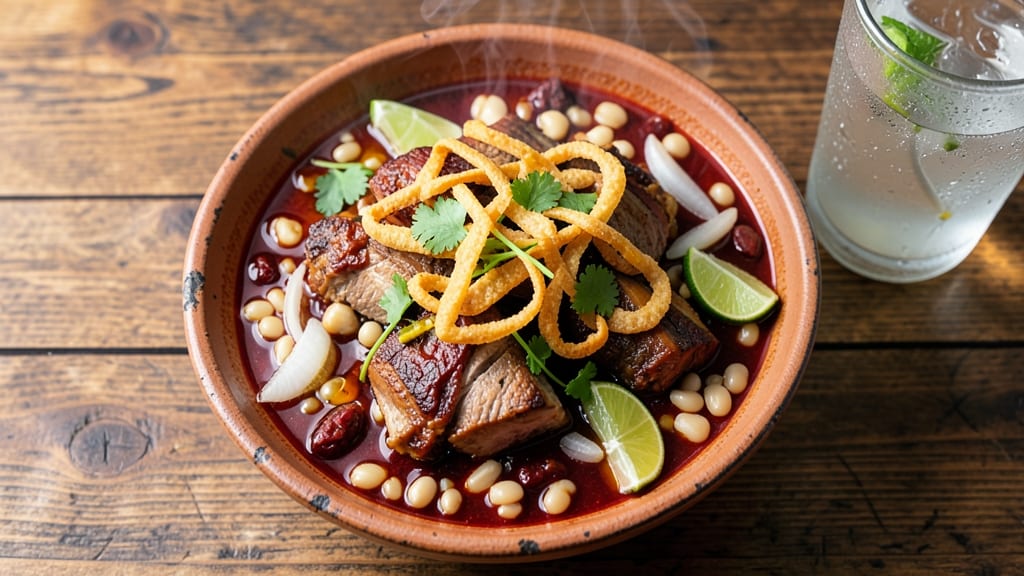
This authentic Mexican pork pozole recipe brings the soul of Mexican home cooking to your table, where hominy, tender pork, and aromatic spices create a dish that's both comforting and celebratory. I first tasted pozole in a tiny family-run fonda in Oaxaca, where the broth was rich enough to drink and the hominy had that perfect chewy texture. That memory still guides me as I recreate this dish at home—balancing tradition with techniques that work in any kitchen.
The key to authentic pozole lies in the slow-cooked broth, where pork bones and meat simmer for hours, releasing collagen that transforms into a velvety, flavorful liquid. Hominy—nixtamalized corn kernels—adds a satisfying chewiness that's essential to the dish.
This recipe delivers both the classic red pozole (with chiles like guajillo and ancho) and the option for green pozole (with tomatillos and serrano peppers), giving you the flexibility to match your preferred spice level.
What makes this recipe special is the harmony of textures and flavors: tender pork that falls apart, hominy with a satisfying bite, and a broth so rich it deserves a spoon.
Toppings like shredded cabbage, radishes, avocado, and lime add freshness and crunch, turning each bowl into a personalized feast. The aroma alone—smoky, spicy, and earthy—will have everyone gathering around the table.
Serve this pozole at family gatherings, holiday celebrations, or even a casual weeknight dinner when you crave something hearty and full of soul. The leftovers reheat beautifully, making it perfect for meal prep.
Whether you're cooking for a crowd or treating yourself to a taste of Mexico, this recipe delivers the real deal—just like my abuela used to make.
Ingredients for authentic mexican pork pozole
Six pounds of pork, smoky chiles, and hominy that's chewy perfection—this is your pozole foundation.
| Ingredient | Amount | Notes |
|---|---|---|
| Pork Shoulder 🐖 | 4 lb | Bone-in for richer broth |
| Pork Bones 🦴 | 2 lb | Knee and foot bones preferred |
| Dried Guajillo Chiles 🌶️ | 6 whole | Stemmed and seeded |
| Dried Ancho Chiles 🌶️ | 4 whole | Stemmed and seeded |
| Dried Hominy 🌽 | 2 cups | Soaked overnight, drained |
| White Onions 🧅 | 2 whole | Chopped, medium dice |
| Garlic Cloves 🧄 | 8 cloves | Peeled, smashed |
| Fresh Tomatillos 🍅 | 4 whole | Husk removed, quartered |
| Serrano Peppers 🌶️ | 2 whole | Seeds removed for mild heat |
| Cumin Seeds 🌿 | 1 tbsp | Toasted for depth of flavor |
| Ground Cumin 🌿 | 1 tbsp | Freshly ground preferred |
| Mexican Oregano 🍃 | 1 tbsp | Dried, not Italian oregano |
| Bay Leaves 🌿 | 2 whole | Fresh preferred |
| Salt 🧂 | 2 tsp | Kosher or sea salt |
| Black Peppercorns 🌶️ | 1 tsp | Freshly cracked |
| Orange Juice 🍊 | ½ cup | Freshly squeezed |
| Cilantro Leaves 🌿 | ½ cup | Chopped, for garnish |
| Lime Wedges 🍋 | 4 whole | For serving |
The pork is non-negotiable here—bone-in shoulder and bones create that legendary pozole broth. Ask your butcher for knee and foot bones if possible, as they add incredible depth. For chiles, MexGrocer or Latin markets are your best bet—they carry authentic dried varieties like guajillo and ancho. If you can't find Mexican oregano, substitute Italian oregano but reduce to half the amount—it's not the same, but it works in a pinch. Toast your cumin seeds in a dry pan until fragrant—30 seconds max—this unlocks their full flavor. And for the hominy, soak it overnight in plenty of water; discard the soaking liquid as it's bitter.
No dried chiles? Fresh serranos or jalapeños work for green pozole, but you'll lose that deep, smoky complexity. Short on tomatillos? Green tomatoes or even tart green apples can stand in, though the flavor will shift slightly. The orange juice is key—Navel or Valencia oranges are ideal, but any juice will do if you're in a hurry. For storage, keep the broth and hominy separate in the fridge; they reheat beautifully together. Freeze the broth in portions for quick future meals—it tastes even better the next day as flavors meld. And if you're making this for a crowd, double the hominy—everyone will want seconds.
This broth keeps for 5 days in the fridge, while the hominy stays fresh for 3 days once soaked. For maximum flavor, reheat gently on the stove—never microwave. The pork can be pre-cooked and stored separately for 4 days. Garnishes like shredded cabbage, radishes, and avocado should be added fresh when serving. If you're prepping ahead, store toppings in airtight containers in the fridge; they'll keep for 3-4 days. The lime wedges? Squeeze them fresh at the table—nothing beats that bright citrus punch.
Why You'll Love This Recipe
- One-Pot Magic: I swear by this—simmer the pork shoulder and bones in the same pot, then toss in the dried chiles and hominy. No chopping, no fuss, just layers of flavor building right there while you sip your beer (or coffee, no judgment).
- Deep, Smoky Richness: That combo of guajillo and ancho chiles? It’s like a warm hug for your taste buds. The pork bones melt into the broth, giving it this unmistakable depth—salty, earthy, and just a little bit smoky. (Yes, even on a Tuesday night.)
- Leftovers That Taste Better: Between us, pozole only gets more amazing the next day. The flavors meld even deeper, and reheating it is a breeze. I’ll often make a big batch and freeze portions—perfect for lazy Sundays or when unexpected guests show up.
- Budget-Friendly Feast: Pork shoulder and bones stretch across multiple servings, and dried chiles last forever. Honestly, this is one of those recipes where you’re feeding a crowd without breaking the bank. Plus, the hominy adds that satisfying texture without costing a fortune.
Step-by-step instructions for authentic Mexican pork pozole
This homestyle pozole delivers deep, smoky flavors and tender pork through careful layering and slow simmering.
Prepare the Chiles and Toast the Spices
Begin by removing stems and seeds from the 6 whole dried guajillo chiles and 4 whole dried ancho chiles, then toast them briefly in a dry skillet over medium heat for 30 seconds per side until fragrant. This step awakens their natural oils and deepens the smoky complexity. Transfer them to a bowl and cover with hot water to soften for 15 minutes while you prepare the rest.
In the same skillet, toast the 1 tablespoon cumin seeds over medium heat for 2 minutes until they darken and release their nutty aroma. Immediately transfer them to a spice grinder along with the 1 tablespoon ground cumin and 1 tablespoon Mexican oregano to create a fragrant blend. Set aside—this toasting step is essential for developing the pozole's signature earthy depth.
Sear the Pork and Build the Broth Base
Pat the 4 lb pork shoulder dry and cut into 2-inch chunks, reserving any fat for flavor. In a large Dutch oven, sear the pork over medium-high heat with 1 tablespoon oil until deeply browned on all sides (5-6 minutes). Remove and set aside. Add the 2 lb pork bones and sear until they develop a golden crust (3-4 minutes per side).
Push the meat aside, add the 2 whole chopped white onions and 8 smashed garlic cloves, and cook for 3 minutes until softened. Deglaze the pot with 2 cups hot water, scraping up all the browned bits that hold so much flavor. Return the pork and bones to the pot, then add 6 cups fresh water and bring to a boil. Reduce heat to low and simmer uncovered for 1 hour, skimming any foam that rises to the surface.
Blend the Chile Sauce and Combine with the Broth
Drain the softened chiles and transfer them to a blender with 1 cup hot broth from the pot. Blend until completely smooth, then strain through a fine-mesh sieve to remove any remaining skins. Return the blended chile mixture to the pot and stir in the toasted spice blend, 2 whole bay leaves, 2 teaspoons salt, and 1 teaspoon cracked black peppercorns. Simmer for 30 minutes to allow the flavors to meld.
Add the 2 cups soaked and drained dried hominy, 4 whole quartered fresh tomatillos, and 2 whole seeded serrano peppers. The hominy will absorb some of the liquid, so keep an eye on the broth level—add hot water as needed to maintain a simmer. Cook for 45 minutes until the pork is fork-tender and the broth has deepened in color.
Finish with Brightness and Serve Traditionally
Strain the pozole through a fine-mesh sieve, pressing gently on the solids to extract maximum flavor. Return the broth to the pot and stir in the 0.5 cup freshly squeezed orange juice. Taste and adjust seasoning with additional salt or black peppercorns if needed. The orange juice brightens the dish, cutting through the richness of the pork and chiles.
To serve, ladle the pozole into bowls and garnish each portion with chopped cilantro leaves and a lime wedge. Traditional pozole is served with warm corn tortillas, radishes, and avocado slices on the side. The broth should be rich and aromatic, with tender pork chunks and hominy that hold their shape yet are infused with the deep, smoky flavors of the chiles.
Pro Tips For Making Authentic Mexican Pork Pozole
- Char the Chiles Properly: I learned this the hard way—skipping the char step means your pozole will taste bland and one-dimensional. Toast the dried guajillo and ancho chiles over an open flame (or under a broiler) until they’re blackened in spots, then cool and remove stems/seeds. The smoky depth from the char is what makes the broth sing.
- Simmer Bones First: Start with just the pork bones in cold water, then bring to a rolling boil for 10 minutes to blanch off impurities. Drain and rinse before adding everything else—this cuts grease and keeps your broth crystal clear. Trust me, your future self will notice the difference when tasting the finished soup.
- Soak Hominy Overnight: Dried hominy needs at least 8 hours to soften properly, but I usually do it overnight. Skip the shortcut of boiling it fresh—it’ll never get tender enough to hold its shape, and your pozole will have a gritty texture. Drain well before adding to the pot, or you’ll dilute the broth.
- Deglaze with Vinegar: After browning the pork shoulder, don’t just add water to the pot—deglaze with ¼ cup apple cider vinegar first. It cuts through the meaty bits and brightens the flavor before you even add the chiles. I was skeptical until I tried it—now it’s non-negotiable in my kitchen.
Creative variations of these flavors
Red vs. Green Pozole
Traditional pozole comes in two distinct styles based on chile choice. Red pozole uses guajillo and ancho chiles for a deep, smoky, slightly sweet profile—this is the classic version I grew up loving.
The chiles create a rich, velvety broth that pairs beautifully with tender pork. For a milder heat, reduce the ancho count to 2 chiles and add 1 dried pasilla for extra depth.
Green pozole swaps chiles for tomatillos and serranos, delivering a tangy, herbaceous flavor with bright acidity. I make this version when I want something lighter but still packed with flavor. Use 6 tomatillos and 3 serranos for a balanced heat level. The broth will be clearer and more vibrant, perfect for hot summer days.
Spice Level Adjustments
Pozole's heat depends entirely on the chiles used. For mild pozole, remove seeds and stems completely from all chiles, then toast them longer (45 seconds per side) to mellow their intensity.
If you love heat, keep seeds in and add 1 dried habanero to the blend—just ½ tsp of its powdered form adds serious fire.
For a smoky kick, char the dried chiles directly over a gas flame or under a broiler until blackened in spots. This adds a campfire-like depth that takes pozole to the next level.
I often do this for special occasions when I want to impress guests with that authentic, smoky aroma.
Vegetarian Adaptation
Swap the pork for mushrooms and sweet potatoes to create a vegetarian version that still delivers pozole's comforting texture. Use 16 oz cremini mushrooms and 2 medium sweet potatoes, both cut into 1-inch chunks.
Sear them with the onions and garlic before adding to the broth. The mushrooms absorb the chile flavors beautifully, while sweet potatoes add natural sweetness that balances the acidity.
For protein, stir in 1 cup cooked black beans during the final 15 minutes of cooking. The beans soften perfectly and add a satisfying heartiness. Garnish with avocado slices and pickled red onions to keep the dish vibrant and full of contrasting textures.
Regional Twists
In Oaxaca, pozole often includes chayote squash and epazote, a licorice-like herb that adds an earthy note. Add 1 cup diced chayote with the hominy and 2 tbsp chopped epazote at the end.
For a Yucatán touch, substitute achiote paste for some of the chiles—just 1 tbsp adds a beautiful golden color and nutty depth.
Northern Mexico versions sometimes include corn tortilla strips cooked in the broth for the last 10 minutes, creating a thick, porridge-like consistency. I've made this style for large gatherings when we needed to feed a crowd quickly—it's hearty and filling without requiring extra prep.
Modern Shortcuts
For a 30-minute version, use pre-made chicken broth (like Pacific Foods Organic) and rotisserie chicken instead of pork. Simmer the chicken in the broth with all spices for 20 minutes, then shred the meat and add it back.
Use canned hominy (like Goya) to save time—just drain and rinse it well before adding.
My freezer-friendly trick: Cook the broth base completely, then freeze it in 1-gallon portions. When ready to serve, thaw overnight in the fridge, add the hominy, and simmer for 20 minutes.
This cuts active cooking time by half while keeping all that authentic flavor. Perfect for busy weeknights!
Nutrition facts
Frequently asked questions
Can I substitute chicken or beef for the pork in pozole?
While pork is traditional, you can adapt this recipe! For chicken, use 4 lbs bone-in chicken thighs (they stay juicier than breasts) and add 2 chicken feet for extra gelatin. For beef, try 3 lbs chuck roast cut into chunks—it needs longer cooking (2-3 hours) to tenderize. The broth will have a different depth, but the technique remains the same. Just reduce cooking time by 30 minutes for chicken.
Why does my pozole broth look cloudy instead of clear?
Cloudiness usually means unstrained solids or overcooked hominy. For a clearer broth, strain it through a fine-mesh sieve after simmering, pressing gently on the solids. If the hominy is too soft, reduce cooking time by 15 minutes. For extra richness, skim fat from the surface before serving—it adds flavor but can make broth appear murky.
How do I make pozole spicier without changing the chiles?
Add heat by stirring in ½ teaspoon cayenne pepper or 1-2 sliced serrano peppers during the final 10 minutes of cooking. For smoky heat, char 1 dried guajillo chile until blackened, then blend it into the broth. Pro tip: Toast ½ teaspoon ground chipotle powder in a dry pan for 30 seconds to intensify its flavor before adding.
Can I make pozole in a slow cooker or Instant Pot?
For a slow cooker, sear the pork and bones first, then transfer everything to the pot with 8 cups water. Cook on low for 8 hours or high for 5 hours. For an Instant Pot, use 6 cups water, cook on high pressure for 45 minutes, then natural release. Both methods work, but the stovetop version gives you more control over browning and skimming foam.
What's the best way to reheat pozole without drying it out?
Reheat pozole gently on the stove over low heat, adding ½ cup water if it thickens too much. Never microwave—it breaks down the hominy texture. For leftovers, store broth and hominy separately in airtight containers. When reheating, combine them and simmer for 10 minutes to restore richness. Add fresh toppings after reheating for maximum crunch.