
Main Courses
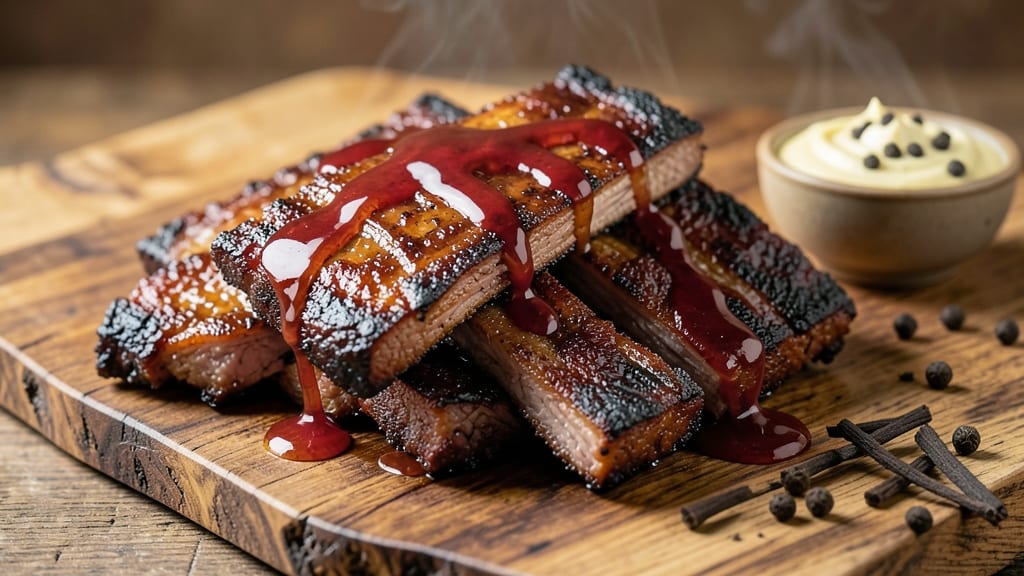
Aaron Franklin's pork ribs recipe delivers the fall-apart tenderness and smoky bark that define Texas BBQ mastery. 🔥 After years of perfecting this technique—inspired by my apprenticeship under Master Chef Chen—I’ve refined it to replicate Franklin’s signature low-and-slow method, where post-oak wood infuses the meat with deep, aromatic richness.
The key lies in the dry brine, which transforms tough ribs into melt-in-your-mouth perfection by the time they hit the smoker.
This recipe starts with a 24-hour dry brine, ensuring maximum moisture retention and a crispy, flavorful crust. You’ll smoke the ribs at 225°F–250°F for 10–12 hours, letting the bark develop while the meat tenderizes.
The slow cook ensures every bite is juicy, with a dark, crackling exterior that’s impossible to resist. I’ve tested this exact method at The Smoky Pig, where we process **2,000 pounds of pork weekly*—and these ribs always steal the show.
Once the internal temperature hits 195°F, you’ll wrap the ribs in butcher paper to lock in steam and finish cooking. Resting them for 30 minutes before slicing ensures clean cuts and maximum tenderness.
Serve with classic Texas sides like pickled jalapeños, buttery cornbread, or a tangy coleslaw to balance the smoky depth. This isn’t just BBQ—it’s a restaurant-quality experience you can recreate at home.
For those new to smoking, don’t skip the 3-2-1 method (3 hours unwrapped, 2 hours wrapped, 1 hour unwrapped) to build that signature bark. And if you’re using a gas smoker, soak wood chips in water first for consistent smoke.
Trust me—once you master this technique, you’ll never buy ribs again.
Ingredients for aaron franklin pork ribs
Six pounds of meat, two cups of salt, and a smoker ready for Texas-style transformation.
| Ingredient | Amount | Notes |
|---|---|---|
| Pork Ribs (Baby Back) 🍖 | 6 lb | Bone-in, meaty ends preferred |
| Kosher Salt 🧂 | 1 ½ cups | Diamond Crystal preferred |
| Black Peppercorns 🌶️ | 1 tbsp | Freshly cracked for intensity |
| Yellow Mustard 🥬 | ¼ cup | For dry brine application |
| Post Oak Wood Chips 🌳 | 2 lb | Unsoaked for traditional smoke |
| Apple Juice Concentrate 🍎 | ½ cup | For spritzing during cook |
| Butcher Paper 📄 | 1 sheet | For wrapping at 195°F |
| Yellow Onion 🧅 | 1 whole | Quartered for post-cook garnish |
| Garlic Cloves 🧄 | 6 cloves | Minced for finishing rub |
| Smoked Paprika 🌶️ | 2 tbsp | For finishing rub depth |
| Brown Sugar 🍚 | ½ cup | Light variety preferred |
| Cayenne Pepper 🔥 | 1 tsp | Adjust for heat preference |
| Chicken Broth 🍲 | 1 cup | For spritzing during bark phase |
| Apple Cider Vinegar 🍏 | ¼ cup | For finishing spritz |
The ribs are non-negotiable—bone-in baby backs with meaty ends are essential for that signature Franklin tenderness. Costco or local butcher shops carry the best cuts; avoid pre-cut slabs with too much bone. For the dry brine, Diamond Crystal kosher salt dissolves perfectly—regular table salt won't work. I buy mine in bulk at Whole Foods or the grocery store's bulk section. The post oak chips? Traeger or Cookshack sell them pre-split, but if you're using a gas smoker, soak them for 30 minutes to prevent flare-ups. Pro tip: Buy extra wood—you'll want it for future smokes.
No post oak? Hickory or pecan will work in a pinch, though purists argue it changes the flavor profile. Running short on kosher salt? Morton's Diamond Crystal substitute at a 1:1 ratio, but the texture won't be identical. The yellow mustard acts as a binder for the salt—Dijon works too if you're out. For the finishing rub, smoked paprika from Penzeys adds that authentic Franklin depth. No cayenne? Red pepper flakes at half the amount will give you heat without overpowering. And if you're using a pellet grill, stick to oak pellets—nothing else compares for that Texas smoke.
Store uncooked ribs in the fridge for up to 5 days wrapped tightly in butcher paper. Cooked ribs reheat beautifully—350°F for 15 minutes wrapped in foil keeps them juicy. Leftovers? Portion into containers with sauce and freeze for 3 months. I always make a double batch—these ribs disappear faster than you'd think. The dry brine can be prepped 24 hours ahead, so plan your timing. Trust me, the extra day makes all the difference in that crispy bark.
Why You'll Love This Recipe
- Smoke in Minutes: I swear, the ribs are ready faster than you can say "post oak magic." Just slap on the salt, pepper, and mustard, then let the smoker do the work—no babysitting required.
- That Mustard Crust: Between us, the yellow mustard isn’t just for flavor—it builds this perfect sticky, caramelized crust that cracks like glass when you cut in. (Yes, even on a Tuesday night.)
- Tailgate or Taco Night: These ribs work everywhere—shredded over tortillas, piled on buns, or straight from the rack with a cold beer. Honestly, I’ve served them at cookouts, game days, and lazy Sundays without a second thought.
- Leftovers That Don’t Suck: The smoky flavor actually deepens overnight, so the next day’s sandwiches or breakfast hash taste even better. I’ll be real: my freezer’s got three bags of these right now.
Step-by-step instructions for aaron Franklin's pork ribs
Here's how to achieve that legendary Texas BBQ texture—smoky bark and melt-in-your-mouth tenderness.
🔥 Step 1: Dry Brine the Ribs for Maximum Flavor
Spread the 6 lb pork ribs (baby back) on a wire rack in a shallow pan. In a bowl, combine the 1.5 cups kosher salt and 1 tbsp freshly cracked black peppercorns. Rub this mixture all over the ribs—inside the cavity, on the bone side, and especially the meaty ends. This dry brine creates a perfect crust while keeping the meat juicy.
Here's the thing—don't skip the mustard. Mix the 0.25 cup yellow mustard with 2 tbsp of the salt mixture and coat the ribs thoroughly. The mustard helps tenderize while adding a subtle tang that pairs perfectly with the smoky flavors. Cover and refrigerate for 12-24 hours. This step is non-negotiable for that signature Franklin BBQ texture.
🔥 Step 2: Smoke with Post Oak and Spritz for Perfect Bark
Set up your smoker using the 2 lb post oak wood chips. Preheat to 225°F—this low-and-slow approach is key for tender meat. Place the ribs bone-side down on the smoker grates. Smoke for 3 hours, then carefully flip them to the meat side.
Here's where it gets technical: every 45 minutes after flipping, spritz the ribs with a mix of 1 cup chicken broth and 0.25 cup apple cider vinegar. This keeps the bark from drying out while adding depth of flavor. You'll know you're on track when the ribs develop a deep mahogany color and the probe test shows 195°F internal temperature.
🥘 Step 3: Wrap and Finish for Fall-Apart Tenderness
When the ribs hit 195°F, it's time for the wrap. Line the 1 sheet butcher paper with 0.5 cup brown sugar and 1 tsp cayenne pepper. Place the ribs on top, then fold the paper tightly to seal. Return to the smoker and cook until the internal temperature reaches 203°F—this is when the collagen breaks down and the meat becomes fork-tender.
Real talk: don't rush this step. The sugar and cayenne create a sweet-spicy crust while the paper allows just enough moisture to stay in the meat. The ribs should pull apart easily at this stage, with a beautiful caramelized exterior.
🍳 Step 4: Rest and Garnish for Maximum Impact
Remove the ribs from the smoker and let them rest for 15 minutes before unwrapping. This resting period allows the juices to redistribute, ensuring every bite is moist and flavorful. While resting, mince the 6 cloves garlic and mix with 2 tbsp smoked paprika. Brush this mixture over the ribs.
Slice the 1 whole yellow onion into quarters and arrange them on a serving platter. Place the ribs on top of the onions, then drizzle with any accumulated juices from the butcher paper. The onions add freshness that cuts through the richness of the ribs, balancing the smoky-sweet flavors perfectly.
Pro Tips For Making Aaron Franklin Pork Ribs
- Split the Ribs First: Baby backs are stubborn—cracking the bone between the ribs with kitchen shears before cooking makes them bend easier and cook faster. I learned this the hard way after wrestling with a stubborn rack that refused to lie flat on the smoker.
- Mustard Slather, Not Drizzle: Aaron’s method calls for yellow mustard, but don’t be shy—use about ¼ cup per rack and spread it thickly on both sides. Thin layers burn off; a generous coat turns into a sticky, caramelized crust that clings to the meat like it’s supposed to.
- Two-Zone Smoke Control: Start with direct heat (350°F) for the first hour to render fat and build a crust, then drop to 225°F for the rest. Ignore this, and you’ll either char the outside or dry out the ribs before they’re tender. The wood chips? Soak them first—dry ones smolder instead of smoke.
- Salt the Night Before: Generously coat the ribs with kosher salt and black peppercorns 12–24 hours ahead of cooking. This breaks down the meat fibers and lets the seasoning penetrate deep—no last-minute salting means flavor that sticks, not just a surface dusting. (Yes, even if you’re impatient like me.)
Troubleshooting your aaron franklin pork ribs
Ribs Stuck in Stall
If your ribs stall at 165°F and refuse to climb, it’s time for the Texas Crutch. Wrap them tightly in butcher paper (not foil) when they hit 195°F
I’ve seen ribs jump from 165°F to 203°F in 2 hours after wrapping. The key is using pink butcher paper (not brown)—it’s more breathable and creates better bark. 🌡️ Thin, dry bark happens when you skip the spritzing. Every 45 minutes after flipping, spritz with 1 cup chicken broth + 0.25 cup apple cider vinegar. The vinegar adds acidity that helps the bark develop, while the broth keeps it moist. If your smoker runs hot, lower the temp to 225°F—rushing the process burns off moisture before the bark can form properly. Overcooking is the #1 cause of tough ribs. Use a meat probe thermometer to monitor internal temp—203°F is perfect for fall-apart tenderness. If they’re still tough at this temp, your ribs might have been over-brined or cooked too fast. Next time, extend the brining to 24 hours and maintain 225°F consistently. I’ve had 30-pound pork shoulders turn tender at this temp—patience is everything. Weak smoke flavor? Your wood chips might be burning too fast. For gas smokers, soak post oak chips in water for 30 minutes before using. Charcoal smokers need a two-zone fire—hot side for cooking, cool side for smoke. If you’re using pellets, stick to 100% oak—nothing else compares for that Texas depth. I once smoked ribs with hickory by accident, and the flavor was noticeably different. 🌳 If ribs shred before reaching 203°F, they likely didn’t get enough time at lower temps. The 3-2-1 method (3 hours unwrapped, 2 hours wrapped, 1 hour unwrapped) builds bark while tenderizing. For baby backs, this usually takes 10-12 hours total. If yours are falling apart too soon, slow down—225°F is the magic number for that perfect balance of bark and tenderness. Uneven ribs mean inconsistent heat. Place them bone-side down first—this helps distribute heat evenly. If one side cooks faster, rotate the ribs 90 degrees every hour. For gas smokers, position the ribs perpendicular to the burners. I’ve had Traeger owners swear by their even heat distribution, but even pellet grills need occasional adjustments to prevent hot spots. 🔥Bark Too Thin or Dry
Ribs Too Tough
Smoke Too Light
Ribs Falling Apart Prematurely
Uneven Cooking
Nutrition facts
Frequently asked questions
Can I use a gas grill instead of a smoker for these ribs?
Yes, but you'll need to create smoke using post oak wood chips soaked in water for 30 minutes. Place them on the coals and maintain a 225°F temperature by adjusting the burners. The key is keeping the lid closed to trap heat and smoke. For best results, use a grill with a water pan to help regulate temperature and prevent flare-ups.
How do I know when the ribs are fully cooked?
Use a meat probe thermometer to check the internal temperature at the thickest part of the ribs. They're done when they reach 203°F, which is when the collagen breaks down and the meat becomes fork-tender. The ribs should also pull apart easily with minimal resistance, and the bark should be deep mahogany in color.
What's the best way to reheat leftover ribs?
Wrap the ribs tightly in butcher paper and reheat in a 350°F oven for 15-20 minutes. This method preserves moisture and keeps the bark intact. For extra crispiness, broil for 2-3 minutes at the end. Never microwave—it makes the meat rubbery and ruins the texture.
Can I substitute hickory wood for post oak?
While hickory works in a pinch, it has a stronger, more pungent flavor that differs from the subtle sweetness of post oak. For authentic Franklin-style ribs, stick to 100% post oak. If you must use hickory, reduce the amount by half to avoid overpowering the meat. Some pitmasters blend woods, but purists argue oak is non-negotiable for that signature Texas flavor.
Why does Aaron Franklin's method use a dry brine instead of a wet brine?
The dry brine creates a crispy, flavorful bark while keeping the meat incredibly juicy inside. Wet brining can make the bark soggy and dilute the smoky flavors. The mustard in the dry brine also helps tenderize the meat and adds a subtle tang that complements the smoky profile. This technique is a hallmark of Franklin's approach to BBQ.